


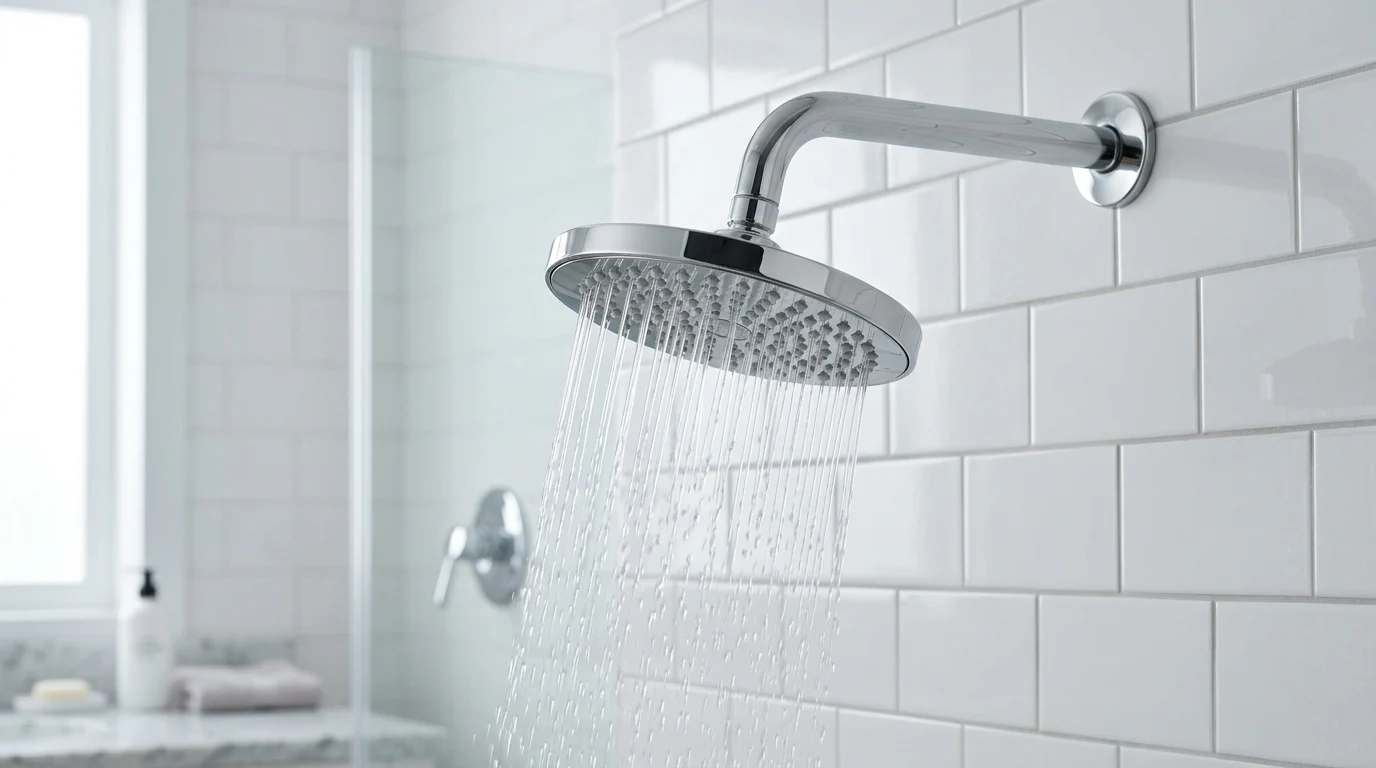
For importers, retailers, and project buyers, choosing the right sourcing partner can affect far more than unit price. A direct relationship with a Shower Head manufacturer can improve margins, speed up product development, and give buyers clearer control over materials, finishes, packaging, and quality standards. At the same time, trading companies can still be useful when orders are small, product categories are broad, or logistics need consolidation. This article compares both sourcing models from a practical procurement perspective, including cost structure, MOQ flexibility, quality control, supplier verification, and OEM/ODM customization. The goal is to help buyers build a supply chain that is cost-efficient, transparent, and scalable.
Why Importers Should Consider a Shower Head Manufacturer
Procuring plumbing fixtures for large-scale distribution, hospitality projects, or retail brands demands a strategic approach to supply chain management. For buyers sourcing sanitary ware, the decision between partnering with a direct shower head manufacturer versus a trading company fundamentally impacts gross margins, quality control, and intellectual property protection. Bypassing intermediaries can yield significant improvements in gross margins for high-volume importers, primarily by eliminating layered markups and optimizing the bill of materials (BOM) at the factory level.
However, the choice is not strictly binary. The optimal sourcing model depends heavily on the buyer's operational capacity, order volumes, and product diversification needs. Understanding the distinct economic and operational mechanics of both supplier types is critical for establishing a resilient procurement pipeline.
How Direct Manufacturer Access Improves Negotiation
Establishing a direct relationship with a shower head manufacturer provides buyers with transparent access to raw material costs and production overhead. Trading companies typically apply a standard intermediary markup on unit costs to cover their operational expenses and profit. By communicating directly with the factory, procurement teams can negotiate specific BOM components, such as substituting standard ABS plastic for high-grade brass or adjusting the thickness of the chrome electroplating to meet specific price points.
Furthermore, direct access facilitates structured volume discounts. Manufacturers rely on capacity utilization; therefore, they are often willing to amortize tooling costs or offer tiered pricing structures when buyers commit to scheduled annual forecasts—a negotiation lever rarely available when working through a broker.
When a Trading Company Can Still Add Value
Despite the cost advantages of direct manufacturing, trading companies remain highly relevant for specific procurement scenarios. Their primary value proposition lies in supply chain aggregation and risk mitigation for smaller buyers. When an importer requires a diverse catalog of Bathroom Accessories—such as faucets, drains, towel racks, and shower heads—a trading company consolidates these SKUs into a single shipment, streamlining logistics and customs clearance.
Additionally, trading companies are adept at managing low minimum order quantities (MOQs). While a primary factory might require a strict MOQ to initiate a production run, a trading company can often fulfill smaller orders by leveraging their existing inventory or consolidating orders from multiple clients. Beyond logistics and MOQ flexibility, intermediaries frequently provide material services like trade financing, market intelligence, and after-sales dispute resolution. They also act as local cultural liaisons to bridge language gaps and manage consolidated pre-shipment inspections across multiple factories.
Manufacturer vs. Trading Company: Key Differences
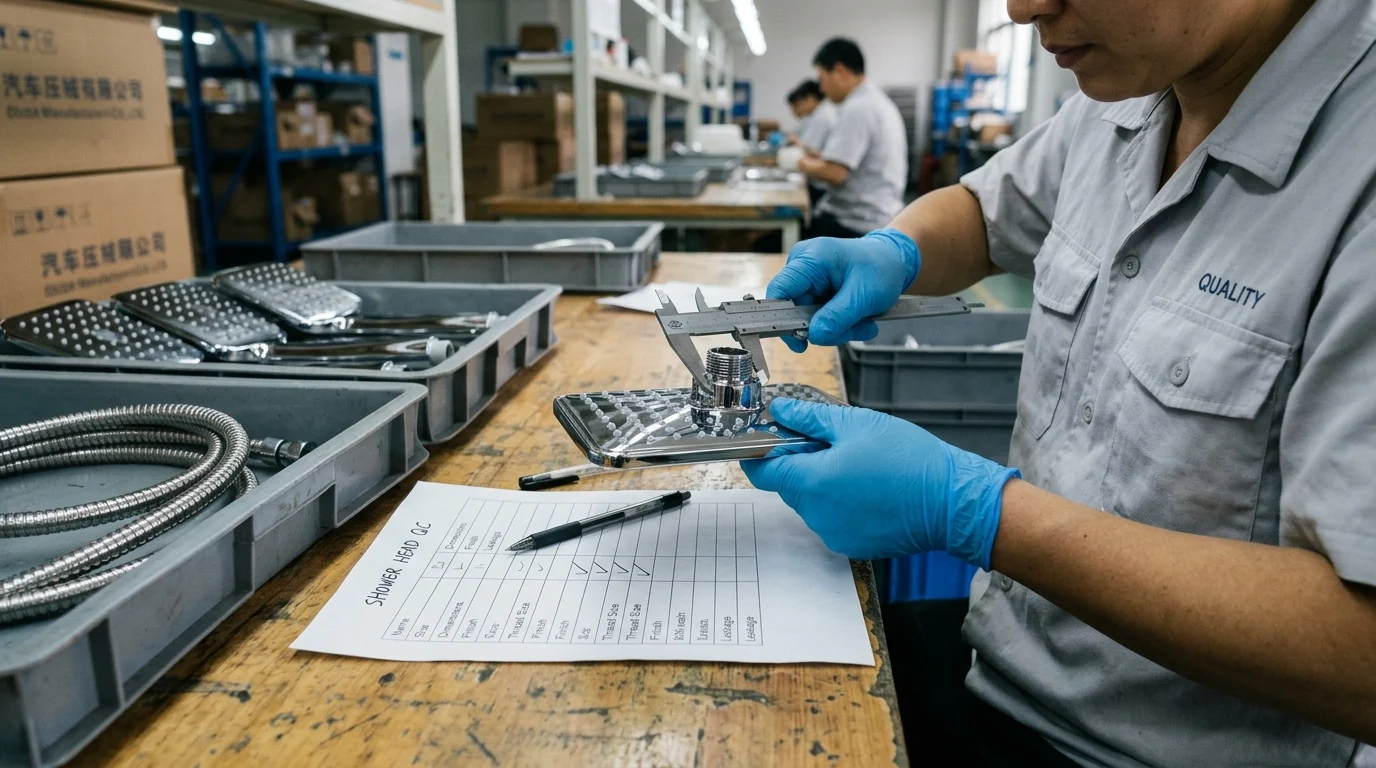
Distinguishing a true shower head manufacturer from a well-disguised trading company requires rigorous supplier vetting. In global sourcing hubs, intermediaries frequently present themselves as factories to capture direct-to-buyer business. An initial indicator is the entity's registered capital and business scope on their official commercial license; a legitimate manufacturer typically demonstrates substantial registered capital and explicitly lists manufacturing, injection molding, or metal fabrication in its approved operational scope. (Note that registered capital norms and business scope classifications vary significantly by country, though these indicators are highly relevant in major manufacturing hubs like China.)
How to Define Each Supplier Type
A manufacturer is an enterprise that owns and operates the physical assets required for production. In the context of shower heads, this includes plastic injection molding machines, CNC machining centers for brass components, assembly lines, and in-house testing laboratories. They possess direct control over the production schedule, quality assurance protocols, and engineering modifications. However, buyers should be aware that not all self-identified manufacturers are fully vertically integrated. Many still outsource critical, highly regulated processes like electroplating or specialized plastic molding, meaning direct factory access does not entirely eliminate third-party risk.
Conversely, a trading company operates as a specialized intermediary or sourcing agent. They do not own production machinery. Instead, they maintain networks of sub-suppliers, handle cross-border communication, manage export documentation, and provide localized customer service. Their expertise is in market navigation and logistics rather than industrial engineering.
Operational Signals That Prove Factory Capability
To verify manufacturing capability without an immediate on-site visit, procurement teams must analyze specific operational signals. Requesting an ISO 9001 certificate is standard, but the critical step is reviewing the certificate's "scope"—a factory's scope will explicitly state "manufacturing of sanitary ware," whereas a trader's will state "sales" or "export." Additionally, the ratio of production staff to sales personnel is a strong indicator; a genuine factory usually exhibits a high ratio of production staff to sales personnel, while a trading company employs predominantly sales and support staff.
The table below outlines the fundamental operational differences to help buyers quickly categorize potential partners:
| Feature | Direct Manufacturer | Trading Company |
|---|---|---|
| Core Competency | Production, R&D, Quality Control | Sourcing, Consolidation, Logistics |
| Typical MOQ | High (1,000+ units per SKU) | Low to Medium (100–500 units) |
| Pricing Structure | Factory direct (lowest unit cost) | Unit cost + intermediary markup |
| Customization (OEM/ODM) | High (direct tooling and CAD control) | Limited (relies on third-party factory limits) |
| Product Range | Narrow (specialized in shower/bath) | Broad (can source entire bathroom sets) |
How Direct Sourcing Affects Cost, Quality, and Engineering
The decision to bypass intermediaries directly influences the triad of procurement: cost, quality, and engineering. When an importer engages a shower head manufacturer, they integrate their supply chain directly into the production floor. This integration is particularly crucial for OEM (Original Equipment Manufacturer) and ODM (Original Design Manufacturer) projects, where custom tooling investments for proprietary shower head faceplates or internal water channels can range from $3,000 to $15,000 depending on mold complexity and cavity count.
Cost Drivers to Compare Before Ordering
Before issuing a purchase order, buyers must analyze the primary cost drivers that dictate the final unit price. Direct sourcing allows for a granular review of raw materials, such as the market fluctuations of copper alloys for brass fittings or the grade of ABS thermoplastic used for the shower body. Surface finishing is another critical cost component.
For example, specifying a multi-layer electroplating process with a 0.2 to 0.3 µm chrome layer and a 10 to 15 µm nickel layer will increase costs but significantly enhance corrosion resistance. A trading company typically provides a static price, whereas a manufacturer can adjust these specific parameters to align with a buyer's target cost and warranty requirements.
How Direct Engineering Communication Improves Product Fit
Effective product development relies on frictionless communication between the buyer's designers and the production engineers. Working directly with the factory eliminates the "telephone game" that often occurs through brokers. CAD files, 3D models, and flow-rate specifications can be exchanged directly with the tooling department.
This direct line of communication accelerates the prototyping phase, often shaving weeks off the standard R&D cycle. Furthermore, factory engineers can provide immediate feedback on Design for Manufacturability (DFM), suggesting minor alterations to internal waterways that prevent pressure drop or reduce material waste during injection molding. Buyers must note, however, that direct communication introduces significant operational burdens. Employing bilingual staff, managing time-zone differences, and absorbing the true overhead of in-house QA are necessary investments to prevent costly miscommunications and defects that a trading company would typically manage.
Quality Risks Reduced by In-House Testing and Inspection
Quality assurance is vastly superior when managed at the source. Reputable shower head manufacturers maintain in-house testing facilities to validate mechanical endurance and finish durability. Direct buyers can specify rigorous testing parameters, such as a 96-hour Copper Accelerated Acetic Acid-Salt Spray (CASS) test to ensure the chrome finish withstands high-humidity bathroom environments without blistering.
Additionally, manufacturers can conduct 100% pneumatic or hydrostatic pressure testing on the assembly line, typically at 0.5 MPa (approx. 72.5 PSI), to identify micro-leaks before packaging. Trading companies, lacking these facilities, rely entirely on the sub-supplier's undocumented quality control, increasing the risk of high defect rates upon delivery. However, buyers going direct must be prepared to actively manage these testing protocols or hire third-party inspectors to verify the factory's internal reports.
Compliance and Documentation Support
In the heavily regulated plumbing and sanitary ware industry, compliance is non-negotiable. Importers assume the legal liability for the products they distribute; therefore, securing authentic and verifiable documentation is paramount. Working directly with a shower head manufacturer ensures access to original test reports and technical files, whereas trading companies often obscure the original factory's identity on certificates to prevent buyers from bypassing them. Failing to meet regional compliance standards can result in customs seizures, product recalls, or steep fines in jurisdictions governed by strict water and material safety laws.
Certifications and Water Efficiency Standards to Check
Global markets enforce diverse regulatory frameworks governing water consumption and material safety. In the United States and Canada, cUPC certification is a baseline requirement, alongside EPA WaterSense, which mandates a maximum flow rate of 2.0 Gallons Per Minute (GPM), while state-level mandates like California’s require an even stricter 1.8 GPM. Direct manufacturers invest heavily in engineering shower internal restrictors to meet these precise flow rates while maintaining specific spray force criteria.
| Region | Primary Certification | Key Focus Area |
|---|---|---|
| North America | cUPC / EPA WaterSense | Plumbing safety, Flow rate (≤ 2.0 or 1.8 GPM) |
| Europe | CE / WRAS / ACS | Material safety, Acoustic classes, Backflow |
| Australia | WaterMark / WELS | Plumbing integrity, Water efficiency rating |
| Middle East | SASO / ECAS | Regional conformity, Flow rate restrictions |
How to Assess Testing, Traceability, and Records
Assessing a supplier's documentation capabilities involves more than reviewing a one-time certificate. Importers must evaluate the manufacturer's traceability protocols. A robust factory utilizes an Enterprise Resource Planning (ERP) system to track raw material batches, production dates, and specific assembly line shifts.
Leading shower head manufacturers retain quality control and testing records for multiple years. This level of traceability is vital if a product recall occurs or if a regulatory body demands proof of compliance for a specific production run imported months prior.
Why Regional Requirements Affect Supplier Selection
Regional safety and environmental mandates dictate strict material specifications that heavily influence supplier selection. For instance, the US Safe Drinking Water Act and California's AB1953 require that any plumbing fixture conveying water for human consumption contain a weighted average lead content of less than 0.25%.
European markets often prioritize acoustic performance, requiring plumbing fixtures to meet specific acoustic limits to minimize noise transmission in multi-dwelling units. Direct manufacturers possess the metallurgical expertise and testing capabilities required to ensure compliance with these localized nuances, a technical depth rarely found within trading firms.
How to Decide the Best Sourcing Model
Determining the optimal sourcing strategy requires a calculated assessment of the buyer's internal resources, risk tolerance, and market positioning. While the allure of factory-direct pricing is strong, the administrative burden of managing overseas production, quality control, and international freight falls entirely on the importer. A structured decision matrix helps brands navigate this choice, ensuring the selected supplier model aligns with their growth trajectory. Industry best practice dictates that any direct factory engagement should begin with a comprehensive audit, targeting a high compliance and capability score before transferring significant order volumes.
Due Diligence Steps Before Choosing a Supplier
Rigorous due diligence is the foundation of successful direct sourcing. Importers should mandate third-party factory audits—such as SMETA for ethical compliance or specialized ISO 9001 audits for quality management systems—before finalizing a partnership. Key steps include verifying the manufacturer's export license, requesting original tax registration documents, and conducting video walk-throughs of the injection molding and plating workshops.
Furthermore, requesting a "tear-down" sample allows the buyer's engineers to inspect the internal geometry, the quality of the elastomeric nozzles (e.g., food-grade silicone vs. standard TPR), and the integrity of the ultrasonic welding, validating the factory's technical claims.
Decision Factors: Volume, Customization, and Risk
The tipping point between utilizing a trading company and going direct is often dictated by volume and customization.
Key Takeaways
- Work directly with a shower head manufacturer when you need better cost transparency, BOM-level negotiation, and stronger control over materials and finishes.
- Use annual forecasts and repeat-order commitments to negotiate tiered pricing, tooling amortization, and more stable production capacity with a factory.
- Choose a trading company when your priority is mixed-SKU consolidation, lower MOQs, financing support, or simplified logistics across multiple suppliers.
- Verify a supplier’s factory status by checking its license, production scope, equipment, workshop capabilities, and ability to discuss technical manufacturing details.
- For OEM or ODM shower projects, prioritize manufacturers with R&D capability, sample support, quality systems, and proven export experience.
Frequently Asked Questions
What is the main advantage of buying directly from a shower head manufacturer?
Direct buying can reduce intermediary markups, improve pricing transparency, and give importers more control over materials, tooling, finish quality, packaging, and production schedules.
When is a trading company still a practical choice?
A trading company can help when buyers need many different bathroom SKUs, lower MOQs, consolidated shipping, trade financing, or local coordination across multiple factories.
How can buyers verify a real shower head manufacturer?
Check the business license, production scope, factory address, workshop photos or audits, export records, equipment, certifications, and whether the supplier can discuss tooling, BOM details, and quality processes.
Can manufacturers support OEM and ODM shower head projects?
Yes. Source factories such as XinYi Sanitary Ware offer OEM/ODM/OBM services, including custom shower heads, Hand Showers, shower sets, filters, finishes, packaging, and sample development.
Do direct manufacturers require higher MOQs?
Often yes, because factories plan production around tooling, materials, and line efficiency. However, stable forecasts or repeat orders can help buyers negotiate better MOQs and tiered pricing.
