


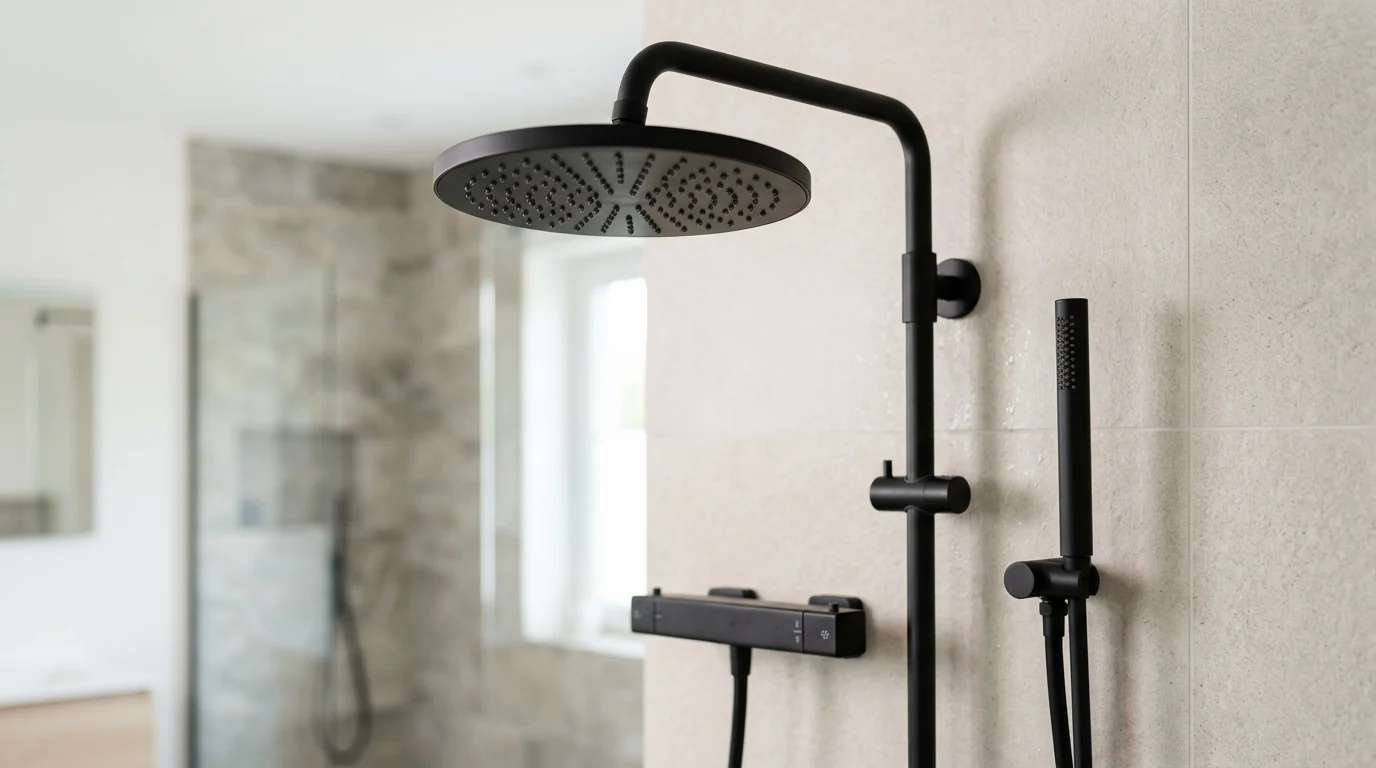
Matte black has moved far beyond a passing bathroom trend; it is now a strategic finish for brands, developers, and distributors targeting premium specification. Its appeal comes from more than style: a successful matte black Shower Head must combine controlled gloss, durable surface engineering, color consistency across components, and reliable water performance. As buyers increasingly compare finishes by both visual impact and lifecycle value, manufacturers face higher expectations for coating quality, material compatibility, and customization. This article examines whymatte black shower heads continue to gain demand, what technical details separate premium products from ordinary alternatives, and how professional sourcing decisions can support stronger margins in competitive sanitary ware markets.
Key Technical Specifications for Matte Black Quality

Engineering a premium matte black shower head that meets commercial standards requires distinct disciplines: exact control over metallurgical substrates and chemical deposition for the exterior finish, alongside advanced fluid dynamics for the internal waterways. The specification process is highly technical, demanding rigorous oversight to ensure the final product delivers both optimal water performance and superior surface resilience.
Coating Methods and Surface Preparation
The durability and appearance of a matte black shower head are entirely dependent on the application methodology. The three primary methods utilized in the industry are Physical Vapor Deposition (PVD), Electrophoretic Deposition (EPD), and traditional powder coating. PVD stands as the premium standard, bonding titanium or chromium ions to the substrate in a vacuum chamber, creating an ultra-thin but exceptionally hard layer that resists scratching and fading better than alternative methods.
| Coating Method | Typical Thickness (μm) | Durability / Adhesion | Relative Cost Index |
|---|---|---|---|
| PVD (Physical Vapor Deposition) | 0.2 – 1.5 | Excellent (High Scratch Resistance) | $$$ |
| EPD (Electrophoretic Deposition) | 10.0 – 20.0 | Good (Corrosion Resistant) | $$ |
| Powder Coating | 50.0 – 100.0 | Moderate (Prone to chipping) | $ |
While powder coating offers a lower barrier to entry for budget fixtures, its thickness often obscures fine machining details and nozzle threads. PVD and high-grade EPD, conversely, preserve the exact geometry of the shower head while delivering superior adhesion and resistance to thermal shock.
Materials, Flow Rates, and Spray Functions
Beyond the exterior coating, the internal architecture dictates the fixture's operational lifespan. Premium matte black shower heads typically utilize a core of lead-free brass alloys—such as C46500 or ECO BRASS for North American potable water applications, or standard CW617N where permitted globally—alongside 304-grade stainless steel to prevent internal corrosion that could undermine the exterior finish. ABS plastic is frequently used for the nozzle faceplates due to its thermal insulation properties, preventing the exterior from becoming dangerously hot.
Flow rates are equally critical, heavily regulated by regional environmental standards. A premium fixture must deliver a robust spray experience while adhering to strict flow restrictor limits, typically ranging from a standard 2.5 Gallons Per Minute (GPM) down to 1.8 GPM or even 1.5 GPM for highly restricted markets. Advanced fluid engineering ensures that even at 1.8 GPM, internal pressure chambers accelerate the water droplets to maintain spray force.
Durability Testing and Quality Control
Quality control for matte black finishes requires aggressive environmental simulation. To verify corrosion resistance, premium units undergo Neutral Salt Spray (NSS) testing for a minimum of 240 hours, or Copper Accelerated Acetic Acid-Salt Spray (CASS) testing for 24 to 48 hours. Any blistering or discoloration during these tests results in immediate batch rejection.
Adhesion is validated using the ISO 2409 cross-hatch cutter test, ensuring the black coating will not delaminate when scratched. Additionally, thermal cycling tests—alternating water temperatures between 10°C and 70°C for thousands of cycles—are mandatory to confirm that the differing expansion rates of the base metal and the black coating do not cause micro-fractures over time.
Matte Black vs Chrome and Brushed Finishes
Evaluating matte black against legacy finishes like polished chrome and brushed nickel reveals distinct operational and aesthetic trade-offs. While traditional metallic finishes have dominated the plumbing industry for decades, the functional advancements in dark surface treatments have shifted the competitive landscape.
Finish Appearance and Design Fit
Polished chrome is ubiquitous, offering a highly reflective, sterile appearance that fits traditional bathroom motifs. However, its ubiquity often translates to a lack of differentiation in luxury spaces. Brushed nickel provides a softer, warmer metallic tone that hides water spots well, yet it can clash with modern, high-contrast interior designs.
Matte black disrupts this paradigm by absorbing light rather than reflecting it. This creates a grounding visual weight that pairs exceptionally well with organic materials like timber vanities, concrete basins, and natural stone tiles. The finish acts as a definitive silhouette, offering architects a tool to create sharp, geometric focal points within the shower enclosure.
Where Matte Black Outperforms Alternatives
Modern matte black finishes, particularly those utilizing PVD paired with an Anti-Fingerprint (AF) oleophobic topcoat, outperform standard chrome in day-to-day maintenance. While standard chrome highlights every fingerprint and hard-water calcium deposit, AF-coated matte black significantly reduces the visibility of smudges and repels water droplets.
However, buyers must be aware of practical maintenance caveats. Matte surfaces can prominently display dust, lint, dry water spots, and white soap scum in hard-water regions if not regularly cleaned. Furthermore, users must explicitly avoid bleach or ammonia-based cleaners, which can chemically degrade the oleophobic topcoat over time. Unlike polished chrome which can sometimes be buffed, a deep chip in a PVD coating cannot be field-repaired, necessitating full component replacement.
| Finish Type | Surface Hardness (HV) | Fingerprint Resistance | Water Spot Visibility |
|---|---|---|---|
| Matte Black (PVD Base Layer) | 2000 – 2500 | High | Low to Medium |
| Polished Chrome | 800 – 1000 | Low | High |
| Brushed Nickel | 500 – 700 | Medium | Medium |
The extreme surface hardness of the underlying PVD layer (2000–2500 HV) makes the fixture highly resistant to deep scratches, though the actual contact surface—the AF topcoat—has a lower measured hardness. This layered approach prevents the micro-abrasions caused by standard cleaning cloths, an area where softer polished finishes frequently degrade over time.
Regional Preferences and Project Applications
Market adoption of matte black varies significantly by region and project scope. In North America, matte black has captured a significant specification rate in new premium hospitality and luxury multi-family residential developments, driven by the popularity of modern farmhouse and industrial chic aesthetics.
In contrast, European markets often blend matte black with brushed brass or gunmetal, demanding highly specific, localized finish portfolios. For commercial projects, specifiers favor matte black in high-traffic boutique hotels where visual impact is paramount, though they require stringent coating specifications to ensure the finish survives rigorous commercial housekeeping protocols.
Sourcing, Compliance, and Procurement Requirements
Procuring matte black shower heads introduces strict compliance and quality assurance variables into the supply chain. Because surface defects on dark finishes are immediately visible, buyers must implement rigorous vendor qualification and logistics protocols to protect their investments.
Certifications and Flow Regulations
Regardless of the finish, shower heads must meet stringent plumbing codes to enter major global markets. In North America, fixtures must comply with ASME A112.18.1/CSA B125.1 standards for mechanical safety and reliability. Furthermore, components in contact with potable water must adhere to lead-free regulations, such as California's AB1953.
Flow regulations dictate inventory strategy. A buyer cannot simply import a standard 2.5 GPM matte black shower head into all jurisdictions. Voluntary certification through the EPA WaterSense program requires a maximum flow of 2.0 GPM, while the California Energy Commission (CEC) enforces a strict 1.8 GPM legal mandate. Sourcing partners must be capable of providing certified flow restrictors tailored to the destination market.
Supplier Capability Assessment
Assessing a supplier's capability to produce premium matte black fixtures requires deep supply chain visibility. Buyers should determine whether a manufacturer handles PVD or EPD coating in-house or outsources it to a third-party facility. In-house capabilities generally yield tighter quality control and lower defect rates, which should ideally be maintained below a strict 2% threshold.
Minimum Order Quantities (MOQs) for custom matte black finishes typically range from 500 to 1,000 units, depending on the complexity of the shower head design and the chosen coating method. Buyers must audit the supplier's color-matching consistency across different production batches, ensuring that an order placed in Q1 visually matches a reorder placed in Q4.
Packaging, Handling, and Inventory Control
The logistics of shipping matte black fixtures demand specialized packaging solutions. Unlike polished chrome, which can often survive standard cardboard inserts, matte black surfaces are susceptible to micro-scratching from transit vibrations if improperly secured.
Procurement teams must specify the use of high-density EPE (Expanded Polyethylene) foam or custom-molded EVA inserts rather than rough EPS or standard corrugated dividers. Additionally, packaged units should pass ISTA 1A drop testing to guarantee that the heavy brass or stainless steel components do not shift and compromise the finish during international freight and final-mile delivery.
How Buyers Should Decide on Matte Black Shower Heads
Integrating matte black fixtures into a broader product catalog requires a calculated approach to market timing, technical validation, and margin analysis. Retailers and wholesale distributors must move beyond aesthetic appeal to build a resilient, profitable product category.
Pre-Launch Evaluation Steps
Before initiating mass production, buyers must execute a rigorous pre-launch evaluation of prototype units. This involves destructive testing to verify the coating's adhesion and chemical resistance. Prototypes should be subjected to real-world cleaning agents, extreme hard water conditions, and accelerated life testing to simulate years of mechanical stress on swivel joints and nozzles.
Additionally, the pre-launch phase should include a comprehensive review of the silicone nozzles. Black silicone nozzles must resist mineral buildup and be easily cleanable (rub-clean technology) without discoloring or degrading, as grey or calcified nozzles will severely detract from the stark matte black aesthetic.
Commercial Demand Signals
Monitoring commercial demand signals is crucial for inventory planning. Matte black is no longer an experimental finish; it is a baseline expectation for modern renovations. Buyers should track specification trends in commercial real estate and high-end residential builds to forecast volume requirements accurately.
Financially, matte black fixtures offer highly attractive unit economics.
Key Takeaways
- Specify matte black finishes below 5 Gloss Units when a uniform, premium, low-reflection surface is required.
- Match shower heads with valve trims, diverters, and hand showers by both gloss level and color temperature to avoid visible inconsistency.
- Choose coating systems that resist flaking, peeling, fading, hard water, alkaline soaps, and routine cleaning over a long service cycle.
- Account for material differences because brass, stainless steel, and ABS may require different finishing processes to achieve the same matte black appearance.
- Wholesale buyers can protect premium margins by sourcing from manufacturers with full-chain production, R&D capability, and proven OEM/ODM quality control.
Frequently Asked Questions
Why are matte black shower heads considered premium?
They deliver strong visual contrast, a modern architectural look, and a non-reflective finish that can elevate perceived bathroom value when coating quality, color consistency, and durability meet premium standards.
What gloss level defines a true matte black finish?
Premium matte black surfaces are often engineered below 5 Gloss Units (GU), helping create a uniform, light-absorbing appearance without the shine or glare found in polished finishes.
Are matte black shower heads harder to maintain than chrome?
They can be easy to maintain if the coating resists hard water, soaps, fading, and peeling. Buyers should avoid abrasive cleaners and choose products with proven surface treatment quality.
Why is color consistency important for matte black bathroom fixtures?
Premium projects require shower heads, trims, diverters, hand showers, and accessories to match in gloss and color temperature, even when made from different materials such as brass, stainless steel, or ABS.
Can matte black finishes be applied to ABS shower components?
Yes, but ABS cannot usually withstand high-temperature PVD processes. Manufacturers use precise electroplating or specialized low-temperature coatings to match the finish with metal components.