


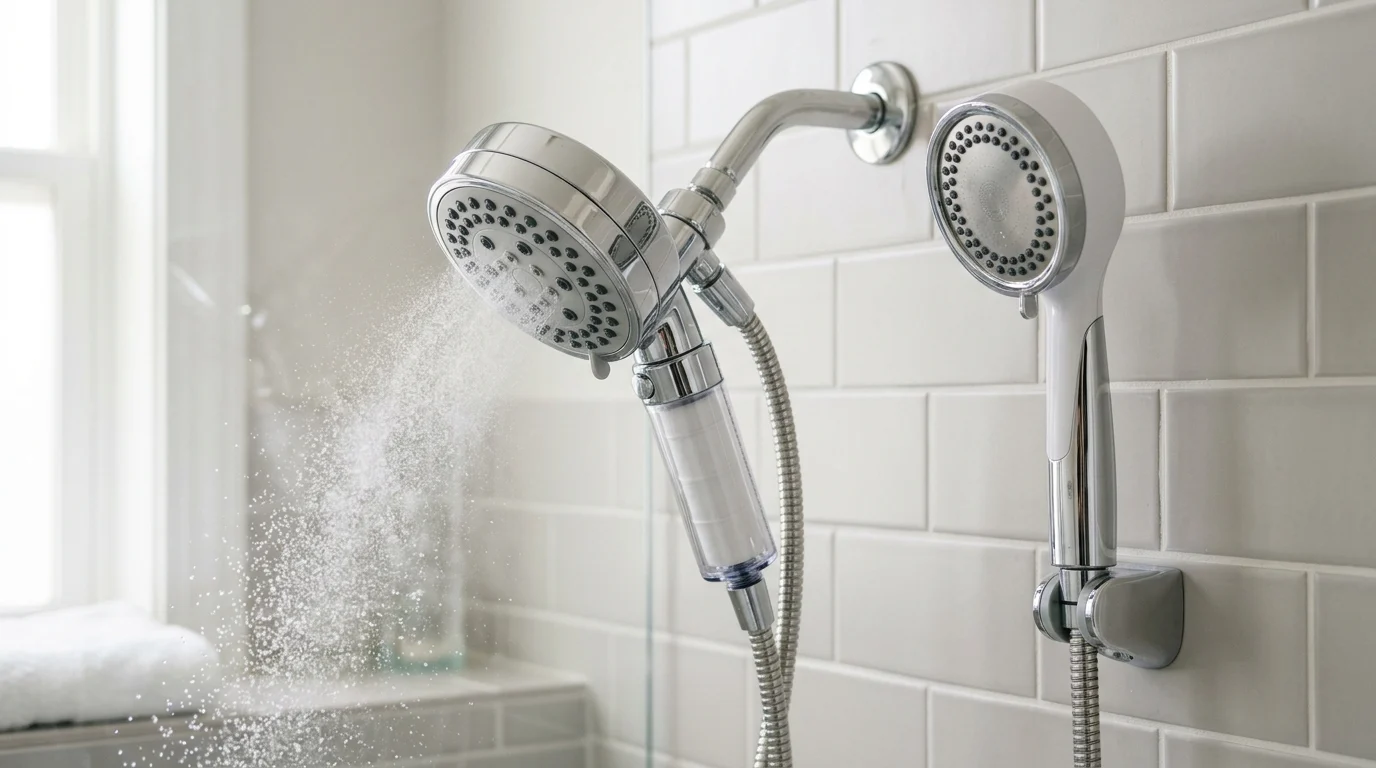
Filter Shower Heads have moved from a niche plumbing add-on to a fast-scaling category at the intersection ofwater quality, beauty, and bathroom innovation. For distributors, retailers, and wellness brands, the opportunity is larger than a simple fixture upgrade: consumers are increasingly linking shower water with skin comfort, hair care, and daily wellbeing, while replacement cartridges create recurring revenue potential. This article examines why demand is accelerating, which technical specifications matter, how to separate credible filtration claims from weak marketing, and what B2B buyers should prioritize when sourcing from experienced sanitary ware manufacturers.
Market Growth of Filter Shower Heads
The intersection of personal care and plumbing fixtures has catalyzed rapid expansion in the point-of-use water filtration market. The filter shower head category, previously a niche segment dominated by utilitarian designs, is now projected by industry estimates to exceed a billion-dollar global market valuation in the coming years, reflecting strong compound annual growth. This expansion is driven by a convergence of wellness trends, dermatological awareness, and rising concerns regarding municipal water quality.
Definition and Core Use Cases
At its core, a filter shower head is a point-of-use plumbing fixture integrating replaceable filtration media designed to treat municipal or well water immediately prior to dermal contact. The primary use case centers on mitigating the effects of residual chemical disinfectants and scale buildup. It is crucial to distinguish between contaminant reduction and water softening: these filters do not actually soften water by removing hardness minerals, but rather target specific chemical impurities. Consumers increasingly utilize these fixtures hoping to combat compromised skin barrier function, hair follicle damage, and dry skin. However, brands must navigate this carefully; dermatological benefits (such as eczema relief or hair loss prevention) lack broad clinical validation, and marketers should avoid implying direct medical efficacy.
Key Demand Signals
Demand signals indicate a structural shift in consumer awareness regarding water quality and its physiological impacts. Market research aggregators report significant, sustained increases in search queries correlating "hard water" with "hair loss" or "dry skin." Furthermore, the proliferation of direct-to-consumer (DTC) wellness brands introducing proprietary Shower Filters demonstrates strong consumer willingness to pay premium price points for perceived dermatological benefits, shifting the product from a hardware store staple to a high-margin beauty and wellness accessory.
Drivers of Long-Term Category Growth
Long-term category growth is driven by aging municipal water infrastructure and increasing urbanization, which frequently result in higher concentrations of chlorine and chloramines to maintain microbial safety in distribution pipelines. As residential consumers become increasingly skeptical of tap water quality, the integration of filtration technology into standard bathroom fixtures transitions from a luxury upgrade to a baseline expectation. Additionally, the recurring revenue model inherent in replacement filter cartridges provides a highly attractive economic foundation for sustained brand growth, a dynamic that heavily influences downstream product design and channel strategies.
Product Specifications That Differentiate Performance

The efficacy of a filter shower head relies entirely on the internal architecture of its cartridge and the specific chemical interactions facilitated by its filtration media. Distinguishing premium units from commodity alternatives requires a rigorous evaluation of component specifications and performance metrics.
Filtration Media and Contaminant Claims
Filtration efficacy hinges on the media utilized within the cartridge. Kinetic Degradation Fluxion (KDF-55), a high-purity copper-zinc formulation, is the industry standard for high-temperature applications, capable of reducing water-soluble heavy metals and free chlorine via redox reactions. Calcium sulfite is frequently deployed alongside KDF for its rapid chlorine-scavenging properties, while granular activated carbon (GAC) provides secondary reduction of volatile organic compounds (VOCs). However, GAC's effectiveness degrades rapidly in hot water environments above 100°F (38°C), making multi-media blending essential for shower applications.
Flow Rate, Pressure Retention, and Cartridge Life
Maintaining optimal fluid dynamics while forcing water through dense filtration media presents a significant engineering challenge. Standard flow rates must adhere to regulatory maximums, typically ranging from 1.8 to 2.5 gallons per minute (GPM). Dense, multi-stage cartridges can induce a severe pressure drop, reducing the perceived quality of the shower experience. Cartridge life is another critical specification; industry benchmarks dictate a standard capacity of 10,000 gallons, which translates to approximately three to six months of average household usage before media exhaustion necessitates replacement.
Benchmarking Competing Filter Shower Heads
Evaluating competing units requires analyzing the trade-offs between media composition, longevity, and manufacturing costs. Understanding these variables allows distributors to benchmark performance accurately.
| Filtration Media | Primary Target Contaminants | Efficacy in Hot Water | Typical Lifespan | Cost Impact |
|---|---|---|---|---|
| KDF-55 | Chlorine, Heavy Metals | High | 10,000 Gallons | High |
| Calcium Sulfite | Free Chlorine | Very High | 8,000 Gallons | Medium |
| Activated Carbon | VOCs, Odor | Low (Degrades >100°F) | 5,000 Gallons | Low |
| Vitamin C (Ascorbic Acid) | Chloramines, Chlorine | High | 3,000 Gallons | Medium-High |
Compliance, Testing, and Quality Risks
Introducing water-contact materials into residential plumbing systems necessitates strict adherence to international safety standards. Distributors and brands face substantial liability and reputational risks if products fail to meet regulatory compliance, exhibit manufacturing defects, or leach harmful compounds into the water stream.
Certification and Labeling Requirements
Navigating certification frameworks is a prerequisite for market entry. In the United States, the NSF/ANSI 177 standard specifically governs the design and performance of shower filtration systems. It is vital to note that this standard verifies claims related only to free available chlorine reduction; it does not certify the removal of hardness minerals or other contaminants. Additionally, flow rate regulations are strictly enforced at the state level; products sold in California must comply with the California Energy Commission (CEC) mandate restricting shower head flow rates to a maximum of 1.8 GPM. Achieving EPA WaterSense certification further validates water efficiency without compromising the spray force.
Material Safety and Plating Durability
Material safety extends beyond the filtration media to the housing and internal seals. Acrylonitrile Butadiene Styrene (ABS) plastic is common for its corrosion resistance and cost-effectiveness, but premium SKUs increasingly utilize brass or stainless steel housings to prevent cracking under thermal stress. Plating durability is critical for aesthetic longevity; components should withstand a minimum 24-hour Copper Accelerated Acetic Acid-Salt Spray (CASS) test to prevent blistering or peeling of chrome or PVD finishes. Furthermore, all internal plastics and O-rings must be evaluated for chemical leaching under sustained high-temperature conditions.
Factory Audits, Sampling, and Quality Control
Robust quality control protocols at the factory level are essential to mitigate defect rates. Procurement teams should enforce an Acceptable Quality Limit (AQL) of 1.5 for major defects and 4.0 for minor defects during pre-shipment inspections. Critical testing parameters must include burst pressure testing, typically conducted at 125 PSI to ensure housing integrity under severe municipal pressure spikes, and thermal cycling tests to verify structural stability across rapid temperature fluctuations between 40°F and 140°F.
Economics, Logistics, and Channel Strategy
The commercial viability of a filter shower head program depends on optimizing the supply chain, from raw material procurement to final mile delivery. Understanding the underlying economic models and regional market nuances dictates the success of retail and DTC channel strategies.
Cost Drivers, Landed Price, and Retail Margin
Production costs vary significantly based on material selection and cartridge complexity. Free on Board (FOB) costs for a basic ABS plastic unit with a single-stage calcium sulfite filter typically range from $4.50 to $6.00. In contrast, multi-stage brass units utilizing high volumes of KDF-55 can command FOB prices exceeding $12.00. To maintain profitability, especially in DTC channels heavily reliant on paid advertising, brands generally target a retail multiplier of 4x to 5x the landed cost. This margin structure is necessary to absorb customer acquisition costs (CAC) and outbound freight expenses.
Packaging Design and SKU Architecture
Packaging architecture directly influences logistical efficiency and the feasibility of the recurring revenue model. Because replacement cartridges are the primary profit driver, the initial shower head packaging must be optimized for dimensional weight. Keeping the primary retail box under 2.0 pounds and minimizing cubic volume is crucial for leveraging favorable ePacket or domestic parcel shipping tiers. Additionally, SKU architecture should be designed for modularity, allowing a single universal cartridge size to fit multiple shower head designs across the brand's entire portfolio.
Regional Water Concerns and Buyer Preferences
Global distribution strategies must account for localized water quality profiles, recognizing these as common concerns in many municipalities rather than treating entire regions as monolithic markets. A universal filtration approach is rarely optimal for diverse geographic areas.
| Target Region | Primary Municipal Water Concern | Optimal Filtration Configuration | Regulatory Flow Limit |
|---|---|---|---|
| North America (West Coast) | Prevalent Hardness, Drought | KDF-55 + Polyphosphate | 1.8 GPM (CA, WA, HI) |
| North America (Midwest) | Agricultural Runoff, Iron | KDF-85 + Multi-stage | 2.5 GPM (Federal) |
| Western Europe | Calcium Carbonate (Scale) | Anti-scale Resins + Calcium Sulfite | Varies (often <9 L/min) |
| Southeast Asia | Chlorination, Particulates | High-density PP Cotton + Carbon | Unrestricted (Market driven) |
Selection Strategy for Brands and Distributors
Successful entry into the competitive bathroom fixture market requires a highly calculated selection strategy. Brands and distributors must meticulously align technical specifications with their target demographic's specific pain points while navigating inherent engineering trade-offs.
Matching Product Specifications to Market Needs
Product selection must begin with a thorough analysis of the target market's municipal water reports. A brand targeting urban centers with high chloramine usage must prioritize Vitamin C (ascorbic acid) media, as standard KDF or carbon filters are largely ineffective against chloramine bonds. Conversely, if the primary consumer complaint is scale buildup on glass doors and dull hair caused by mineral-heavy water, the specification must include polyphosphate crystals or similar sequestering agents. It is critical to clarify in consumer messaging that polyphosphate only inhibits scale formation; it does not remove hardness minerals or soften the water. Aligning the physical product capabilities with the marketed claims prevents high return rates and protects brand equity.
Key Trade-Offs Before Product Positioning
Product positioning inherently involves navigating engineering and commercial trade-offs. The most prominent conflict exists between aesthetic design and filtration capacity. Sleek, minimalist shower heads physically cannot house sufficient media to achieve a 10,000-gallon lifespan; brands must choose between a bulky, high-capacity housing or a slim design that requires highly frequent cartridge replacements. Furthermore, prioritizing a high cartridge reorder rate—targeting an industry benchmark of 40% retention on subscription models—necessitates designing proprietary cartridge form factors. While this increases initial tooling costs by $3,000 to $5,000, it effectively protects long-term recurring revenue from third-party generic replacements.
Ultimately, succeeding in this category requires a strategic balance of engineering realities, regulatory compliance, and targeted marketing. By aligning technical capabilities with verified consumer pain points, avoiding exaggerated medical claims, and optimizing the recurring revenue model, brands can establish a profitable, long-term foothold in the evolving bathroom wellness space.
Key Takeaways
- Position filter shower heads as both bathroom hardware and wellness accessories to capture demand from plumbing, retail, and personal care channels.
- Avoid claiming that shower filters soften water unless the product is designed to remove hardness minerals through a validated softening process.
- Differentiate products through verified filtration media, cartridge lifespan, flow performance, spray modes, and replacement cartridge availability.
- Use compliant marketing language focused on chlorine reduction, odor control, comfort, and cleaner showering rather than unproven medical outcomes.
- Build sourcing programs around OEM/ODM flexibility, stable cartridge supply, quality control, and packaging that supports repeat purchases.
Frequently Asked Questions
What is a filter shower head?
A filter shower head is a point-of-use shower fixture with internal filtration media that treats water before it reaches the skin and hair. It is commonly designed to reduce chlorine, odors, sediment, and some impurities, depending on the cartridge.
Do filter shower heads actually soften hard water?
Most filter shower heads do not truly soften water because they do not remove hardness minerals like calcium and magnesium. They may reduce chlorine, scale-related buildup, and certain particles, but true softening usually requires ion-exchange or whole-house treatment.
Why are filter shower heads growing so quickly?
Growth is driven by wellness trends, concern over municipal water quality, interest in skin and hair care, and the appeal of affordable bathroom upgrades. Replacement cartridges also create recurring revenue for brands and distributors.
What filtration media are commonly used in shower filters?
Common media include KDF, activated carbon, calcium sulfite, ceramic balls, mineral stones, and multi-stage combinations. The right media depends on the target claim, such as chlorine reduction, odor control, or sediment filtration.
How should brands market filter shower heads responsibly?
Brands should focus on measurable water treatment claims, user comfort, and product specifications. They should avoid unsupported medical claims such as curing eczema, preventing hair loss, or treating skin disease unless backed by appropriate clinical evidence.