


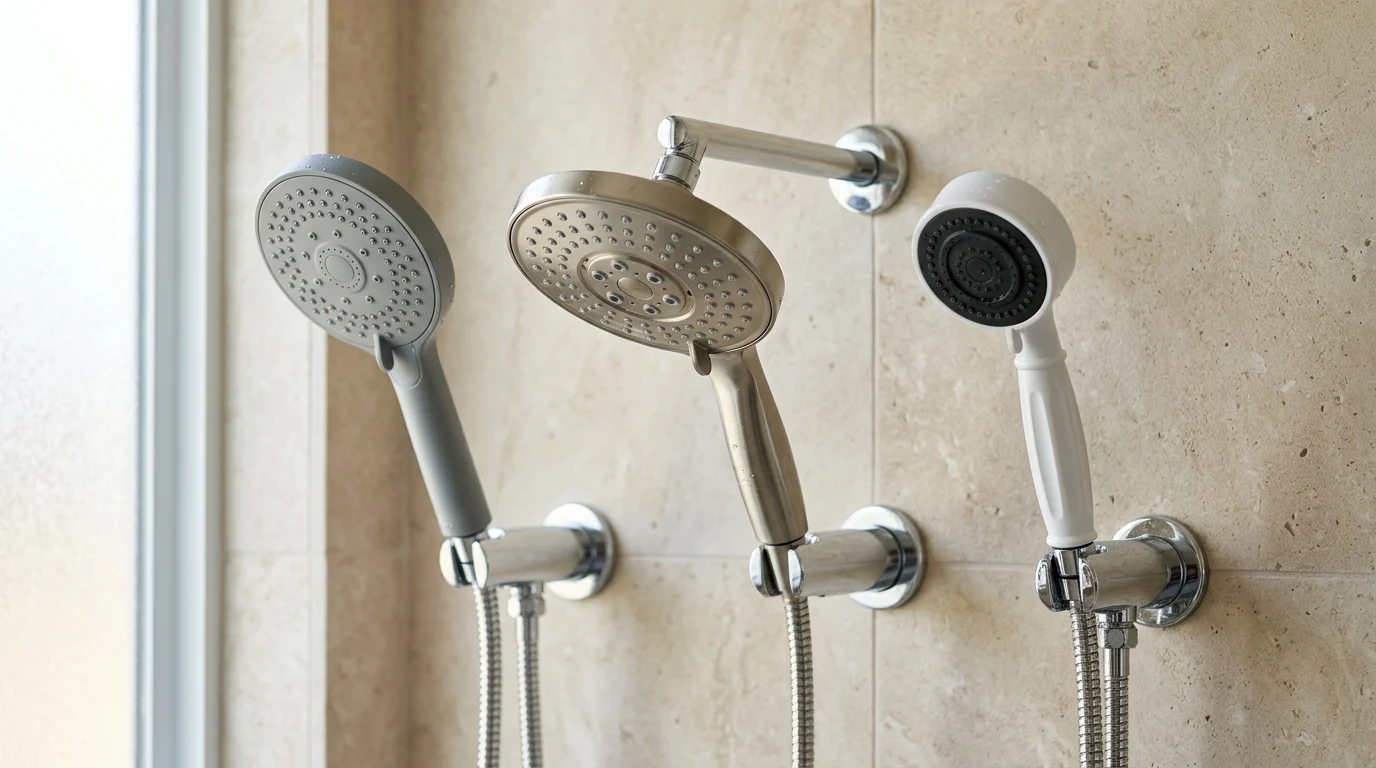
Modern bathroom buyers want more than a basic spray fixture—they expect comfort, water efficiency, stylish finishes, and reliable value at scale. That is why Abs Shower Heads have become a practical choice for retailers, distributors, designers, and OEM bathroom brands. Acrylonitrile Butadiene Styrene enables lightweight construction, precise spray engineering, fast injection-molded production, and attractive surface finishes without the cost burden of solid metal. For manufacturers and procurement teams, the material also supports predictable unit economics, scalable output, and flexible product positioning across entry-level, mid-tier, and design-led collections. This article explores the commercial, functional, and aesthetic reasons ABS continues to shape modern shower product development.
Why ABS Shower Heads Are a Strategic Choice
Acrylonitrile Butadiene Styrene (ABS) has fundamentally shifted the manufacturing economics of sanitary ware. For distributors and project procurement managers, integrating ABS shower heads into a product portfolio balances manufacturing costs with consumer demands for aesthetic versatility and high performance.
Market Positioning for ABS Shower Heads
In the global plumbing fixtures market, ABS shower heads occupy a highly flexible strategic tier. While traditionally categorized as entry-level to mid-market products, advancements in multi-layer electroplating and physical vapor deposition (PVD) allow ABS fixtures to compete in premium segments. These finishing technologies enable the polymer to flawlessly mimic brushed nickel, matte black, or polished chrome.
From a materials engineering perspective, ABS offers superior dimensional stability and impact resistance compared to standard PVC, making it highly suitable for fluctuating water temperatures. This allows brands to position these products as durable, rust-proof alternatives to traditional metals in residential and commercial bathroom collections.
| Material | Production Cost | Shipping Weight Per Unit | Corrosion Resistance | Thermal Insulation |
|---|---|---|---|---|
| ABS Plastic | Low | Low (~0.2–0.4 kg) | Excellent (Rust-proof) | High (Safe to touch) |
| Solid Brass | High | High (~1.0–1.5 kg) | High (Requires coating) | Low (Conducts heat) |
| Stainless Steel | Medium | Medium (~0.6–0.9 kg) | Very High | Low |
Key Commercial Assumptions
Procurement strategies for modern bathroom collections rely on several core commercial assumptions regarding ABS shower heads:
- Freight and Logistics Optimization: The lightweight nature of ABS polymers drastically reduces international shipping costs. When calculating container yields, buyers can load significantly more ABS units per TEU (Twenty-foot Equivalent Unit) than brass equivalents, maximizing freight efficiency and lowering the landed cost per unit.
- Tooling and Prototyping Agility: Injection molding ABS allows for rapid SKU expansion. Manufacturers can quickly iterate complex internal geometries—such as advanced water-saving aerators, self-cleaning silicone nozzles, or multi-function spray channels—without the prohibitive CNC machining costs associated with metal fabrication.
- Regulatory Compliance: High-quality ABS formulations are inherently lead-free. This characteristic streamlines compliance with stringent potable water regulations, such as the US Safe Drinking Water Act and European CE standards for sanitary tapware, reducing supply chain friction.
By leveraging these structural and economic advantages, wholesale buyers can achieve higher profit margins while maintaining the rigorous quality and safety standards required for large-scale real estate developments.
Material, Construction, and Performance

The fundamental appeal of ABS in plumbing and sanitary applications stems from its unique polymer chemistry. ABS is a terpolymer made by polymerizing styrene and acrylonitrile in the presence of polybutadiene. This specific matrix provides a high strength-to-weight ratio and excellent dimensional stability. Furthermore, it creates a surface profile that is highly receptive to metallic plating.
ABS Resin Properties and Plating Layers
To achieve a premium metallic appearance, raw ABS components undergo Electroplating on Plastics (EPP). This involves etching the plastic surface with chromic acid to create microscopic cavities, followed by the deposition of a palladium catalyst, and then electroless copper or nickel to make the part conductive. Once conductive, standard electroplating layers are applied.
For a shower head to withstand the highly humid and corrosive environment of a bathroom, stringent plating thickness specifications must be maintained. Substandard plating leads to blistering and peeling within months of use. This is often exacerbated by the coefficient of thermal expansion (CTE) mismatch between the ABS substrate and the rigid metal plating layers, which can stress the bond during temperature fluctuations. Additionally, prolonged exposure to UV light can degrade exposed ABS over time, making comprehensive plating coverage essential.
The table below outlines representative estimates for plating thickness, which vary by supplier but generally align with standards like ASTM B604 or EN 248:
| Plating Layer | Typical Industry Range (Microns) | Primary Function |
|---|---|---|
| Acid Copper | 15.0 - 20.0 | Leveling, thermal expansion buffer |
| Semi-Bright Nickel | 8.0 - 12.0 | Base corrosion resistance |
| Bright Nickel | 4.0 - 6.0 | Mirror finish foundation |
| Chrome | 0.2 - 0.3 | Surface hardness, tarnish resistance |
High-quality ABS shower heads are engineered to pass rigorous Acid Salt Spray (ASS) or Neutral Salt Spray (NSS) tests, ensuring the plating matrix remains intact even under aggressive environmental conditions. However, it is important to note a field-performance caveat: standardized salt-spray tests do not fully predict adhesion loss from daily handling. Over multi-year use, plated ABS can experience edge-wear and physical abrasion from aggressive cleaning and frequent adjustments, which procurement teams must factor into warranty models.
Durability Limits and Performance Factors
While ABS is highly durable, it possesses specific thermal, mechanical, and chemical thresholds that dictate its application parameters.
Thermally, the heat deflection temperature (HDT) of standard plumbing-grade ABS typically hovers around 95°C to 105°C. Given that residential hot water systems are usually governed by thermostatic mixing valves capped well below this range, ABS provides a robust thermal safety margin for continuous daily use.
Mechanically, ABS shower assemblies must withstand significant hydrostatic pressure. Industry-standard burst pressure testing requires the shower head to maintain structural integrity at sustained high pressures. The primary point of failure in poorly engineered ABS shower heads is often the welded seams connecting the faceplate to the main rear housing. Premium manufacturers mitigate this by utilizing advanced ultrasonic welding. This process fuses the ABS components at a molecular level, virtually eliminating seam leaks and significantly improving structural integrity.
Despite these strengths, ABS has specific durability caveats that must be managed. The plastic is vulnerable to strong chemical cleaners; prolonged exposure to harsh solvents or abrasive bathroom chemicals can degrade the protective plating and the underlying polymer. Furthermore, while ABS is resilient, the plastic fixture itself is more fragile upon severe impact than metal and can crack if dropped heavily against a hard surface.
ABS vs Metal Shower Heads
The debate between utilizing ABS versus traditional metals like brass or 304/316 stainless steel is a central consideration in plumbing fixture design. Solid brass has historically been the gold standard for luxury fixtures due to its heft and durability. However, ABS has successfully challenged metal in the shower head category by offering superior functional characteristics in specific use cases. It is also worth noting that many retail fixtures marketed broadly as "metal" are actually die-cast zinc alloys or plated composites. This reality narrows the real-world performance gap between ABS and solid brass or stainless steel.
Weight, Corrosion, and Cost Comparison
A comparative analysis of ABS and metal options reveals stark differences in logistics, unit economics, and chemical resistance. ABS weighs significantly less than an equivalent brass fixture. This reduced weight drastically lowers international freight costs and simplifies installation, requiring less robust mounting hardware behind the wall.
The following table provides representative estimates that vary by specific supplier and design, separating distinct metal categories to clarify volume economics:
| Material | Estimated Unit Weight | Raw Material Cost Base | Corrosion Resistance (Internal) |
|---|---|---|---|
| ABS Plastic | 150g - 250g | Low | Excellent (No scaling/rust) |
| Die-Cast Zinc Alloy | 400g - 700g | Low to Medium | Fair (Prone to pitting if unplated internally) |
| Solid Brass | 800g - 1200g | High | Good (Susceptible to dezincification) |
| 304 Stainless Steel | 600g - 900g | Medium | Excellent (Requires passivation) |
Furthermore, unlike brass, which can suffer from dezincification in aggressive water conditions, ABS is highly resistant to hard water minerals. This prevents internal scaling and extends the functional life of the spray nozzles.
Where ABS Outperforms Metal Options
ABS significantly outperforms metal in areas of user safety, thermal insulation, and design flexibility. Because ABS is a poor conductor of heat, the exterior of an ABS shower head remains cool to the touch regardless of the internal water temperature. This eliminates the scalding hazards associated with users adjusting the angle of solid brass or stainless steel fixtures during high-temperature operation.
Safety in the event of an accidental drop presents a distinct advantage for ABS. As noted in the durability caveats, while the ABS fixture itself may crack upon severe impact, its low mass rarely causes collateral damage. Conversely, a heavy brass shower head dropped from a height can easily crack an acrylic shower base or chip ceramic floor tiles, leading to costly property damage claims in hospitality environments.
Finally, the injection molding process allows for the creation of highly intricate internal water channels and integrated air-induction systems (which mix air with water to increase perceived pressure). Manufacturing such intricate internal channels in metal—whether through die-casting, forging, or machining—is often technologically challenging or economically unviable. This gives ABS a distinct advantage in executing advanced spray engine designs.
Sourcing and Compliance Requirements
Procuring ABS fixtures from global supply chains requires rigorous vendor qualification and a deep understanding of international plumbing codes. Buyers must verify both the manufacturing capabilities of the injection molding facility and the product's adherence to regional water-efficiency mandates.
Supplier and Mold Quality Checks
When auditing an ABS shower head supplier, the primary focus should be on mold maintenance and defect rate management. A standard hardened steel mold for ABS injection has a lifecycle expectancy of hundreds of thousands of shots before degradation occurs. As molds age, buyers will notice an increase in "flash" (excess plastic at the parting lines) and dimensional inaccuracies. Quality control protocols should strictly mandate a low defect rate.
Secondary inspections must focus on the plating line. Buyers should demand cross-hatch adhesion testing and thermal cycling tests to ensure the electroplated layers will not delaminate from the ABS substrate over time. Using virgin ABS resin rather than recycled regrind is critical; regrind introduces impurities that cause microscopic surface pitting, which inevitably leads to plating blisters and long-term degradation.
Regional Standards and Water-Efficiency Rules
Compliance with regional flow rate and material safety standards is non-negotiable for market entry. In the United States, federal standards mandate a maximum flow rate of 2.5 Gallons Per Minute (GPM). However, stricter state-level regulations (such as in California) restrict flow rates further, and the EPA's WaterSense program offers a voluntary certification for fixtures flowing at 2.0 GPM or less. ABS shower heads must be engineered with precise flow restrictors—often integrating pressure-compensating O-rings—to maintain consistent spray velocity at these lower volumes, aligning with consumer desires for eco-friendly performance.
In Europe, products must align with EN 1112 standards, which govern the dimensional, leak-tightness, and acoustic characteristics of shower heads. Furthermore, any ABS components or internal elastomer seals (such as silicone nozzles) that come into contact with potable water may require regional certifications (like WRAS in the UK or ACS in France), proving they do not leach harmful chemicals or promote bacterial growth within the waterway.
How to Decide if ABS Shower Heads Fit
Determining whether ABS shower heads are the right fit for a specific product portfolio requires a strategic evaluation of the brand's target demographic, margin requirements, and overall lifecycle costs. While ABS is universally applicable, the decision to invest in custom tooling versus purchasing off-the-shelf white-label designs dictates the commercial approach.
Product Selection Steps
The first step in product selection is defining the target retail environment and consumer expectations. For mass-market retail where competitive pricing is paramount, ABS is often the only viable material to maintain healthy gross margins. Buyers must then evaluate the required aesthetic finishes. While chrome is standard, modern bathroom collections frequently demand matte black, brushed gold, or oil-rubbed bronze to match broader interior design trends.
Achieving these finishes
Key Takeaways
- Choose ABS shower heads when you need a scalable balance of affordability, lightweight handling, finish variety, and dependable daily performance.
- Plan ABS sourcing around injection mold tooling, MOQs, and batch-based lead times for molding, plating, assembly, and quality inspection.
- Use ABS for products requiring complex internal waterways, multi-function spray modes, pressure-boosting designs, or water-saving components.
- Position ABS shower heads across entry-level and mid-tier collections, and consider premium finishes such as matte black or brushed gold for higher-value retail lines.
- Partner with an experienced source factory when developing OEM, ODM, or OBM shower products to improve consistency, customization, and production efficiency.
Frequently Asked Questions
What makes ABS shower heads suitable for modern bathroom collections?
ABS is lightweight, cost-effective, and easy to mold into ergonomic shapes, multi-function spray engines, and trendy finishes such as matte black, chrome, and brushed gold.
Are ABS shower heads durable enough for daily use?
Yes. Quality ABS shower heads are designed for daily residential use, offering good impact resistance, stable structure, and reliable performance when supported by proper plating, assembly, and quality control.
Why do manufacturers prefer ABS for high-volume shower head production?
ABS works well with injection molding, allowing fast production cycles, repeatable quality, complex internal waterways, and scalable output for retailers, distributors, OEM, ODM, and OBM bathroom product programs.
Can ABS shower heads support water-saving and high-pressure functions?
Yes. ABS can be molded into precise internal channels that support water-saving restrictors, pressure-boosting structures, filtration components, and multiple spray modes.
Do ABS shower heads look less premium than metal models?
Not necessarily. Advanced electroplating and PVD-style finishes can give ABS shower heads a premium appearance, although some luxury buyers may still associate heavier metal fixtures with higher value.