


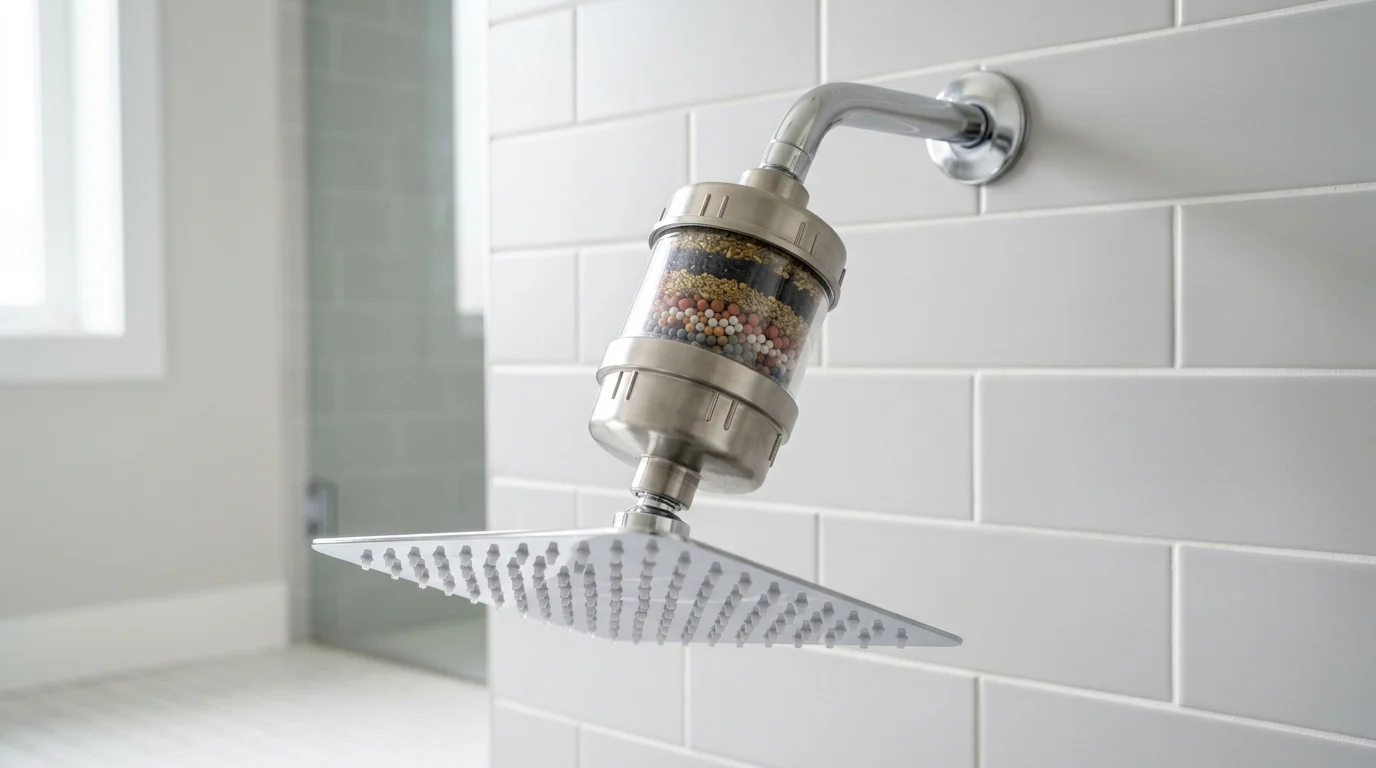
Filtered Shower Heads have moved from niche wellness accessory to repeat-revenue product category, and the 15-stage format is leading that shift. Consumers are paying closer attention to chlorine, odors, sediment, and the everyday effects of water quality on skin and hair, while retailers are discovering a stronger business case: replaceable cartridges turn a one-time fixture sale into a predictable replenishment cycle. For distributors, hardware brands, and OEM/ODM buyers, the opportunity is not just in selling a higher-value shower head, but in building long-term customer retention through performance, cartridge availability, and credible filtration claims.
Market Demand for 15-Stage Filter Shower Heads
The point-of-use water filtration market has experienced a significant structural shift, moving away from simple sediment screens toward comprehensive multi-stage purification systems. Among these, 15-stage filter shower heads have emerged as a dominant SKU for plumbing distributors, hardware retailers, and direct-to-consumer lifestyle brands. This transition is heavily driven by consumer awareness regarding municipal water quality and its direct physiological impacts.
For retailers and wholesalers, the appeal of these units extends far beyond the initial sale. Unlike traditional shower fixtures that represent a one-time purchase with a lifecycle of five to ten years, filtered shower heads introduce a razor-and-blade commercial model to the bathroom hardware category, fundamentally altering customer lifetime value (CLTV).
Consumer Pain Points Driving Adoption
The primary catalyst for multi-stage filtration adoption is the high prevalence of chemical disinfectants and the compounding effects of hard water in municipal supplies. In North America alone, approximately 85% of households operate on hard water systems containing elevated levels of calcium and magnesium. While filtration media cannot remove these hard water ions, they effectively neutralize municipal chlorine—frequently maintained at residual levels of 1.0 to 2.0 parts per million (ppm). When chlorine is left untreated, consumers experience tangible pain points, including dermal irritation, exacerbated eczema, and accelerated degradation of hair cuticles.
By marketing 15-stage systems as a targeted solution to these dermatological and cosmetic issues caused by chemical disinfectants, brands effectively reposition a standard plumbing fixture as an essential health and wellness device, unlocking higher willingness-to-pay and accelerating market penetration.
Signals of Repeat Purchase Potential
Standard multi-stage cartridges are engineered with a volumetric capacity of 10,000 to 12,000 gallons. Assuming a typical shower-only volume of 40 to 60 gallons per day—roughly equivalent to two 10-minute showers utilizing standard 2.5 Gallons Per Minute (GPM) fixtures—this capacity necessitates a cartridge replacement every four to six months.
Distributors tracking cohort data note that consumers who purchase a high-quality 15-stage unit exhibit a strong likelihood of returning for replacement cartridges within the first year. Monitoring this predictable, volume-driven replenishment cycle allows retailers to forecast inventory needs accurately and build reliable purchasing habits that traditional static shower heads cannot generate.
Short-Term Trends vs Durable Demand
While aesthetic bathroom upgrades—such as matte black finishes or rainfall form factors—are subject to volatile interior design trends, the demand for water filtration demonstrates long-term durability. Health-centric home upgrades represent a structural shift in consumer behavior rather than a transient fad.
Market analysts project the point-of-use water treatment market to sustain a Compound Annual Growth Rate (CAGR) exceeding 7% over the next five years. The "15-stage" configuration, in particular, has stabilized as a recognizable wholesale category convention. While it serves as an industry standard for comprehensive media variety and universally compatible housing designs, savvy buyers understand that functional efficacy ultimately depends on media composition rather than a literal engineering metric of stage counts.
Product Definition and Performance Criteria
The nomenclature of a '15-stage' filter refers to the distinct layers of filtration media packed into the cartridge housing. Rather than relying on a single mechanism, these systems utilize a combination of mechanical filtration, chemical adsorption, and oxidation-reduction (redox) reactions to treat water at high flow rates and elevated temperatures.
Understanding the specific performance criteria of these stages is critical for procurement teams to distinguish between scientifically sound filtration and mere marketing hyperbole.
Common 15-Stage Filtration Media
A standard 15-stage cartridge integrates multiple active and passive layers. High-density stainless steel mesh and Polypropylene (PP) cotton serve as mechanical barriers at the entry and exit points to trap macro-particulates. However, buyers should be aware of "stage inflation" in marketing; several of these 15 stages are often redundant mechanical meshes and PP cotton layers. To combat this, procurement teams are advised to demand itemized stage-by-stage media breakdowns and precise volumetric ratios rather than relying on aggregate stage counts.
Additionally, buyers must account for microbial growth risks; activated carbon in warm, damp shower-filter environments can harbor bacteria if not properly integrated with bacteriostatic media. The core chemical and redox processes are handled by specialized media:
| Filtration Media | Primary Function | Ideal Operating Condition |
|---|---|---|
| KDF-55 (Kinetic Degradation Fluxion) | Reduces water-soluble heavy metals and chlorine via redox. | Highly effective in hot water (up to 212°F). |
| Calcium Sulfite | Rapidly adsorbs free chlorine. | Effective in both hot and cold environments. |
| Activated Carbon | Traps volatile organic compounds (VOCs) and odors. | Most effective at lower flow rates and cooler temps. |
| Ceramic/Maifan Balls | Mineralizes water and balances pH. | Passive dissolution over cartridge lifespan. |
| Vitamin C (Ascorbic Acid) | Neutralizes chloramines and residual chlorine. | Depletes steadily based on water volume. |
While the media listed above are industry standards, buyers must recognize that at standard 2.5 GPM flow rates, water-media contact time is extremely brief. Consequently, claims regarding heavy metal reduction via KDF-55 or pH balancing via ceramic balls are often marginal in practice and rarely certified to potable-water standards.
Evaluating Chlorine Reduction Claims
The most critical performance metric for any shower filter is its ability to reduce Free Available Chlorine (FAC). In the United States, the benchmark standard is NSF/ANSI 177, which specifically evaluates shower filtration systems for aesthetic effects. To achieve compliance, a system must demonstrate a minimum of 50% reduction in FAC over its stated lifespan. It is crucial for procurement buyers to understand that this certification covers aesthetic free-chlorine reduction only; it does not validate heavy metal reduction, VOC removal, or broader health and safety claims.
Premium 15-stage models utilizing high-grade KDF-55 and calcium sulfite frequently exceed this baseline, achieving 90% to 99% initial chlorine reduction. However, buyers must require suppliers to provide verifiable laboratory testing curves, as performance inherently degrades as the media approaches its 12,000-gallon threshold.
Technical Factors Affecting User Experience
Beyond chemical reduction, the physical design of the 15-stage housing must maintain strict hydraulic parameters to ensure a positive user experience. The US federal mandate restricts shower head flow rates to a maximum of 2.5 GPM at 80 PSI, while stricter regional regulations, such as California's Title 20, cap flow rates at 1.8 GPM.
A critical technical constraint in these environments is water-media contact time. At standard shower flow rates, water passes through a compact housing in fractions of a second. Consequently, simply adding more stages does not automatically equate to better filtration; efficacy relies on highly reactive media rather than the sheer number of layers.
Packing 15 distinct layers into a compact cartridge also introduces the risk of severe pressure drop (head loss). Premium manufacturers mitigate this by optimizing the granular size of the media and utilizing high-porosity flow-through designs. A well-engineered unit typically aims to induce a pressure drop of around 3 to 5 PSI against a typical residential water pressure baseline of 40 to 80 PSI. This ensures the end-user does not experience a noticeable reduction in shower flow, balancing filtration efficacy with consumer comfort.
15-Stage Models vs Basic Filtered Shower Heads
The wholesale market offers a spectrum of shower filtration devices, ranging from rudimentary single-stage attachments to advanced 15-stage configurations. For retail buyers and private labelers, selecting the correct tier of product dictates both the target demographic and the overall profitability of the SKU.
While basic filters present a lower barrier to entry, 15-stage models command a premium positioning that aligns with modern consumer expectations for comprehensive water treatment.
Key Feature and Performance Differences
Basic filtered shower heads typically rely on a single block of activated carbon or a simple PP cotton core. While these are sufficient for capturing large sediment, rust, and superficial odors, their efficacy drops precipitously in hot water environments, as activated carbon struggles to retain adsorbed VOCs and chlorine at elevated temperatures.
Conversely, 15-stage models are explicitly engineered for the thermal dynamics of a shower. The inclusion of KDF-55 ensures that chlorine reduction remains highly efficient even at temperatures exceeding 100°F (38°C). Furthermore, the multi-stage approach addresses a broader spectrum of contaminants, which basic filters entirely bypass.
Replacement Cartridge Considerations
The architecture of the replacement cartridge is a critical differentiator. Basic filters often utilize proprietary cartridge shapes, locking consumers into a specific brand ecosystem but also increasing the risk of stockouts and consumer frustration if the brand discontinues the line.
Most 15-stage systems have gravitated toward standardized cylindrical cartridge designs. While exact dimensions vary by OEM and are not established industry norms, this general standardization allows retailers to source replacement cartridges from multiple Tier 1 manufacturers without altering the injection molds for the primary shower head housing, ensuring supply chain resilience.
Cost, Quality, and Margin Trade-Offs
The decision to stock 15-stage units involves distinct margin calculations. The Bill of Materials (BOM) for a basic filter is heavily weighted toward inexpensive plastics, whereas 15-stage units require costly raw materials like high-purity copper-zinc alloys (KDF).
| Metric | Basic 1-to-3 Stage Filter | Premium 15-Stage Filter |
|---|---|---|
| Relative Material Cost Index | 1x (Baseline Commodity) | 3x – 5x (Premium Materials) |
| Target Retail Price | Entry-Level (Lower Margin) | Premium Tier (40–60% Margin) |
| Cartridge Replacement Cost | Low ($) | High ($$$) |
| Defect / Leak Risk | Low (Simple construction) | Moderate (Requires precise O-ring seals) |
Despite the higher initial procurement cost, the 15-stage model yields significantly higher absolute gross profit dollars per unit, justifying the upfront investment for procurement teams focused on long-term category growth.
When modeling wholesale profitability, buyers must also account for warranty and defect costs. While basic filters have low failure rates, the moderate leak risk of 15-stage units—often due to O-ring displacement or housing micro-fractures—can increase customer service burdens. Factoring in standard one-year warranty provisions and a projected 1% to 2% return rate is essential to accurately calculate net margins.
Wholesale Sourcing and Procurement
Procuring multi-stage shower filters requires rigorous supplier vetting. Because these devices handle pressurized, heated water and make direct contact with the human body, failures in material quality or assembly can lead to catastrophic plumbing leaks or the leaching of toxic compounds.
Establishing a resilient supply chain requires looking past superficial unit costs and evaluating a factory's engineering tolerances, material sourcing, and compliance documentation.
Supplier Qualification Checklist
When qualifying an original equipment manufacturer (OEM), buyers must prioritize factories with ISO 9001 certification and a proven track record in pressurized water fixtures. The primary housing is typically injection-molded from Acrylonitrile Butadiene Styrene (ABS) or brass. For ABS models, the factory must utilize virgin, non-regrind ABS rather than recycled plastics to prevent micro-fractures under pressure. Food-grade certification is irrelevant for shower housings and may confuse compliance teams evaluating material safety under REACH and RoHS.
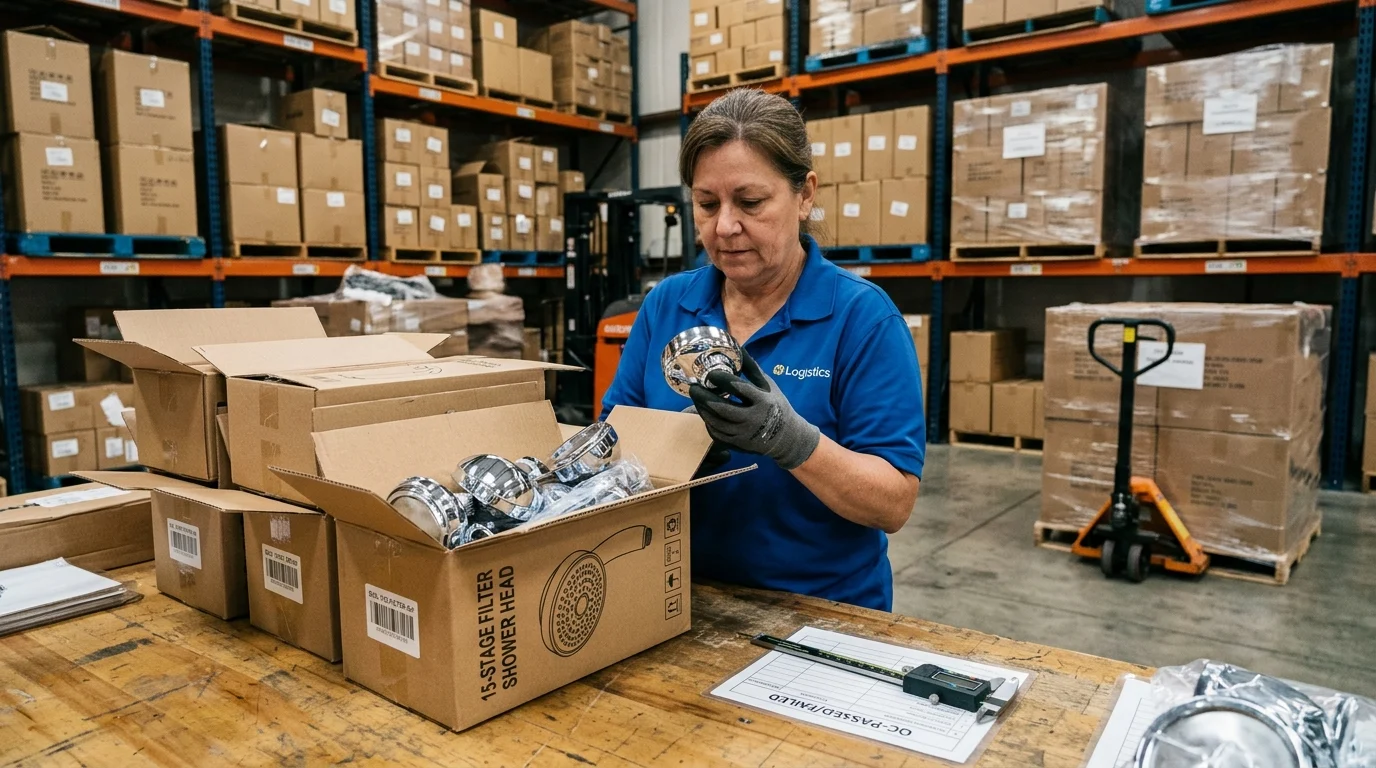
A robust quality control protocol should mandate 100% pneumatic or hydrostatic pressure testing at the end of the assembly line. Buyers should establish a strict Acceptable Quality Limit (AQL) with a defect rate tolerance of less than 1.5% for critical failures such as thread stripping, O-ring displacement, or housing leaks.
Compliance and Documentation Requirements
Regulatory compliance is a frequent stumbling block in international procurement. Buyers must ensure that all plastic components comply with RoHS and REACH directives, guaranteeing the absence of hazardous phthalates and heavy metals in the housing itself.
Regarding filtration efficacy, buyers must be vigilant against deceptive marketing. Factories often claim 'NSF Certified,' but this frequently means they purchased a single batch of NSF-certified KDF media, while the assembled unit itself remains uncertified. Importers claiming specific reduction metrics in strict jurisdictions must independently test the finalized assemblies through accredited third-party laboratories to validate claims and avoid regulatory penalties. Furthermore, brands positioning these units as health and wellness devices must navigate Federal Trade Commission (FTC) or equivalent regulatory scrutiny; strict compliance requires avoiding unsubstantiated medical or dermatological claims in consumer advertising.
Packaging, Carton, and Logistics Planning
Efficient logistics planning directly impacts landed costs.
Merchandising and Long-Term Growth
Effective merchandising of 15-Stage Filter Shower Heads relies on transitioning buyers from a single hardware purchase to a recurring revenue stream. Because the internal filtration media—comprising KDF-55, calcium sulfite, and activated carbon—degrades over time, retailers can design merchandising strategies that capitalize on predictable replacement cycles.
Tactics That Increase Repeat Orders
The primary driver for recurring revenue is the consumable filter cartridge. Retailers maximize customer lifetime value (CLV) by implementing automated subscription models. According to municipal water quality reports aligned with U.S. Environmental Protection Agency (EPA) standards, continuous exposure to chlorine and mineral scaling dictates that multi-stage filters require replacement every four to six months to maintain efficacy. By offering a subscription program at the point of sale, merchants lock in hardware buyers for long-term cartridge fulfillment. Bundling an extra cartridge with the initial shower head purchase also accelerates user adoption of the replacement habit and demonstrates long-term value.
Channel-Specific Offer Segmentation
Merchandising strategies for 15-stage filter shower heads must adapt to the target sales channel to sustain long-term growth:
- Direct-to-Consumer (DTC): Segment offers geographically. Target consumers in regions with high water hardness using localized marketing focused on dermatological benefits, and offer tiered discounts on multi-pack replacement cartridges.
- B2B and Commercial: For hospitality, property management, and fitness centers, segment offers into annual bulk-fulfillment contracts. Commercial buyers prioritize predictable maintenance schedules and require wholesale pricing on master cartons of replacement filters rather than individual retail packaging.
Buyer Decision Framework
Understanding how commercial and retail buyers evaluate these filtration systems allows merchants to align their inventory and marketing. The following framework outlines the primary decision criteria driving long-term adoption:
| Decision Criteria | Buyer Priority | Merchandising Action |
|---|---|---|
| Filtration Efficacy | Proven reduction of chlorine, heavy metals, and odors. | Highlight KDF-55 and industry-standard filtration media in technical specifications. |
| Total Cost of Ownership | Long-term expense of recurring replacement cartridges. | Offer transparent annual maintenance costs and automated subscription discounts. |
| Installation & Compatibility | Universal fit with existing plumbing fixtures. | Emphasize tool-free installation and standard G1/2-inch thread compatibility. |
By aligning product lifecycle realities with structured merchandising channels, retailers transform a standard bathroom fixture into a highly profitable, consumable asset that guarantees sustained order volume.
Key Takeaways
- Position 15-stage filter shower heads as wellness-focused upgrades because customers are actively seeking solutions for chlorine exposure, dry skin, and hair concerns.
- Plan cartridge inventory around a four-to-six-month replacement cycle, based on typical capacities of 10,000 to 12,000 gallons and normal household shower use.
- Educate buyers that most Shower Filters reduce chlorine and impurities but do not fully remove hard water minerals such as calcium and magnesium.
- Evaluate products by filtration media, flow rate, cartridge capacity, sealing quality, and manufacturing consistency instead of relying only on the number of stages.
- Use replacement cartridges to improve customer lifetime value, since filtered shower heads create recurring purchase behavior unlike traditional long-life shower fixtures.
- For wholesale or private-label programs, partner with an experienced manufacturer that can support filtration-focused models, customization, and stable global supply.
Frequently Asked Questions
Why do 15-stage filter shower heads encourage repeat orders?
They use replaceable cartridges with a typical capacity of about 10,000 to 12,000 gallons. For many households, that means replacement every four to six months, creating a predictable replenishment cycle for retailers and distributors.
Do 15-stage shower filters remove hard water minerals?
Most shower filters do not remove calcium and magnesium ions that cause hard water. Their main value is reducing chlorine, odors, sediment, and certain impurities that can affect skin, hair, and shower comfort.
What customer problems drive demand for filtered shower heads?
Common drivers include chlorine exposure, dry skin, irritated scalp, hair dullness, unpleasant odors, and concerns about municipal water quality. These pain points help position filtered shower heads as wellness-oriented bathroom upgrades.
How often should filter cartridges be replaced?
Replacement depends on water quality and usage, but many 15-stage cartridges are designed for roughly four to six months of normal household use, based on shower volume and cartridge capacity.
Is the number of stages the most important performance factor?
Not by itself. The media composition, cartridge capacity, flow performance, sealing quality, and manufacturing consistency matter more than the stage count alone.