


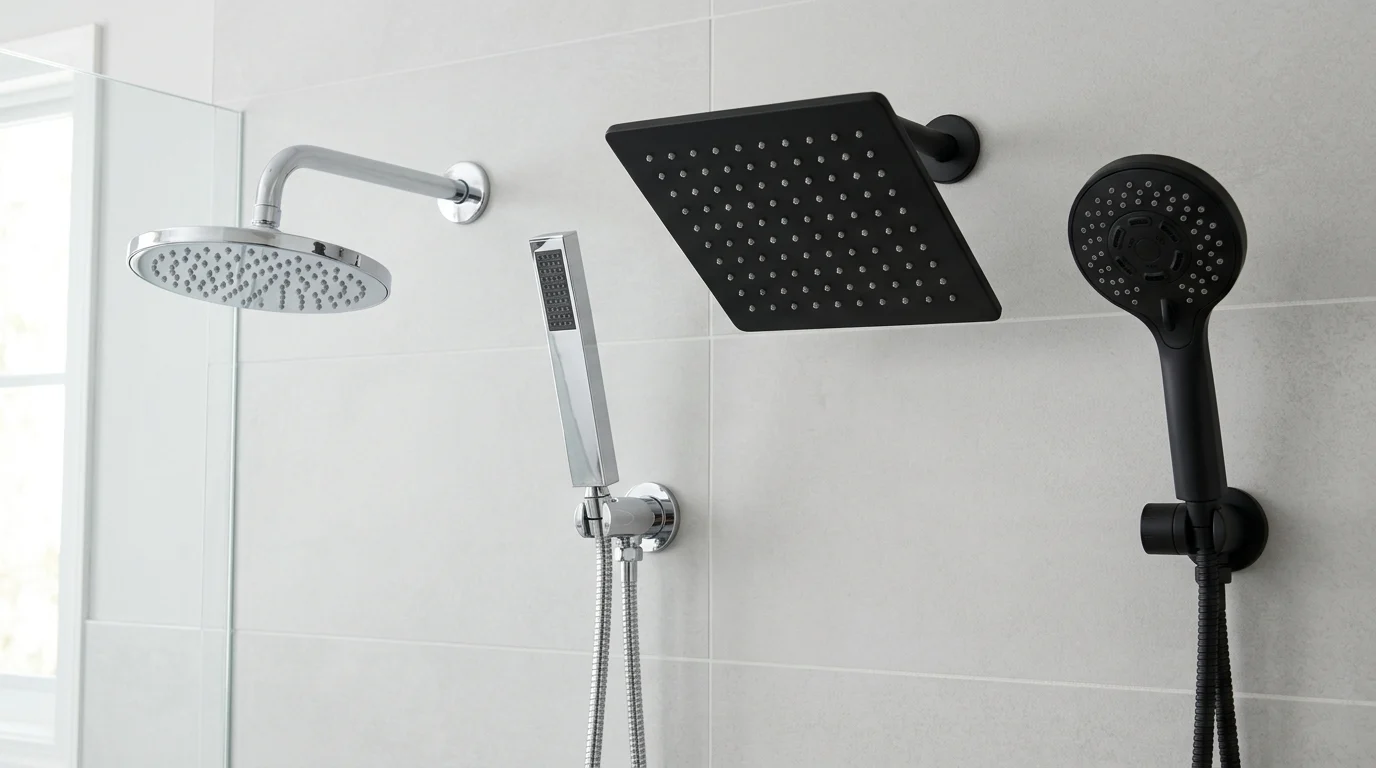
In plumbing fixtures, a Shower Head is more than a replacement part—it is a fast-moving DIY upgrade that can influence category margin, shelf productivity, and customer satisfaction. Retail buyers are under pressure to choose designs that look premium, install easily, and deliver measurable value through water saving, high pressure, filtration, or multi-function performance. With fixture margins often benchmarked around35% to 50%, assortment decisions must balance visual appeal with low return risk and dependable manufacturing. This article examines the design features, commercial signals, and product segmentation strategies that help shower heads win attention from home improvement buyers and perform consistently across retail channels.
Most Attractive Shower Head Designs for Home Improvement
In the highly competitive plumbing fixtures category, home improvement retail buyers must continuously optimize shelf space to maximize gross margin return on investment (GMROI). Shower head designs represent a high-velocity segment within this category, driven by both necessary replacements and discretionary bathroom upgrades—particularly during the peak spring remodeling season. Because shower heads require minimal plumbing expertise to install, they are a primary gateway product for DIY consumers.
To capture market share, category managers must curate assortments that balance aesthetic appeal with functional reliability, carefully weighing the margin benefits of private-label programs against the consumer draw of established national brands. Standard retail expectations demand gross margins generally ranging from 35% to 50% for plumbing fixtures, though these are illustrative industry norms subject to supplier negotiation, volume, and channel differences. Achieving these margins requires selecting shower head designs that not only catch the consumer's eye on the shelf or digital storefront but also deliver on performance promises to minimize costly reverse logistics.
How Retail Buyers Evaluate Shower Head Designs
Retail buyers evaluate shower head designs through a matrix of visual differentiation, perceived value, and installation simplicity. A primary metric for DIY viability is the tool-free installation threshold. Industry trends suggest a vast majority of consumers prefer shower heads that can be hand-tightened and installed in under 15 minutes without specialized wrenches or professional assistance.
Beyond installation, buyers scrutinize the tactile quality of the product. Even in value-tier designs manufactured from Acrylonitrile Butadiene Styrene (ABS) plastic, the electroplating or physical vapor deposition (PVD) finish must mimic the visual heft of solid brass or stainless steel. Packaging also plays a role in the initial evaluation, as clear visibility of the nozzles and prominent display of certifications can significantly reduce consumer purchase hesitation.
Commercial Signals That Indicate Strong Sell-Through
The ultimate measure of a successful shower head design is its velocity off the shelf, often referred to as sell-through rate. High sell-through is typically signaled by designs that integrate easily recognizable upgrades, such as magnetic docking stations for handheld units or push-button spray diverters, which consumers perceive as premium features worth an upsell.
Conversely, post-purchase metrics are equally vital. Retail buyers monitor return rates meticulously. For plumbing fixtures, consumer returns—which encompass buyer's remorse, aesthetic dissatisfaction, and installation errors—must be kept to an absolute minimum. It is crucial to distinguish between broad consumer returns and actual factory defect rates: low factory defect rates do not automatically yield low consumer returns. Poor instructions, missing accessories, or misleading packaging photography can drive high consumer return rates even on mechanically sound units. Products suffering from elevated returns often exhibit structural design flaws, such as leaking pivot joints, easily clogged silicone nozzles, or peeling finishes. In contrast, factory defect rates strictly track manufacturing flaws and hardware failures. A design that maintains high sell-through while keeping this factory defect rate exceptionally low provides a strong commercial signal for expanded retail distribution.
How to Segment Shower Head Designs

Effective category management requires segmenting shower head designs into distinct sub-categories that address specific consumer use cases. By mapping out core types and key features, retail buyers can ensure there are no critical gaps in their assortment, preventing lost sales to specialty plumbing showrooms.
Core Types: Fixed, Handheld, Rain, and Combo
The retail assortment is generally divided into four primary architectures: fixed, handheld, rain, and dual combo systems. Fixed single-functIon Shower Heads remain the highest-volume staple, catering to budget-conscious consumers and institutional buyers.Handheld units have seen compounding growth due to their utility for families, elderly users, and pet owners. Rain shower heads, often commanding a notable price premium over standard fixed models, appeal to the remodeling demographic seeking a spa-like aesthetic.
Dual combo systems, which integrate a fixed rain head with a handheld wand via a diverter valve, currently represent one of the fastest-growing segments in big-box retail. These systems offer high perceived value, allowing consumers to achieve a luxury setup without altering behind-the-wall plumbing. Note that the estimated retail price bands below represent illustrative industry norms and are subject to channel differences.
| Shower Head Type | Typical Material | Estimated Retail Price Band (USD) | Primary Target Demographic |
|---|---|---|---|
| Fixed Single-Function | ABS / Zinc | $15 - $40 | Budget / Institutional |
| Handheld Multi-Function | ABS / Brass Hose | $35 - $85 | Families / Pet Owners |
| Rain Shower | Stainless Steel / Brass | $75 - $250 | Premium / Remodelers |
| Dual Combo Systems | Mixed Materials | $60 - $150 | Value-Add DIY Upgraders |
Key Features: Finish, Spray Pattern, Flow Rate, and Installation
Once core architectures are established, differentiation relies on key features. Finishes dictate the aesthetic lifespan of the product. While polished chrome remains the baseline—historically accounting for a significant plurality of standard retail volume—matte black and brushed gold have recently accelerated in the premium tiers, though these regional trend preferences may shift over time. Industrial standards require high-quality PVD finishes to withstand extensive neutral salt spray testing without degradation.
Spray patterns are another critical segmentation tool. While legacy models relied on standard wide-spray patterns, modern SKUs must offer multi-functionality. Designs featuring three to five distinct settings—such as pulsating massage, mist, and aerated rain—dominate the mid-market. Furthermore, the internal engine design must maintain water velocity even at restricted flow rates, ensuring the user experience is not compromised by regulatory compliance. Additional features, such as universal threading and pre-installed washers, further segment the market by catering directly to consumer demand for straightforward setups.
Best-Performing Designs by Price Tier and Channel
Aligning shower head designs with appropriate price tiers and retail channels is essential for maximizing profitability. A product over-engineered for the value tier will erode margins, while an under-engineered product in the premium tier will damage brand equity. Buyers must carefully calibrate the cost of goods sold (COGS) against target retail pricing while contrasting the distinct requirements of e-commerce versus brick-and-mortar channels.
Comparison of Water-Saving Shower Head Designs
Water conservation is no longer a niche feature; it is a baseline requirement heavily influenced by regional legislation in North America. Retailers must stock designs that comply with varying flow-rate maximums without sacrificing perceived pressure. Manufacturers achieve this through advanced aeration, which mixes air with water to create larger droplets, or through pressurized droplet technology.
Understanding the regulatory landscape helps buyers allocate the right water-saving designs to specific geographic channels. For instance, the EPA WaterSense program is a voluntary certification for products meeting a 2.0 Gallons Per Minute (GPM) standard, distinguishing it from the federal EPAct 1992 baseline of 2.5 GPM. Meanwhile, stricter state codes enforce mandatory legal caps, such as the California Energy Commission (CEC) 1.8 GPM rule.
| Flow Rate Specification | Regulatory Standard / Certification | Primary Retail Market | Spray Technology Focus |
|---|---|---|---|
| 2.5 GPM | US Federal Max (EPAct 1992) | Standard US (Excl. CA, CO, NY) | Standard Restrictor |
| 2.0 GPM | EPA WaterSense | National Eco-Conscious | Air-Injection / Aeration |
| 1.8 GPM | California Energy Commission (CEC) | California, New York, Colorado | Pressurized Droplet |
| 1.5 GPM | Ultra-High Efficiency | Green Building / LEED Projects | Atomization / Micro-Droplet |
Design Trade-Offs That Affect Margin and Shelf Productivity
To hit target price points, manufacturers and buyers must navigate specific design trade-offs. In the value tier ($15 to $30 retail), ABS plastic is heavily utilized. The trade-off is a lighter weight and lower perceived durability compared to metal, but it yields high shelf productivity and excellent margin profiles due to highly competitive unit costs. However, buyers must acknowledge that while PVD and multi-layer plating on ABS can mimic metal aesthetics, the plastic substrate fundamentally limits chip and peel resistance. This helps explain why value-tier designs may still drive aesthetic-dissatisfaction consumer returns, eroding the projected margin advantage.
In the premium tier ($100+ retail), solid brass components, ceramic disc diverters, and stainless steel hoses become mandatory. While these materials increase production costs significantly, they support higher retail pricing and lower long-term warranty claims. Retail buyers must balance these trade-offs by analyzing their specific customer base and channel format. For example, e-commerce assortments prioritize digital imagery appeal, ISTA-certified packaging to survive parcel networks, and streamlined returns logistics. Conversely, brick-and-mortar channels focus on maximizing physical shelf productivity; big-box home improvement centers typically dedicate a majority of shelf space to high-productivity ABS models, reserving the remainder for premium, mixed-material designs to capture high-ticket remodelers.
Specifications and Compliance Factors
Behind every visually appealing shower head design is a rigorous framework of technical specifications and regulatory compliance. For retail buyers, failing to vet a supplier's compliance standards can result in massive liabilities, including unsellable inventory, regulatory fines, and consumer safety hazards. Rigorous adherence to mechanical and material standards is non-negotiable.
Flow-Rate Standards, Materials, and Plating Durability
In North America, shower heads must comply with ASME A112.18.1/CSA B125.1 standards, which govern the plumbing supply fittings' structural integrity, burst pressure, and temperature resistance. Additionally, as noted, state-level mandates like the California Energy Commission (CEC) require flow rates to be legally capped at 1.8 GPM. Products failing to meet these mandatory standards cannot legally be sold or shipped to those jurisdictions, making flow-restrictor precision a critical manufacturing spec.
Material safety and durability are equally regulated. Plating durability is a frequent point of failure in low-cost designs. For chrome finishes, buyers should look for specifications detailing adequate multi-layer plating depths of nickel and chrome that meet established industry benchmarks. This ensures the fixture resists peeling and tarnishing in high-humidity bathroom environments. Furthermore, internal waterways must be constructed from non-toxic materials, ensuring compliance with low-lead regulations where applicable.
Packaging, Installation Accessories, and After-Sales Support
The physical product is only part of the retail equation; packaging and installation accessories heavily influence the bottom line. For e-commerce channels, shower heads must utilize e-commerce-ready protective packaging that passes ISTA 1A drop-test standards to prevent transit damage. For brick-and-mortar, tamper-evident clamshells or robust corrugated boxes with high-resolution graphics are required to reduce in-store shrink and drive impulse conversions.
To support a seamless consumer experience, the inclusion of physical accessories is paramount. Providing high-quality PTFE thread seal tape, rubber O-rings, and clear, multi-lingual instruction manuals drastically reduces consumer frustration. Retailers track consumer returns closely; providing robust after-sales support, including accessible warranty registration and replacement parts for easily lost components like filter screens, helps maintain factory defect rates and overall return metrics at manageable levels, ultimately protecting the retailer's margin.
How Retail Buyers Can Build a Stronger Assortment
Building a resilient and profitable shower head assortment requires a proactive approach to supplier relationship management and product curation. Retail buyers must look beyond catalog aesthetics to evaluate the operational capabilities of the manufacturers behind the designs. A strong assortment blends steady, high-volume staples with high-margin, trend-forward innovations.
Steps for Screening Suppliers, Samples, and Costs
The first step in screening suppliers is verifying quality management systems, typically demanding ISO 9001 certification and reviewing independent third-party lab testing reports (e.g., IAPMO, Intertek). Buyers must then negotiate sampling and production terms. Requesting pre-production samples allows buyers to test thread tolerances and diverter valve stiffness firsthand.
Cost structures and Minimum Order Quantities (MOQs) dictate supply chain agility. Standard MOQs for off-the-shelf ABS shower heads range from 500 to 1,000 units per finish, though these are illustrative figures subject to supplier negotiation and volume commitments. If a retailer wishes to develop a proprietary, private-label design to avoid direct price comparison, they must factor in custom injection molding tooling costs, which can represent a significant upfront capital expenditure depending on the complexity of the internal water engine and exterior housing. This tooling estimate alone understates the commercial risk; retail buyers must also carefully negotiate tooling ownership clauses, evaluate supplier intellectual property (IP) risks, and account for potential exit costs if production needs to be shifted to another factory.
Beyond the factory floor, buyers must assess broader supply chain
Key Takeaways
- Prioritize shower head designs that can be installed tool-free in under 15 minutes to meet DIY shopper expectations and reduce purchase hesitation.
- Target gross margin expectations of roughly 35% to 50% by balancing private-label opportunities, supplier negotiation, product quality, and channel positioning.
- Use visible upgrades such as magnetic docking, push-button diverters, multi-function sprays, filtration, and high-pressure performance to support stronger sell-through.
- Reduce consumer returns by providing accurate packaging images, complete accessories, clear instructions, leak-resistant joints, durable finishes, and clog-resistant silicone nozzles.
- Evaluate retail-ready shower heads by both sell-through rate and factory defect rate, because strong sales only matter if post-purchase issues remain low.
- Select finishes on ABS, stainless steel, or brass-look products that deliver premium visual quality, since tactile and aesthetic perception strongly influence shelf conversion.
Frequently Asked Questions
What shower head designs are most attractive to home improvement retail buyers?
Retail buyers usually favor designs that combine strong shelf appeal, easy DIY installation, reliable finishes, and recognizable upgrades such as multi-function spray modes, filtration, high-pressure performance, or handheld magnetic docking.
Why is tool-free installation important for shower head retail sales?
Many DIY shoppers prefer shower heads they can install by hand in under 15 minutes. Simple installation reduces hesitation at purchase, lowers return risk, and makes the product suitable for mass retail channels.
Do water-saving shower heads perform well in retail assortments?
Yes. Water-efficient shower heads appeal to cost-conscious and sustainability-minded consumers, especially when they also deliver strong pressure and comfortable spray coverage. Clear packaging claims help buyers understand the value quickly.
How do filtration shower heads fit into retail buyer demand?
Filtration-focused models, including ionic, anion, stone, and Filter Shower Heads, support wellness-oriented merchandising. They are attractive when positioned around cleaner showering, skin comfort, and visible filter benefits.
What causes high return rates for shower heads?
Returns often come from unclear instructions, missing accessories, misleading photos, leaks, clogged nozzles, or peeling finishes. Even products with low factory defect rates can face high consumer returns if the user experience is poor.