


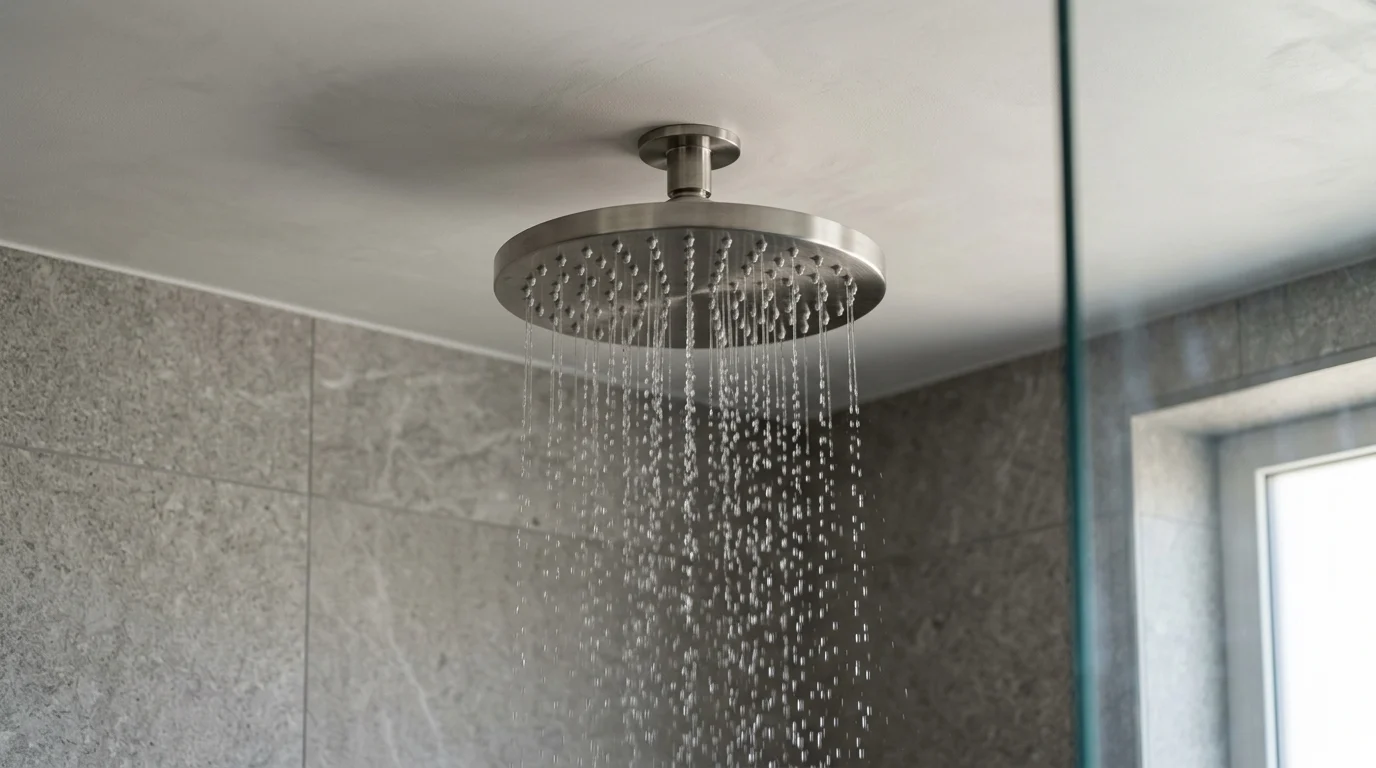
A Rain Shower can transform an ordinary bathroom into a calm, spa-inspired space, but the mounting choice has a major impact on comfort, cost, and construction.Ceiling-mounted designs create a true overhead rainfall experience with a clean architectural finish, while wall-mounted options offer easier installation and greater flexibility in standard remodels. The right decision depends on ceiling height, plumbing access, water pressure, and the level of renovation you are prepared to take on. This guide compares both mounting styles from a practical design and installation perspective, helping homeowners, contractors, and hospitality buyers choose a rain shower solution that fits the space, budget, and user experience.
Ceiling vs Wall Mounted Rain Shower Heads
The trend toward spa-like, experiential bathing at home relies heavily on how your shower delivers water. Whether you are remodeling a standard bathroom or building a custom luxury suite, choosing the right Shower Setup requires understanding your space, plumbing, and daily routine. The primary choice for overhead water delivery is between a ceiling-mounted and awall-mounted rain shower head.
While both styles aim to simulate natural rainfall with soothing, gravity-fed droplets, how they install into your home is very different. Selecting between these two mounting styles dictates not only the visual aesthetic of your bathroom but also the complexity of the plumbing and framing required behind the walls.
How mounting style affects bathroom design
Mounting style fundamentally alters the look and feel of your shower. Ceiling-mounted systems eliminate the need for visible hardware sticking out from the walls, offering a clean, minimalist aesthetic popular in modern design. To get the best rainfall feel without excessive splashing, these overhead units typically work best with finished ceiling heights between 84 and 96 inches.
Conversely, wall-mounted fixtures use a horizontal or angled Shower Arm extending from the wall. While this introduces a visible piece of hardware to the design, it creates a classic focal point and allows for much more flexible placement, especially in bathrooms with non-standard, vaulted, or sloped ceilings.
Best applications for residential, hotel, and spa projects
The choice of mounting style often depends on the scope and intended atmosphere of your remodel. In luxury hospitality and high-end spa environments, ceiling mounts are frequently chosen to deliver a true, immersive vertical rainfall simulation. Many luxury hotel bathroom renovations now incorporate flush-mounted ceiling fixtures to elevate the guest experience, a trend that is increasingly popular in high-end residential builds.
For standard home renovations and simple bathroom updates, wall-mounted models remain the most popular choice. They seamlessly connect to existing plumbing behind the wall, avoiding the need for extensive drywall and framing modifications in the ceiling. This makes them the preferred option for homeowners looking to upgrade their shower experience while keeping labor costs and project timelines in check.
Core Design and Installation Differences
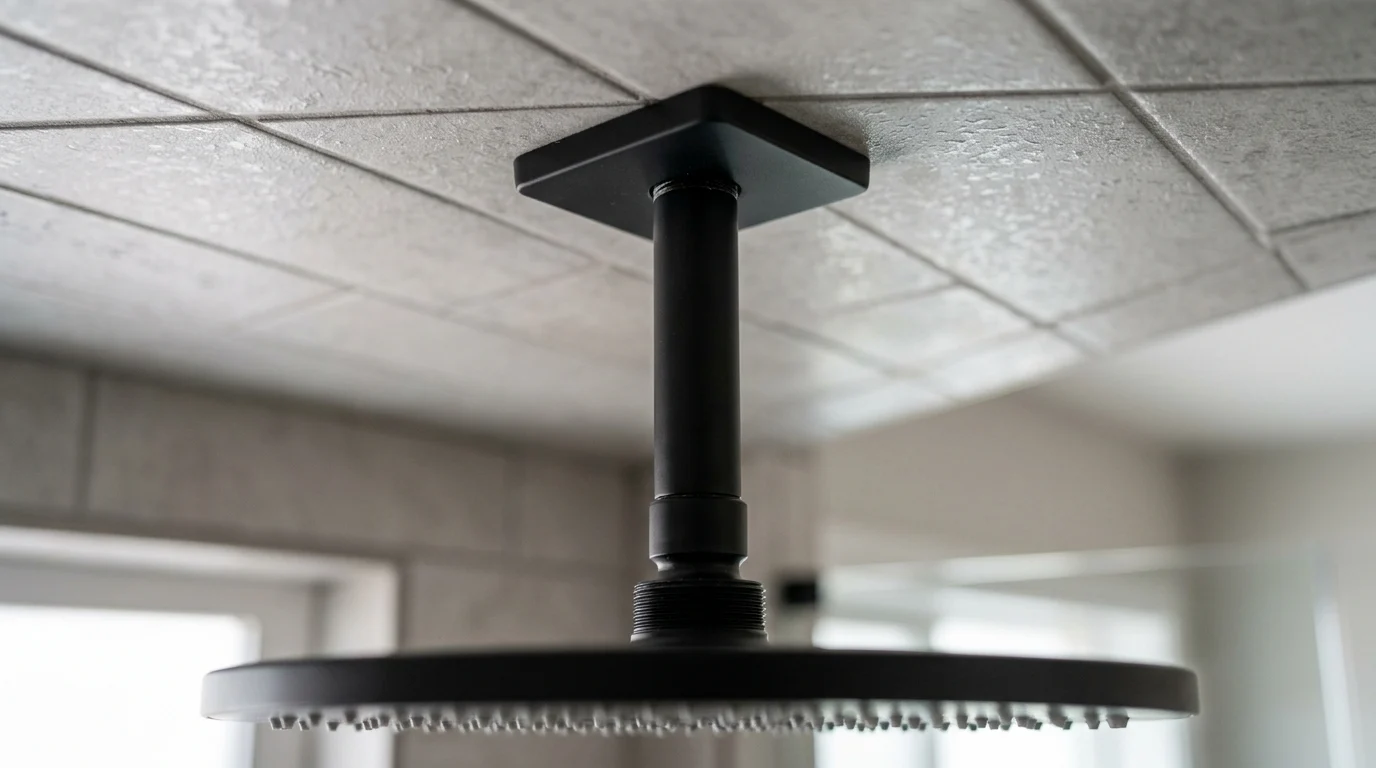
Beyond surface-level aesthetics, the structural requirements and plumbing components of rain shower systems dictate what is actually possible in your bathroom. Understanding these core installation differences is critical before buying fixtures or hiring a contractor.
What defines a ceiling mounted rain shower head
A ceiling-mounted rain shower head is installed directly into the overhead structure above the bather. These units are often flush-mounted directly into the drywall or suspended from the ceiling by a pendant arm. True flush installations require overhead plumbing—meaning water lines must be routed through the ceiling joists. However, surface-mounted alternatives and retrofit drop-arms also exist, offering flexibility for spaces where full in-ceiling plumbing is too difficult.
Because they are supported directly by the ceiling joists rather than a protruding arm, ceiling fixtures can support significantly larger faceplates. High-end residential and commercial models frequently feature dimensions ranging from 16 to 24 inches, with multi-function spa units occasionally exceeding 40 inches in width (which requires dedicated structural wood blocking in the ceiling to hold the weight).
What defines a wall mounted rain shower head
A wall-mounted Rain Shower Head is anchored to the wall framing and relies on a 90-degree or angled shower arm to position the fixture over the user. The defining characteristic is its reliance on a standard internal plumbing connection (such as a 1/2-inch drop-ear elbow) secured within the wall cavity.
Standard installation heights place this connection point between 78 and 84 inches above the finished floor, though you should always verify local code requirements and the manufacturer's recommendations. Because the entire weight of the faceplate and the water inside it is supported by the protruding arm, wall-mounted units are generally restricted to faceplate diameters of 12 inches or less to prevent excessive strain on the plumbing fittings.
Key differences in layout, plumbing, and user experience
The layout dictates where you stand and how large the shower enclosure needs to be. Ceiling mounts centralize the bather within the shower space, generally demanding a minimum footprint of 36 by 36 inches to contain the splashing water. Wall mounts inherently push the user closer to the wall, allowing for slightly more compact enclosures, though a 30 by 30-inch minimum remains the standard building code in many areas.
| Specification Matrix | Ceiling Mounted | Wall Mounted |
|---|---|---|
| Standard Plumbing Location | Overhead ceiling joist cavity | 78–84 inches Above Finished Floor |
| Minimum Enclosure Footprint | 36 x 36 inches | 30 x 30 inches |
| Hardware Extension into Shower | 0 inches (flush) / Variable (pendant) | 12 to 20 inches (shower arm) |
| Typical Maximum Faceplate Size | 24+ inches | 12 inches |
Performance and Plumbing Considerations
Fluid dynamics, structural integrity, and long-term serviceability form the baseline for evaluating shower head performance. The physical location of the fixture introduces unique plumbing and maintenance challenges that must be addressed before installation.
Water pressure, flow rate, and spray coverage
⚠️ Buyer Warning: Low Water Pressure vs. Large Shower Heads
If your home has low water pressure, a massive ceiling-mounted rain shower head may underperform. Distributing a legally restricted 1.8 to 2.5 gallons per minute across a massive 16-inch ceiling panel can result in a weak trickle rather than a satisfying shower. If pressure is a concern, smaller wall-mounted units are often the safer choice.
Rain showers are highly sensitive to water pressure and flow rate restrictions. Under U.S. federal regulations, shower heads are restricted to a maximum flow rate of 2.5 gallons per minute (GPM) at a baseline pressure of 80 PSI. Certain regional jurisdictions, such as California, enforce stricter mandates, capping flow at 1.8 GPM.
Homeowners must be aware of key performance caveats: large rain shower heads demand adequate hot water capacity, as they can drain tank-based water heaters much faster than standard fixtures. For expansive ceiling-mounted units, distributing limited water across hundreds of nozzles requires highly optimized internal channeling. Without advanced pressure-balancing designs, water may merely drip from the center nozzles rather than providing full spray coverage. Wall-mounted units, with their smaller surface areas, naturally maintain higher internal pressure, resulting in more consistent droplet formation at lower flow rates.
Ceiling structure, waterproofing, and pipe routing
Overhead installations demand rigorous attention to structural support and waterproofing. A solid brass 20-inch ceiling fixture can weigh 15 to 30 pounds on its own, and even more when the internal cavity fills with water. This requires your contractor to install custom wood blocking between the ceiling joists to safely hold the weight.
Furthermore, routing pipes for ceiling mounts means cutting into the ceiling's vapor barrier. Any condensation or slow leaks at the plumbing connection risk damaging the ceiling drywall. This requires careful application of waterproofing materials and secure cover plates (escutcheons) to seal the hole completely.
Maintenance access and long-term reliability
Maintenance differs drastically between the two configurations. Wall-mounted units offer straightforward access; homeowners can simply unscrew the fixture from the exposed shower arm in minutes to clean out hard water buildup or replace the unit entirely.
Flush ceiling mounts present a more complex maintenance scenario. Accessing the primary plumbing connections often requires removing custom trim kits or opening ceiling access panels. Because the plumbing is hidden above the drywall, servicing a concealed ceiling fixture can add significant time and labor costs to a plumber's service call compared to an exposed wall unit.
Cost, Compliance, and Sourcing Factors
Choosing a shower head involves balancing upfront material costs against long-term installation labor expenses. Furthermore, strict adherence to regional building codes and accessibility standards governs the final decision.
Material, finish, and product specification comparison
Material selection dictates both cost and longevity. High-end rain shower heads utilize solid brass or stainless steel to prevent rust and corrosion in high-humidity environments. To make cleaning easier, premium models feature flexible, medical-grade silicone nozzles, allowing users to easily dislodge calcium and hard water buildup by simply rubbing the nozzles with a finger.
Ceiling units typically use more raw materials due to their larger surface areas and heavy-duty mounting hardware. Because of this, the fixtures themselves often cost significantly more—sometimes 40% to 80% higher as an illustrative range—than equivalent wall-mounted models.
Labor cost, concealed plumbing, and freight considerations
Installation complexity significantly impacts your total remodel cost. Ceiling installations require routing pipes overhead, which can noticeably increase a plumber's labor hours (often estimated at a 20% to 30% increase) compared to a standard wall installation. In multi-story homes, this also requires careful coordination to avoid hitting existing HVAC ducts and electrical wiring hidden in the ceiling.
Shipping costs also favor wall-mounted units. Oversized ceiling panels (exceeding 24 inches) frequently trigger extra shipping fees for oversized boxes. This can increase delivery costs compared to the standard shipping rates that apply to compact wall-mounted fixtures.
| Cost & Sourcing Factor | Ceiling Mounted Rain Shower | Wall Mounted Rain Shower |
|---|---|---|
| Plumbing Labor Impact | Estimated +20% to +30% increase | Baseline standard |
| Shipping Costs | High (Oversized box surcharges) | Low (Standard parcel routing) |
| Fixture Cost | Premium (Large surface area, heavy hardware) | Standard (Smaller footprint, basic arms) |
Water-efficiency, accessibility, and regional code requirements
Compliance with standard plumbing codes is mandatory across North American markets. Additionally, accessibility plays a critical role in bathroom design.
For accessible design, guidelines like the Americans with Disabilities Act (ADA) generally recommend mounting shower control valves between 38 and 48 inches from the floor, though you should always verify specific height requirements with your local building codes. While the shower head itself is exempt from this height restriction, separating the low control valve from a high ceiling-mounted head requires significantly longer pipe runs behind the wall. This extended plumbing can sometimes lead to slight temperature drops and pressure loss that your plumber will need to account for.
How to Choose the Right Rain Shower Head
Choosing the right fixture requires balancing your existing bathroom layout, your renovation budget, and your desired daily shower experience. Selecting the optimal mounting style early prevents costly changes once construction begins.
Decision process by project type and budget
The decision process begins by categorizing your project as either a new build or a remodel. In a standard bathroom update, a typical plumbing budget rarely accommodates the extensive drywall removal, joist drilling, and framing modifications necessary to convert a wall-fed system to a ceiling-fed system.
Therefore, budget-conscious renovations inherently favor wall-mounted fixtures. Conversely, new construction and down-to-the-studs remodels present a blank canvas, allowing your contractor to absorb the extra labor and structural costs of ceiling mounts into the broader framing budget without tearing up finished walls.
When to choose a ceiling mounted model
Ceiling-mounted models are the definitive choice for high-end custom homes and dedicated wellness spaces. They are uniquely suited for environments where visual minimalism and an immersive, vertical soaking experience are prioritized over upfront costs.
Choosing these units requires verifying that your bathroom ceiling has a cavity of at least 8 to 10 inches to conceal the necessary plumbing, valves, and structural wood blocking without compromising the room's overall height.
When to choose a wall mounted model
Wall-mounted models are the most practical choice for standard renovations and projects with strict budget limits. They utilize standard plumbing setups, offering a significantly faster and cheaper installation compared to overhead systems.
By utilizing extended or angled shower arms, you can still achieve a highly functional rain shower experience that looks modern, maintains straightforward maintenance access, ensures adequate water pressure, and keeps labor costs predictable.
**Summary Checklist: Which is Right for You?
Key Takeaways
- Choose a ceiling mounted rain shower head when you want a vertical, spa-style rainfall effect and a clean minimalist bathroom design.
- Plan ceiling-mounted installations early because true flush models usually require overhead plumbing routed through ceiling joists.
- Use wall-mounted rain shower heads for standard renovations when you want to connect to existing wall plumbing and reduce labor time.
- Aim for a finished ceiling height of about 84 to 96 inches to improve comfort and limit splashing from an overhead rain shower.
- Consider project type before selecting a mount: ceiling fixtures suit luxury hotels and spas, while wall-mounted models suit faster residential upgrades.
Frequently Asked Questions
Is a ceiling mounted rain shower head better than a wall-mounted one?
It depends on the project. A ceiling mounted rain shower head delivers a more vertical, spa-like rainfall effect and a cleaner look, while a wall-mounted model is usually easier and less costly to install with existing plumbing.
What ceiling height works best for a ceiling mounted rain shower head?
Ceiling-mounted rain shower heads typically work best with finished ceiling heights of about 84 to 96 inches. This range helps create a comfortable rainfall effect while reducing excessive splashing.
Does a ceiling mounted rain shower head require special plumbing?
Usually, yes. True ceiling installations often require water lines to be routed through the ceiling joists. Surface-mounted or retrofit drop-arm options may reduce renovation work, depending on the bathroom layout.
Are ceiling mounted rain shower heads suitable for hotels and spas?
Yes. Ceiling-mounted models are popular in luxury hotels, spas, and high-end residential bathrooms because they create an immersive overhead rainfall experience and support a minimalist, premium design.
Can I replace a wall-mounted shower head with a ceiling mounted one?
You can, but it may require rerouting plumbing, opening the ceiling, and checking structural support. For simpler upgrades, a wall-mounted rain shower head is often more practical.
