


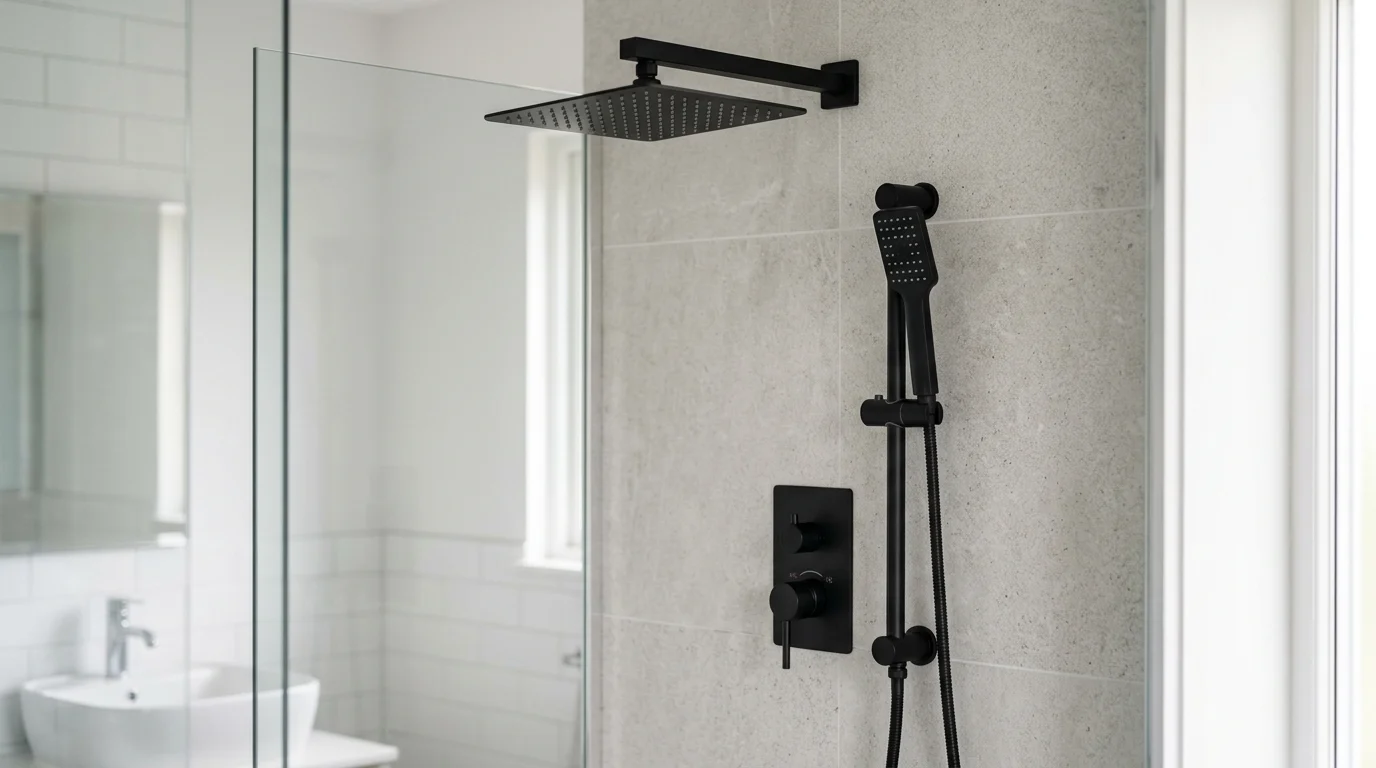
For a bathroom brand, the factory behind a Shower Set can determine far more than the landed cost—it shapes product reliability, compliance risk, delivery stability, and customer reviews. As global demand grows forwater-efficient, high-pressure, multi-function, and filtration-focused shower systems, procurement teams need a structured way to evaluate suppliers. This guide explains how to compare OEM, ODM, and private label options, assess technical specifications, and match factory scale to your sales channel. It also highlights what experienced source manufacturers, such as Xinyi Sanitary with production roots dating back to 2005 and distribution to 50+ countries, can bring to long-term shower product development.
Why Manufacturer Selection Matters for Bathroom Brands
Selecting the right shower set manufacturer directly impacts a bathroom brand's profit margins and long-term reputation. In a crowded global plumbing fixture market, your manufacturer acts as an extension of your own operations. Relying on an incompatible supplier can lead to supply chain disruptions, high defect rates, and compliance failures that expose your brand to significant liability.
Strategic sourcing goes beyond finding the factory with the lowest unit cost. It requires aligning the manufacturer’s technical capabilities and production scale with your brand’s specific market positioning. Understanding the nuanced differences in manufacturing models helps procurement teams build a more efficient supply chain and protect their intellectual property.
OEM, ODM, and Private Label Options
Bathroom brands typically engage manufacturers through one of three primary production models: Original Equipment Manufacturing (OEM), Original Design Manufacturing (ODM), or Private Labeling. OEM partnerships require the manufacturer to produce shower sets strictly according to the brand's proprietary blueprints and specifications. This model demands significant upfront investment, with custom brass forging molds and tooling fees typically ranging from $3,000 to $15,000 per fixture family—depending on product complexity and regional labor rates—but offers maximum intellectual property protection.
Conversely, the ODM model allows brands to select pre-engineered shower sets from the manufacturer's existing catalog, applying minor modifications such as custom handle designs or unique finishes. This drastically reduces time-to-market and eliminates major tooling costs. Private labeling represents the most streamlined approach, where brands simply apply their logo and packaging to off-the-shelf products, though it offers the lowest degree of market differentiation.
Brand Positioning and Channel Fit
A manufacturer's operational scale must perfectly align with the brand’s distribution channels and target demographic. Luxury boutique brands require manufacturing partners capable of executing high-mix, low-volume production runs. These suppliers must accommodate smaller, flexible order quantities while executing complex physical vapor deposition (PVD) finishes and rigorous manual polishing.
In contrast, brands supplying big-box home improvement retailers or high-volume commercial real estate projects must prioritize manufacturers structured for low-mix, high-volume output. These enterprise-level suppliers demand larger production runs but offer economies of scale that drive unit costs down, backed by highly automated CNC machining and robotic polishing lines necessary to meet aggressive retail margins. Between these extremes are mid-market hybrid manufacturers that balance custom finishes with moderate volume requirements, offering a vital middle ground for growing regional brands.
Key Product Specifications to Evaluate
Evaluating a manufacturer's technical competence requires a close look at their product specifications. The durability, functionality, and perceived value of a shower set are entirely dependent on the quality of raw materials, internal components, and surface treatments utilized during production. Top-tier manufacturers maintain strict control over these variables.
Materials, Cartridges, Hoses, and Finishes
The core material of a premium shower valve body is typically forged brass, specifically HPb59-1 or low-lead/lead-free variants required for North American compliance. The internal cartridge acts as the engine of the shower system. Reliable manufacturers exclusively utilize globally recognized cartridge brands, such as Vernet (France) for thermostatic control or Sedal (Spain) for pressure balancing, which are tested to endure upwards of 500,000 operational cycles.
Surface finishes dictate both aesthetic appeal and corrosion resistance. Electroplated chrome remains the industry standard, but premium brands increasingly demand PVD coatings for brushed nickel, gold, or matte black finishes.
| Finish Type | Durability / Scratch Resistance | Salt Spray Test (Hours) | Relative Cost Index |
|---|---|---|---|
| Electroplating (Chrome) | High | 24 - 48 | 1.0x (Baseline) |
| Powder Coating (Matte Black) | Moderate | 48 - 72 | 1.15x - 1.25x |
| PVD (Brushed Gold/Nickel) | Very High | 100 - 200 | 1.4x - 1.8x |
Pressure Testing and Performance Standards
Manufacturers must demonstrate the ability to engineer products that meet strict hydraulic performance thresholds. Showerheads and hand showers must be calibrated to specific flow rates, typically ranging from 1.8 Gallons Per Minute (GPM) for water-restricted markets like California, up to 2.5 GPM for standard jurisdictions.
Reliable factories conduct rigorous pressure testing on all valve bodies. Static pressure tests are routinely performed at up to 1.6 MPa (approximately 232 PSI) to ensure structural integrity and identify microscopic casting flaws, while dynamic pressure tests at 0.3 MPa verify the stability of temperature and flow control under standard operating conditions.
Product Consistency Documentation
Consistent quality across multiple production runs requires comprehensive engineering documentation. Brands must request a complete Bill of Materials (BOM) for every SKU, detailing the exact alloy compositions, component suppliers, and dimensional tolerances. Critical threaded connections and valve seatings should maintain CNC machining tolerances of ±0.1mm, though this can vary by specific component requirements.
Furthermore, exploded view diagrams and assembly Standard Operating Procedures (SOPs) should be readily available. Manufacturers that cannot produce these documents promptly are likely operating as ad-hoc assemblers rather than structured engineering entities, significantly increasing the risk of unauthorized component substitution in future orders.
How to Verify Quality and Compliance
Trusting a golden sample is a common pitfall in global procurement; long-term reliability is proven through factory audits and strict adherence to quality control frameworks. Verifying a manufacturer's compliance infrastructure ensures they can legally supply your target market and consistently replicate the approved sample over thousands of units.
Factory Audit Checklist
A comprehensive factory audit should evaluate both the physical infrastructure and the management systems. Auditors must verify active ISO 9001:2015 certifications and inspect the facility's specialized equipment, such as in-house spectrometry machines for raw material analysis and multi-axis CNC routers.
Labor stability is a highly predictive metric of product quality. A factory with an annual worker turnover rate below 15% (a benchmark that varies by region) retains critical institutional knowledge, particularly in manual processes like brass polishing and assembly. High turnover inevitably leads to aesthetic defects and inconsistent assembly torque.
Regional Plumbing Compliance Evidence
Plumbing products are heavily regulated, and the manufacturer must possess or be capable of achieving the necessary regional certifications. Supplying the North American market requires cUPC certification and adherence to ASSE 1016 standards for anti-scald protection. European markets demand CE marking and EN 1111 compliance for thermostatic valves, while Australia requires WaterMark certification.
Procurement teams must verify that the factory holds valid certificates under their own name, rather than relying on a trading company's documentation. If a brand requires a new, private-labeled cUPC certification for a custom OEM design, they should anticipate regulatory costs ranging from $5,000 to $10,000 per product family and a testing timeline of 3 to 6 months, depending on the certifying body. Additionally, brands should ensure the manufacturer carries adequate product liability insurance for plumbing fixtures to mitigate risks associated with potential water damage claims.
Incoming, In-Process, and Final Quality Control
A robust Quality Control (QC) architecture is divided into three distinct phases. Incoming Quality Control (IQC) must utilize spectrometers to verify the copper and lead content of raw brass ingots before casting. In-Process Quality Control (IPQC) involves station-by-station checks, such as using go/no-go gauges to verify thread dimensions directly off the CNC line.
Final Quality Control (FQC) is non-negotiable for plumbing fixtures. Reliable manufacturers mandate 100% pneumatic or hydrostatic leak testing on every assembled valve body before packaging. Brands should request the factory's internal Defect Parts Per Million (DPPM) data and insist on an AQL (Acceptable Quality Limit) of 1.5 for major defects and 4.0 for minor defects—or stricter thresholds depending on brand positioning—during third-party pre-shipment inspections.
Commercial and Logistics Factors
Beyond technical capabilities, the commercial and logistical framework of a supplier agreement determines the financial viability of the partnership. Misaligned payment terms, inflexible production minimums, or poor post-sale support can rapidly erode a brand's working capital and customer satisfaction.
Tooling Fees, MOQ, and Payment Terms
Tooling amortization and minimum order quantities (MOQs) are primary cost drivers in the initial stages of manufacturing. While specific MOQs vary widely by factory tier and finish complexity, custom PVD colors or proprietary tooling generally require significantly larger volume commitments than standard chrome finishes.
Standard international payment terms usually require a 30% Telegraphic Transfer (T/T) deposit upon order confirmation, with the remaining 70% balance paid against the Bill of Lading (B/L) copy. To protect against market volatility, buyers should also negotiate currency fluctuation clauses if paying in USD while the factory operates in local currency. Established brands with proven purchasing histories may negotiate more favorable terms, such as Net 30 or Net 60 days, or utilize Letters of Credit (L/C) for orders exceeding $100,000.
Lead Time and Shipping Questions
Predictable lead times are critical for inventory management and cash flow cycles. A standard production run for shower sets typically requires 35 to 45 days. However, brands must account for raw material sourcing buffers, unexpected global shipping disruptions, and peak season congestion—particularly ahead of the Lunar New Year—which can extend lead times to 60 or even 75 days. Brands must develop contingency plans that account for these seasonal and geopolitical variables.
The table below provides directional guidance on how supplier tiers typically align, though figures will vary by region, product complexity, and factory capacity:
| Supplier Tier | Target Market | Typical MOQ | Standard Lead Time | Acceptable Defect Rate |
|---|---|---|---|---|
| Tier 1 (Enterprise) | Global Brands, Luxury | 1,000+ sets | 45 - 60 days | < 0.5% |
| Tier 2 (Mid-Market Hybrid) | Regional Brands, Importers | 200 - 500 sets | 30 - 45 days | < 1.5% |
| Tier 3 (Assemblers) | E-commerce, Budget | 50 - 100 sets | 15 - 25 days | 2.0% - 3.0% |
Warranty, Spare Parts, and Claim Response
A manufacturer's commitment to their product is reflected in their warranty and claim response protocols. Industry-standard warranties generally cover valve bodies and thermostatic cartridges for 5 years, and surface finishes for 1 to 3 years, though these terms vary based on the coating technology and the supplier's confidence in their materials.
Proactive manufacturers will automatically include 1% to 2% free spare parts—such as O-rings, decorative handles, and diverter buttons—within the shipping container to help brands rapidly resolve minor consumer end-user issues. Furthermore, the supplier contract should stipulate an 8D (Eight Disciplines) problem-solving report requirement within 72 hours of any major defect claim.
How to Make the Final Supplier Decision
Transitioning from a shortlist of capable factories to a finalized supplier contract requires a structured, objective decision-making process. By formalizing the evaluation and implementing strict legal safeguards, procurement teams can mitigate offshore manufacturing risks and establish a scalable supply chain.
Step-by-Step Sourcing Process
The sourcing protocol should begin with a Request for Information (RFI) to filter out uncertified factories and trading companies—misidentifying a middleman as a direct manufacturer is a major sourcing risk. This verification checklist should include reviewing their export license, checking official business registration records, and requesting live factory floor videos. This is followed by a Request for Quotation (RFQ) issued to the top three to five candidates. Upon receiving competitive bids, brands must order and rigorously test physical samples.
If the golden sample passes internal engineering reviews, the next phase is a pilot production run. Ordering a micro-batch of 50 to 100 units tests the factory's standard operating procedures, packaging durability, and communication efficiency before committing to a mass production order of thousands of sets.
Weighted Supplier Scorecard
To eliminate subjective bias, procurement managers should utilize a weighted supplier scorecard. A standard matrix might allocate 40% of the total score to Quality and Engineering (ISO audits, material specs, DPPM), 30% to Commercials (FOB pricing, tooling fees, payment terms), 15% to Logistics (lead time reliability, MOQ flexibility), and 15% to Communication (English proficiency, response times).
Scoring multiple factories against these exact metrics provides a quantifiable justification for the final supplier selection, ensuring that a superficially low unit price does not overshadow critical deficiencies in quality control or compliance.
Final Negotiation and Risk Controls
The final step is executing a comprehensive manufacturing agreement.
Key Takeaways
- Choose a shower set manufacturer based on production capability, compliance experience, quality control, and fit with your sales channel rather than unit price alone.
- Use OEM for proprietary shower set designs, ODM for faster customization, and private labeling when speed and low development cost matter most.
- Budget carefully for custom tooling, as brass forging molds and fixture-family tooling can cost roughly $3,000 to $15,000 depending on complexity.
- Match manufacturer scale to your market: boutique brands need flexible small-batch customization, while big-box retail programs require high-volume automated production.
- Evaluate core specifications such as brass quality, low-lead options, cartridges, hoses, finishes, spray functions, filtration features, and water-saving performance before ordering.
- Work with an experienced source factory, such as Xinyi Sanitary, when you need OEM/ODM/OBM support, free samples, and global shower product distribution capability.
Frequently Asked Questions
What should I check first when choosing a shower set manufacturer?
Start with production capability, quality control, compliance experience, and whether the factory supports your model: OEM, ODM, private label, or OBM. A reliable partner should match your target market, order volume, finish requirements, and delivery expectations.
Is OEM or ODM better for a bathroom brand?
OEM is better when you need proprietary designs and stronger differentiation, but it requires tooling investment. ODM is faster and more cost-efficient because you can customize existing shower set designs with finishes, branding, or minor feature changes.
How much can custom shower set tooling cost?
Custom molds and tooling for fixture families can commonly range from about $3,000 to $15,000, depending on complexity, materials, and production requirements. Brands should confirm tooling ownership, maintenance, and exclusivity before ordering.
Why do materials matter in shower set manufacturing?
Materials affect durability, safety, and market compliance. Premium shower systems often use forged brass, low-lead components, reliable cartridges, quality hoses, and durable finishes to reduce leaks, corrosion, and after-sales claims.
Can Xinyi Sanitary support OEM and ODM shower set projects?
Yes. Xinyi Sanitary is a source factory established in 2005, offering one-stop OEM/ODM/OBM Bathroom Shower manufacturing, including hand showers, rainfall shower heads, filters, sliding bars, bidet showers, and shower sets.
