


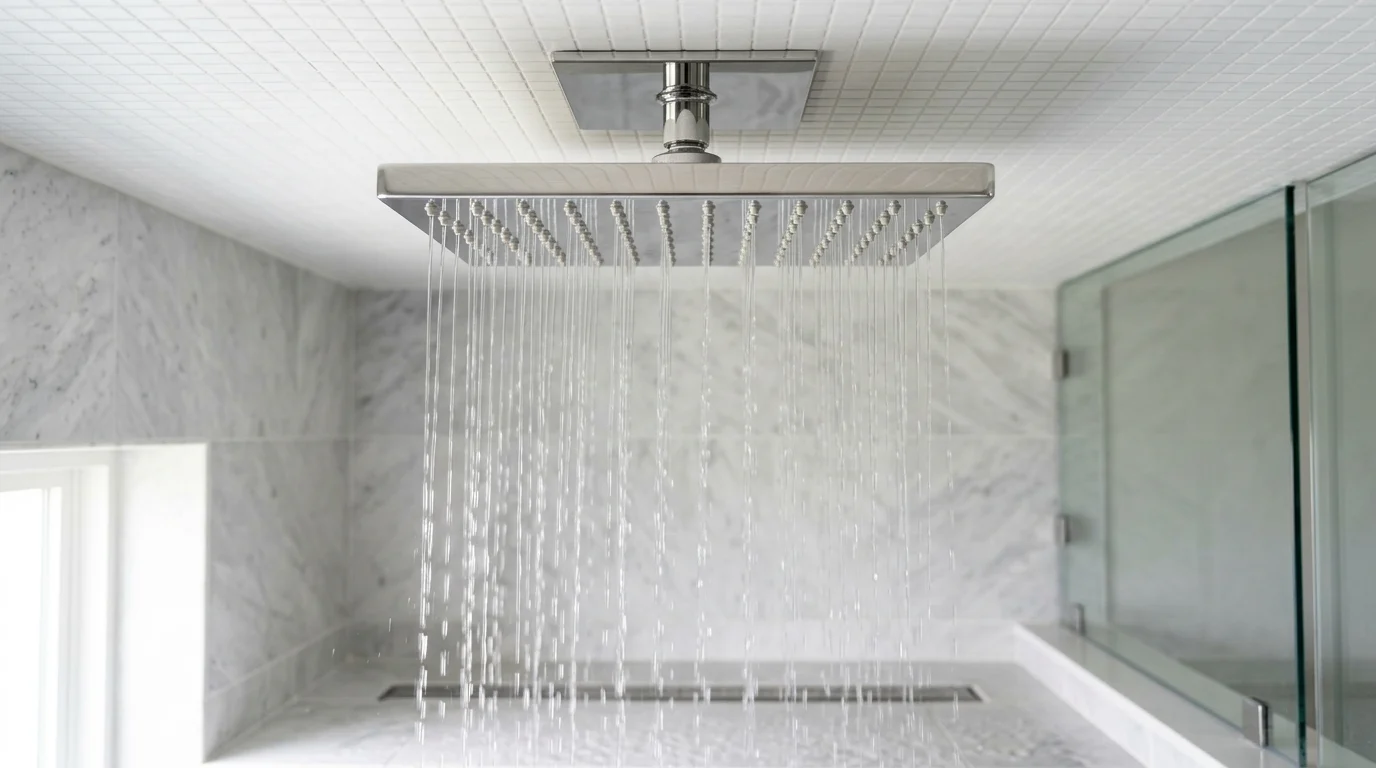
Launching a custom Shower Head is not just a design exercise—it is a manufacturing, cost, compliance, and supply-chain decision. The right OEM partner can help turn a concept into a reliable product with controlled tooling costs, realistic lead times, and features that match your target market, from water-saving ABS retail models to premium brass fixtures with advanced finishes or filtration. This guide explains how to plan specifications, choose between OEM and ODM routes, evaluate customization levels, and work with an experienced sanitary ware manufacturer. For brands, distributors, and bathroom product buyers, a structured development process can reduce risk and improve speed to market.
Plan the Custom Shower Head Program
Starting a custom shower head project requires upfront planning to align your product vision with manufacturing reality. Rushing into production without a defined roadmap frequently leads to cost overruns, extended lead times, and misaligned deliverables.
Define target market, price tier, and sales channel
Establishing your target demographic and retail strategy dictates downstream material and engineering choices. For instance, mass-market retail channels often target unit costs between $8 and $15, which generally points toward ABS plastic construction and standard chrome plating. Conversely, premium architectural fixtures targeting hospitality or luxury residential sectors can command retail price points exceeding $150, justifying the use of solid brass components, PVD (Physical Vapor Deposition) finishes, and specialized silicone nozzles. Keep in mind that all cost, tooling, and timing figures mentioned in this guide are illustrative estimates that vary by region, factory, and design complexity.
Choose the required customization level
Determining the exact degree of customization required for the product line is a crucial early step. Off-the-shelf white-labeling presents the lowest barrier to entry, requiring zero tooling investment—ideal for low-volume or boutique brands testing the market. Intermediate customization, such as modifying the faceplate or specifying a proprietary spray pattern, typically incurs localized tooling costs ranging from $1,500 to $4,000. Full custom development, involving bespoke internal waterways and unique exterior housing, demands complete injection molding and casting tools. This often requires capital expenditures between $8,000 and $25,000 depending on cavity count and complexity.
Lock key product requirements early
Finalizing core product specifications prior to supplier outreach minimizes scope creep, though it is important to remember that specification definition and supplier selection are often iterative. Ambiguity in initial requirements—such as failing to specify maximum flow rates or finish durability standards—can delay the quoting process. Establishing baseline parameters early helps ensure that initial OEM quotations are reasonably accurate. From there, you can use Request for Quotation (RFQ) feedback from suppliers to refine and finalize your specifications before locking the Bill of Materials (BOM) and entering the typical 30- to 45-day tooling phase.
Select the Right OEM Manufacturer
Identifying a capable manufacturing partner is a critical variable in determining the success of a custom plumbing fixture launch. The selected facility should possess not only the mechanical infrastructure to produce the shower head but also the engineering acumen to translate your industrial design into mass-producible components.
Compare OEM, ODM, and contract manufacturing models
It is helpful to differentiate between Original Equipment Manufacturers (OEM), Original Design Manufacturers (ODM), and pure contract manufacturers to align with your internal engineering bandwidth. Note that the intellectual property arrangements and Minimum Order Quantities (MOQs) listed below are typical baselines for mid-to-high volume production. They are often negotiable and highly factory-dependent; boutique brands with smaller initial runs may need to seek out specialized low-volume partners or negotiate higher per-unit costs to offset lower MOQs.
| Manufacturing Model | Intellectual Property | Client Engineering Required | Typical MOQ (Units) |
|---|---|---|---|
| ODM | Factory owns base design | Low | 500 - 1,000 |
| OEM | Client owns modifications | Medium | 1,000 - 3,000 |
| Contract Mfg. | Client owns 100% | High | 5,000+ |
Evaluate factory capabilities and experience
A comprehensive audit of the factory’s physical capabilities is highly recommended. Look for vertically integrated facilities that control critical processes in-house, such as plastic injection molding, CNC machining, and surface finishing. For high-volume ABS shower heads, a factory might operate injection machines ranging from 120T to 400T to handle multi-cavity molds efficiently. Furthermore, production capacity should align with forecasted demand; a large-scale facility might demonstrate a monthly throughput capacity of 100,000 units to handle seasonal spikes, whereas a niche supplier might be better suited for smaller custom runs. Beyond equipment, incorporate practical risk-mitigation steps: conduct third-party factory audits, verify active ISO 9001 certifications, and negotiate standard payment-term structures to protect your investment.
Assess communication, engineering, and project support
Effective execution relies heavily on the supplier's project management and engineering support. An ideal OEM partner employs a dedicated R&D team proficient in industry-standard CAD environments like SolidWorks or Creo, facilitating smooth file sharing. Furthermore, response time is a key indicator of project management maturity; experienced factories typically provide Design for Manufacturing (DFM) feedback within 48 to 72 hours of receiving an initial 3D model, helping development milestones remain on schedule.
Define Product Specifications
Precise technical specifications form the contractual foundation of the manufacturing agreement. Vague requirements can result in substandard components, whereas rigorous specification ensures consistency across production batches.
Set flow rate, spray modes, materials, and finish
The core architecture of the shower head encompasses flow rate, spray functionality, base materials, and surface finish. Standard specifications often dictate a maximum flow rate of 2.5 Gallons Per Minute (GPM) for unrestricted markets, though eco-friendly variants frequently target 1.5 to 1.8 GPM. Material selection heavily influences longevity; premium models often utilize CW617N brass for the main body, while cost-optimized units rely on electroplating-grade ABS (Acrylonitrile Butadiene Styrene). Surface finishes should also be explicitly defined, such as specifying a 24-hour CASS (Copper-Accelerated Acetic Acid-Salt Spray) test requirement for chrome plating.
Balance water efficiency, durability, and user experience
Engineering the internal waterway requires balancing restrictive water conservation mandates with an optimal user experience. Restricting flow to 1.8 GPM can diminish spray velocity if the internal engine is not properly optimized. Advanced OEM engineers utilize computational fluid dynamics (CFD) to design internal turbines and venturi channels that aerate the water, increasing perceived pressure while maintaining strict efficiency metrics. Furthermore, specifying liquid silicone rubber (LSR) for the spray nozzles supports long-term durability and facilitates easy removal of calcium buildup, helping maintain spray integrity over a typical 5- to 10-year lifecycle.
Use design for manufacturing to reduce defects
Applying Design for Manufacturing (DFM) principles early in the specification phase can drastically reduce structural defects and assembly failures. For injection-molded ABS components, engineers generally follow typical guidelines dependent on specific geometry and material. For example, maintaining uniform nominal wall thicknesses—often between 2.0mm and 3.0mm—helps prevent sink marks and warping during cooling. Additionally, incorporating proper draft angles of 1.5 to 2.0 degrees on internal ribs usually ensures clean ejection from the mold, which can extend tool life to an estimated 250,000 shots and minimize scrap rates. Remember that these are general engineering guidelines, not rigid, one-size-fits-all rules.
Manage Development and Sampling
The development phase translates theoretical designs into validated physical products. Careful management of the sampling process mitigates risks and ensures that the final mass-produced units mirror your approved prototypes.
Follow the process from concept brief to feasibility review
The transition from a concept brief to a manufacturable design begins with a comprehensive feasibility review. During this stage, the OEM's engineering team analyzes your industrial design to identify potential tooling interferences or assembly bottlenecks. This collaborative phase typically culminates in a frozen 3D CAD model and a preliminary cost analysis, verifying that the proposed geometry can be manufactured within your target unit cost before any capital is deployed for rapid prototyping or hard tooling.
Control drawings, samples, BOM, and approval gates
Strict configuration control is vital during prototype iterations. It is best practice to require comprehensive 2D technical drawings that specify critical-to-function (CTF) dimensions with tight tolerances, such as an illustrative +/- 0.1mm accuracy on threaded connections (like standard G1/2 or NPT 1/2-inch fittings). Furthermore, a detailed Bill of Materials (BOM) should be locked alongside the 'golden sample'—the final, approved pre-production prototype that serves as the absolute benchmark for all subsequent quality control inspections.
Manage engineering changes and production handoff
Engineering Change Orders (ECOs) are common during the transition from sampling to mass production, but they should be systematically managed to prevent cost escalation. If a modification is required—such as adjusting a nozzle diameter to improve spray dispersion—the ECO should document the exact change, the cost impact, and the timeline adjustment. Before authorizing full-scale production, executing a pilot run of 50 to 100 units is highly recommended to validate assembly line efficiency and confirm that the hard tooling yields parts identical to the approved golden sample. At this stage, it is also crucial to establish clear terms regarding logistics, mold ownership, and IP enforcement. Using Non-Disclosure, Non-Use, and Non-Circumvention (NNN) agreements and establishing mold escrow or clear ownership terms in your contract protects your proprietary designs once production begins.
Confirm Compliance, Quality, and Supply Chain Readiness
Before mass production commences, the product needs to satisfy all regulatory requirements and the supplier should demonstrate robust quality assurance protocols. Failure to establish these controls exposes your brand to product recalls, legal liability, and supply chain disruptions.
Verify regional standards and testing requirements
Shower heads are subject to stringent regional certifications that dictate flow rates, material safety, and mechanical performance. For the North American market, compliance with ASME A112.18.1/CSA B125.1 is mandatory, often accompanied by cUPC certification and EPA WaterSense labeling for models flowing at or below 2.0 GPM. In Europe, products may require WRAS (UK), ACS (France), or KTW (Germany) certifications to verify that non-metallic materials in contact with drinking water do not leach harmful chemicals or support microbial growth. Be aware that securing these regulatory certifications often requires months of lead time and substantial testing fees, which should be factored into your project schedule and budget.
Review inspection, pressure testing, and quality controls
A comprehensive Quality Control (QC) plan should be negotiated prior to the first production run. This includes specifying Acceptable Quality Limit (AQL) standards based on standard lot-size sampling (e.g., ISO 2859-1). For premium plumbing fixtures, these are typically set at AQL 1.0 for major defects and 2.5 for minor defects. Routine inline testing often involves 100% pneumatic leak testing at a standard 0.8 MPa (approx. 116 PSI) and batch-level hydrostatic burst testing exceeding 2.5 MPa to ensure structural integrity under extreme municipal water pressures.
| Test Category | Standard / Parameter | Frequency (Example based on 1,000-unit lot) |
|---|---|---|
| Pneumatic Leak | 0.8 MPa air pressure | 100% of units |
| Hydrostatic Burst | > 2.5 MPa water pressure | 2 units per batch |
| Finish Durability | 24-hour CASS test | 1 unit per shift |
| Flow Rate Verification | Target GPM +/- 10% | 5 units per batch |
Use a decision framework to approve the supplier
Approving a supplier for ongoing mass production requires a structured decision framework that evaluates both technical execution and commercial reliability. Your team should review the OEM’s final compliance documentation, internal defect rates from the pilot run (for example, targeting an initial First Pass Yield of >95%), and the robustness of their raw material supply chain. Once the factory demonstrates sustained adherence to the approved BOM, quality metrics, and lead-time commitments, the final manufacturing agreement can be signed and the first purchase order released.
Key Takeaways
- Define the target market, retail channel, price tier, and performance requirements before requesting OEM quotations.
- Choose the right customization path, from no-tooling white-label products to full custom molds requiring higher investment.
- Lock key specifications such as flow rate, spray modes, finish durability, materials, and filtration needs before confirming the BOM.
- Use supplier RFQ feedback to refine the design before entering the typical 30- to 45-day tooling phase.
- Select an experienced OEM or ODM partner with R&D, tooling, production, quality control, and export experience.
- Consider an established source factory such as Xinyi Sanitary Ware for one-stop custom shower products, including water-saving, high-pressure, and filtration-focused models.
Frequently Asked Questions
What should I define before contacting a shower head OEM manufacturer?
Define your target market, price tier, sales channel, flow-rate requirements, finish standards, spray functions, materials, and expected order volume. Clear specifications help the OEM quote accurately and reduce delays.
What is the difference between OEM and ODM shower head development?
OEM usually follows your custom design and specifications, while ODM adapts an existing manufacturer design with branding or feature changes. ODM is often faster and lower cost; OEM offers more control and differentiation.
How much tooling is needed for a custom shower head?
White-label products may require no tooling. Partial customization may need localized tooling, while full custom housings, waterways, or molds require larger investments. Actual costs depend on materials, complexity, cavity count, and factory capabilities.
How long does custom shower head tooling usually take?
After specifications and the BOM are confirmed, tooling commonly takes about 30 to 45 days, though complex structures, finish trials, or performance revisions can extend the schedule.
Which materials are common for custom shower heads?
Mass-market models often use ABS with chrome plating for cost control. Premium products may use brass, PVD finishes, silicone nozzles, filtration components, or multi-function spray systems depending on the target segment.
