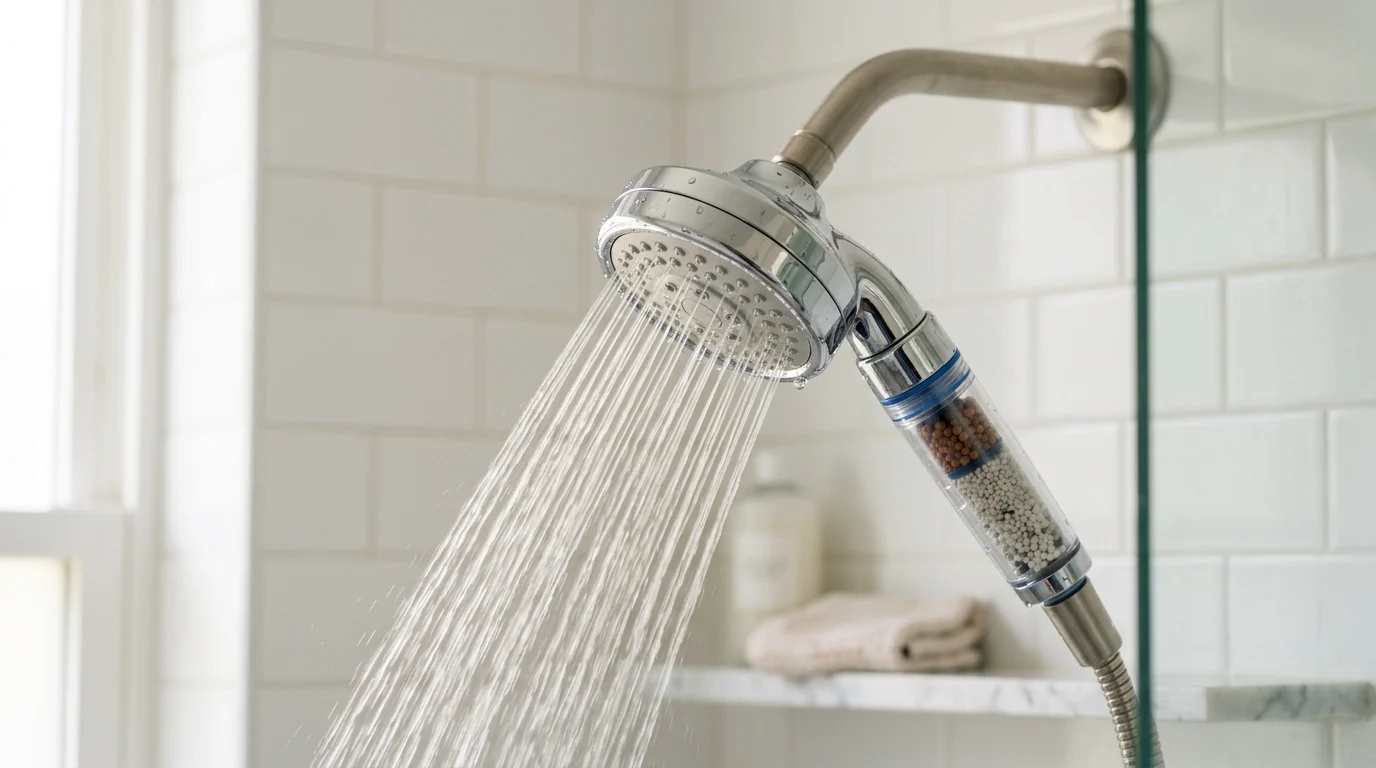
Chlorine keeps municipal water safe, but in the shower it can become an unwanted part of the bathing experience—especially as warm water turns into mist and vapor. A Filtered Shower Head is designed to address that specific problem, while a standard fixture mainly controls flow and spray pattern. This article explains how chlorine reduction actually works, why hot, fast-flowing shower water requires different technology than drinking water filtration, and what standards such as NSF/ANSI 177 indicate about performance. It also compares common filtration media, practical replacement considerations, and product-selection factors for homeowners, distributors, and bathroom brands evaluating cleaner, more comfortable shower solutions.
Do Filtered Shower Heads Remove Chlorine Better Than Standard Shower
Municipal water treatment facilities universally rely on chemical disinfectants to eliminate pathogens from public water supplies. The most common of these agents is free chlorine, typically maintained at concentrations between 0.5 and 2.0 parts per million (ppm) throughout the distribution network. While highly effective for sanitation, residual chlorine delivered to residential and commercial plumbing fixtures introduces secondary challenges, particularly in shower environments where water volatilizes.
Evaluating whether a filtered shower head removes chlorine better than standard fixtures—or even standard drinking water filters—requires understanding the fundamental mechanical differences between point-of-use filtration and basic water dispersion. Standard drinking water filters (like carbon pitchers) rely on slow percolation, which is impossible in a shower. Furthermore, standard shower heads are not designed for chemical mitigation at all, whereas specialized shower filtration units utilize specific media to alter the chemical composition of the fast-flowing water stream.
What chlorine reduction means
In the context of shower filtration, chlorine reduction does not typically refer to physical trapping or adsorption, but rather to a chemical conversion process. The industry benchmark for this application is the NSF/ANSI 177 standard, which requires a device to demonstrate the capacity to reduce free available chlorine by a minimum of 50% over its stated lifespan.
Reduction involves transforming volatile, reactive free chlorine (hypochlorous acid and hypochlorite ions) into benign, water-soluble chloride ions. This conversion prevents the chlorine from vaporizing into the shower enclosure, thereby mitigating exposure through both dermal contact and inhalation.
How standard shower heads handle chlorine
Standard shower heads lack any internal media designed to interact chemically or physically with dissolved gases or chemical disinfectants. Their primary function is strictly mechanical: regulating flow rate—commonly restricted to 1.8 to 2.5 gallons per minute (GPM) in compliance with modern plumbing codes—and shaping the spray pattern.
In fact, standard shower heads can inadvertently exacerbate chlorine exposure. By forcing heated water through fine nozzles, standard fixtures aerosolize the water stream. At typical shower temperatures ranging from 100°F to 105°F (38°C to 41°C), this aerosolization increases the surface area of the water, accelerating the volatilization of dissolved chlorine gas into the ambient air of the shower enclosure. Consequently, without a dedicated filtration mechanism, a standard shower head offers zero chlorine reduction and facilitates maximum airborne chlorine dispersion.
How Filtered Shower Heads Reduce Chlorine

To achieve meaningful chlorine reduction in the demanding environment of a shower enclosure, filtered shower heads rely on specialized media capable of functioning under high flow rates and elevated temperatures. The efficacy of these units depends entirely on the chemical reactions facilitated by the filter cartridge.
Common filtration media and mechanisms
The two dominant filtration media utilized in shower filters are KDF-55 (Kinetic Degradation Fluxion) and calcium sulfite. KDF-55 is a high-purity copper-zinc alloy that operates via a redox (oxidation-reduction) reaction. As chlorinated water passes through the metallic media, electrons are exchanged, effectively converting free chlorine into harmless chloride. This reaction happens almost instantaneously, making it highly suitable for the brief contact times inherent to shower flows.
Calcium sulfite functions similarly through rapid chemical reduction. It is often favored in compact filter housings because it possesses a higher reaction rate per cubic inch compared to KDF-55. Standard activated carbon, while ubiquitous in drinking water filters, is rarely used as a primary medium in Shower Filters because its adsorption capacity degrades significantly at temperatures above 85°F (29°C).
Free chlorine versus chloramine
A critical distinction in water filtration is the difference between free chlorine and chloramine (a compound of chlorine and ammonia). While KDF-55 and calcium sulfite are highly effective at reducing free chlorine—often achieving manufacturer-rated reduction rates between 90% and 99% under ideal conditions when cartridges are new—they are largely ineffective against chloramine.
Chloramine is highly stable and requires prolonged contact time with catalytic activated carbon to break the chlorine-ammonia bond. Because catalytic carbon requires dwell times measured in minutes rather than fractions of a second, standard compact shower filters typically yield chloramine reduction rates of less than 20%. Homeowners and renters must verify which disinfectant their municipality uses before purchasing a point-of-use filter.
Where filtration performs best
Filtration performs best when operating within its designed parameters. For standard KDF-55 and calcium sulfite shower heads, optimal performance is observed in municipal water supplies where free chlorine concentrations range from 1.0 to 2.5 ppm, and source water contains low levels of suspended solids.
| Filtration Media | Primary Mechanism | Free Chlorine Reduction | Chloramine Reduction | Max Effective Temperature |
|---|---|---|---|---|
| KDF-55 | Redox (Copper-Zinc) | High (>90%) | Low (<20%) | 212°F (100°C) |
| Calcium Sulfite | Chemical Reduction | Very High (>95%) | Low (<10%) | 140°F (60°C) |
| Standard Carbon | Adsorption | Moderate (at low temps) | Low | 85°F (29°C) |
| Catalytic Carbon | Catalytic Adsorption | High | Moderate to High | 85°F (29°C) |
Key Specifications That Affect Chlorine Removal
The physical and operational specifications of a shower filter dictate its real-world performance. Unlike drinking water pitchers, where water percolates slowly over several minutes, shower filters must process water dynamically. Understanding the interplay between volume, flow, and environmental factors is essential for evaluating filter efficacy.
Media volume, dwell time, and flow rate
The relationship between media volume, flow rate, and dwell time (contact time) is the primary bottleneck in shower filtration. A typical inline shower filter housing contains roughly 10 to 15 cubic inches of reactive media. At a standard flow rate of 2.5 GPM, water passes through this media bed in approximately 0.2 to 0.5 seconds, depending on the specific model and household water pressure.
This incredibly brief dwell time mandates the use of ultra-fast reactive media like calcium sulfite. If the flow rate exceeds the filter's design specification (for instance, in older plumbing systems delivering 3.0+ GPM), the dwell time drops proportionally, and chlorine reduction efficiency can plummet below the 50% threshold.
Water temperature and pressure
Water temperature and pressure heavily influence chemical kinetics and physical structural integrity. Elevated shower temperatures (100°F to 110°F) actually enhance the kinetic reaction rate of KDF-55 and calcium sulfite, making them more efficient at reducing chlorine than they would be in cold water. Conversely, these same temperatures cause activated carbon to off-load previously adsorbed contaminants.
Water pressure determines the physical stress on the media bed. Standard residential water pressure ranges from 40 to 60 PSI. If pressure spikes above 80 PSI, the velocity of the water can cause channeling—a phenomenon where water forces a direct path through the media bed, bypassing the reactive material entirely and resulting in untreated water reaching the shower head.
Test data and certification claims
To ensure a filtered shower head performs as advertised, consumers should look for independent laboratory testing rather than relying solely on marketing claims. Many products advertise "99% chlorine removal" based on laboratory conditions utilizing cold water and low flow rates, which do not accurately reflect real-world shower environments.
The gold standard for validation in North America is certification to NSF/ANSI Standard 177. To achieve this certification, a unit is subjected to water spiked with 2.0 ppm of free available chlorine. The filter must maintain a minimum of 50% reduction throughout its entire rated capacity. For example, a filter rated for 10,000 gallons must continuously deliver water with less than 1.0 ppm of chlorine from gallon 1 to gallon 10,000. Products lacking this certification or equivalent third-party validation via ISO-accredited laboratories carry a higher risk of premature media exhaustion.
How to Choose and Validate a Filtered Shower Head
Selecting the correct filtered shower head requires more than picking a visually appealing fixture. It involves a systematic validation process to ensure the unit matches the specific chemical profile of the local water supply and aligns with long-term maintenance budgets.
Reviewing source-water reports
The first step in validation is identifying the specific disinfectants present in the source water. In the United States, municipal water utilities are required to publish an annual Consumer Confidence Report (CCR). This document details the exact chemical concentrations in the water supply.
Reviewing the CCR will reveal whether the utility uses free chlorine or chloramines. As previously noted, if the report indicates the presence of chloramines (often listed as combined chlorine at levels of 1.5 to 3.0 ppm), a standard shower filter will be largely ineffective, and alternative whole-house treatment strategies should be considered.
Comparing upfront and replacement costs
Cost validation must account for the total cost of ownership rather than just the initial purchase price. High-quality filtered shower head assemblies typically require an estimated upfront investment ranging from $30 to $120, depending on the housing material (plastic versus solid brass) and the complexity of the shower head.
However, the ongoing operational expense lies in cartridge replacement. Replacement cartridges generally cost between $15 and $40. Given a typical manufacturer-rated lifespan of 10,000 to 15,000 gallons, a standard two-person household will likely consume the media capacity in roughly six months. Therefore, buyers must factor in an annualized maintenance cost of $30 to $80 per fixture to maintain continuous chlorine reduction.
Field testing and maintenance checks
Field testing is the only definitive way to validate ongoing performance in your specific home. Homeowners can utilize standard DPD-1 free chlorine test strips or digital colorimeters to measure chlorine levels at the shower head output.
By establishing a baseline of the unfiltered water and comparing it to the filtered output, users can calculate the exact reduction percentage. When the reduction rate drops below 50%, or if the flow rate noticeably decreases due to particulate buildup in the media bed, it is a definitive mechanical indicator that the cartridge requires immediate replacement.
When a Filtered Shower Head Is the Right Choice
While filtered shower heads provide a highly effective, targeted solution for free chlorine exposure, they are not universally applicable to all water quality challenges. Selecting the optimal filtration strategy requires weighing point-of-use benefits against broader infrastructure solutions.
Best-fit use cases
Filtered shower heads are the ideal solution for localized, point-of-use applications. They are particularly well-suited for renters or apartment dwellers who lack the authorization to alter the building's primary plumbing infrastructure. They are also highly cost-effective for properties located in municipalities that strictly utilize free chlorine at concentrations above 1.0 ppm.
Additionally, in commercial settings such as boutique fitness centers, spas, and salons, installing filtered shower heads provides a tangible, marketable upgrade to client comfort without necessitating a massive overhaul of the building's central water treatment system.
When whole-building treatment is better
When municipal source water is treated with chloramines, or when the water contains high levels of hardness (calcium and magnesium), iron, or volatile organic compounds (VOCs), a point-of-use shower filter is insufficient. Because shower filters are constrained by small media volumes and brief dwell times, they cannot execute complex catalytic or ion-exchange processes.
In these scenarios, a Point of Entry (POE) whole-house filtration system is vastly superior. A POE system utilizing cubic feet of catalytic carbon and softening resins can easily handle flow rates exceeding 10 GPM, providing adequate contact time to strip chloramines and VOCs before the water ever reaches the domestic hot water heater or individual fixtures.
Final decision matrix
To streamline the decision process, consumers can utilize a standardized matrix that balances water chemistry, flow requirements, and budget constraints.
| Implementation Scenario | Primary Contaminant Profile | Recommended Filtration Strategy | Estimated Annual Maintenance Cost (USD) | Primary Benefit |
|---|---|---|---|---|
| Leased Apartment / Condo | Free Chlorine (1.0 - 2.0 ppm) | Point-of-Use Shower Filter | $40 - $80 | Low upfront cost, zero plumbing modification required |
| Single-Family Home | Chloramines & Hardness | Point-of-Entry (POE) System | $150 - $300 | Comprehensive whole-house protection, adequate dwell time |
| Commercial Spa / Gym | Free Chlorine (>2.0 ppm) | High-Capacity POE System | $500+ | Centralized maintenance, protects all fixtures simultaneously |
Ultimately, a filtered shower head dramatically outperforms standard
Key Takeaways
- A standard shower head provides no chlorine reduction because it contains no filtration media or chemical conversion mechanism.
- Filtered shower heads can reduce free chlorine by converting it into chloride ions using media such as KDF-55 or calcium sulfite.
- The NSF/ANSI 177 benchmark requires a shower filtration device to reduce free available chlorine by at least 50% over its stated lifespan.
- Warm shower water at about 100°F to 105°F can increase chlorine volatilization, making filtration more relevant in enclosed shower spaces.
- Choose a filtered shower head based on certified chlorine-reduction performance, rated flow compatibility, cartridge lifespan, and replacement availability.
Frequently Asked Questions
Does a filtered shower head remove chlorine from shower water?
Yes. A quality filtered shower head can reduce free chlorine by using media such as KDF-55 or calcium sulfite to convert chlorine into chloride ions, especially in fast-flowing, warm shower water.
Can a standard shower head reduce chlorine?
No. A standard shower head only controls flow and spray pattern. It has no filtration media, so it does not chemically reduce chlorine and may increase chlorine vapor exposure by aerosolizing warm water.
What does NSF/ANSI 177 mean for shower filters?
NSF/ANSI 177 is a shower filter standard focused on free chlorine reduction. To meet it, a device must reduce free available chlorine by at least 50% over its rated service life.
Which filter media works best for hot shower water?
KDF-55 and calcium sulfite are commonly used because they can perform under shower conditions, including higher temperatures and faster flow rates than typical drinking water filters.
Are filtered shower heads the same as drinking water filters?
No. Drinking water filters often rely on slow contact with carbon media, while shower filters must treat water at higher flow rates, typically around 1.8 to 2.5 GPM.