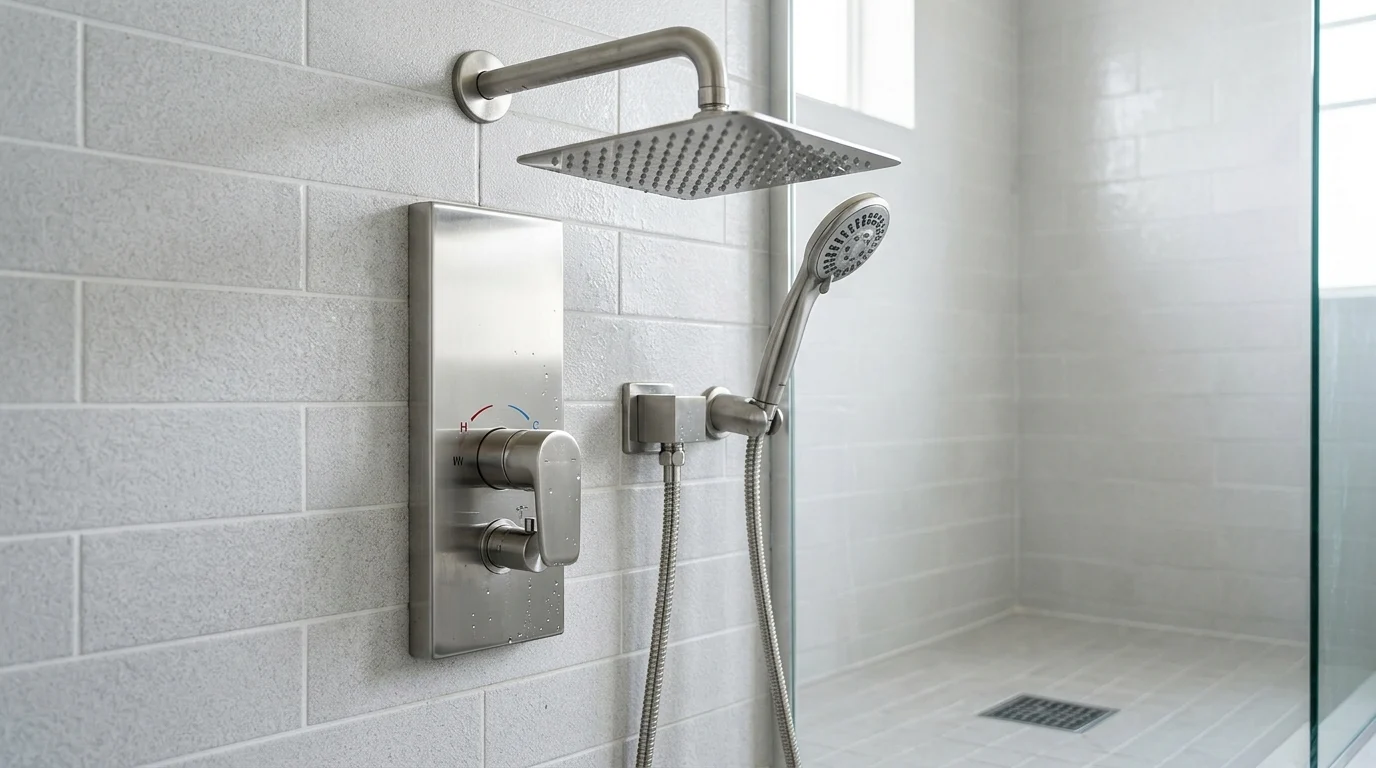
In hotels and multifamily buildings, the shower is more than a fixture—it is a daily performance test for plumbing design, guest satisfaction, water efficiency, and maintenance budgets. A well-specified commercial shower systemmust handle repeated use, changing water pressure, aggressive cleaning, and strict project timelines without compromising comfort or appearance. This guide explains how to evaluate valves, showerheads, Hand Showers, slide bars, flow rates, materials, and accessory scopes for hospitality and apartment developments. It also highlights the differences between short-cycle hotel renovations and long-life rental housing, helping specifiers, developers, and procurement teams make practical decisions that reduce callbacks, control operating costs, and deliver a better end-user experience.
Defining a Commercial Shower System for Hotels
A commercial shower system engineered for large-scale multi-unit developments represents a critical intersection of mechanical engineering, architectural design, and lifecycle economics. Unlike standard residential fixtures, these systems must withstand high-frequency usage, aggressive cleaning protocols, and variable water pressure across multi-story plumbing chases. Specifying the correct system requires a rigorous evaluation of component durability, user demographics, and long-term maintenance liabilities.
Core components of a complete system
At the foundation of a complete commercial shower system is the rough-in valve, which dictates water flow, temperature regulation, and plumbing compatibility. Beyond the concealed valve, the system encompasses the trim kit, showerhead, optional hand shower with a slide bar, diverter mechanisms, and wall supply elbows. For commercial applications, internal cartridges are subjected to rigorous lifecycle testing, often mandated to exceed 500,000 operational cycles to ensure zero-leak performance over a decade of daily use.
Hotel vs apartment shower requirements
While both hospitality and multifamily sectors require robust plumbing infrastructure, their operational priorities diverge significantly. Hotel shower systems are designed for transient guests, prioritizing immediate aesthetic impact, intuitive operation, and high-volume turnover. Consequently, hotel fixtures operate on a shorter aesthetic lifecycle of 7 to 10 years before comprehensive room renovations occur. Conversely, apartment shower systems prioritize long-term durability and tenant familiarity, targeting a 15 to 20-year lifecycle to minimize invasive wall repairs between leases.
| Feature Focus | Hotel Projects | Apartment Projects |
|---|---|---|
| Lifecycle Target | 7 to 10 Years | 15 to 20 Years |
| Component Focus | Guest experience (Rain Showers, body sprays) | Vandal resistance, low maintenance |
| Flow Rate Priority | High sensory impact (Often 2.0 to 2.5 GPM) | Maximum efficiency (Often 1.5 to 1.75 GPM) |
| Valve Preference | Thermostatic for precise control | Pressure balancing for cost-efficiency |
Fixture, valve, and accessory scope boundaries
Defining the boundaries of the fixture, valve, and accessory scope is essential to prevent procurement overlaps and installation delays. The rough plumbing scope covers the in-wall brass valve bodies and standardized PEX or copper connections. The finish plumbing scope encompasses the decorative trim plates, handles, and showerheads. Accessories, such as ADA-compliant grab bars or integrated soap dispensers, often fall under a separate hardware schedule. Clearly delineating these boundaries ensures that mechanical contractors and interior designers align on load-bearing requirements and finish-matching protocols.
Key Performance Specifications

Performance specifications dictate the operational reliability and user experience of any commercial shower installation. Engineers and specifiers must evaluate fluid dynamics, material science, and spatial constraints to select systems that perform consistently across varying municipal water pressures and building elevations.
Pressure balance, thermostatic control, and flow rate
Effective temperature and flow management relies on the selection between pressure-balancing and thermostatic control valves. Pressure-balancing valves maintain a consistent water temperature by reacting to fluctuations in hot or cold supply lines, though they do not allow independent volume control. Thermostatic valves, conversely, utilize a wax or bimetallic element to actively mix water to a precise temperature, independent of volume adjustments. Furthermore, engineered flow rates are heavily scrutinized; while legacy systems allowed up to 2.5 Gallons Per Minute (GPM), modern commercial specifications frequently mandate restrictors that cap flow between 1.5 GPM and 2.0 GPM without compromising the perceived spray force.
| Specification | Pressure Balance Valve | Thermostatic Valve |
|---|---|---|
| Temperature Control | Reactive to pressure drops | Active mixing via thermal element |
| Volume Control | Typically integrated (single handle) | Independent volume and temp handles |
| Cost Profile | Economical | Premium |
| Best Application | Standard apartments, mid-scale hotels | Luxury hospitality, custom suites |
Materials, finishes, cartridges, and valves
Durability is intrinsically linked to material selection. High-quality commercial systems utilize solid forged brass for valve bodies to prevent dezincification and corrosion over decades of exposure to aggressive water chemistries. Internal flow regulation is managed by ceramic disc cartridges, typically 35mm or 40mm in diameter, which offer superior resistance to mineral buildup compared to legacy rubber washers. Externally, finishes must withstand rigorous housekeeping protocols; Physical Vapor Deposition (PVD) finishes are standard, heavily tested to endure a minimum 24-hour acid salt spray test without degradation, far exceeding the performance of standard electroplating.
Concealed vs exposed shower system comparison
The architectural design and structural limitations of the building dictate whether a concealed or exposed system is deployed. Concealed systems, where the valve body and pipework reside entirely behind the finished wall, are the standard for North American multi-unit projects due to their minimalist aesthetic and space efficiency. However, they require strict installation depth tolerances, typically demanding a precise 2.5 to 3.5-inch clearance within the framing. Exposed Shower systems, commonly referred to as shower pipes or columns, mount the thermostatic mixer directly to the finished wall. These are increasingly specified in retrofit projects or mass-timber buildings where in-wall plumbing routing is restricted, offering simplified maintenance access at the expense of a larger physical footprint in the enclosure.
Compliance, Safety, and Water Efficiency
Navigating the regulatory environment is a critical phase in specifying commercial plumbing fixtures. Systems must satisfy a complex matrix of international plumbing codes, local municipal mandates, and third-party sustainability certifications before they can be approved for installation in high-occupancy buildings.
Plumbing codes and anti-scald requirements
Mitigating thermal shock and scalding risks is the primary objective of commercial plumbing safety codes. The International Plumbing Code (IPC) and Uniform Plumbing Code (UPC) mandate that all shower valves comply with ASSE 1016 performance standards. These regulations require valves to feature high-temperature limit stops, typically calibrated during installation to restrict the maximum outlet water temperature to 120 degrees Fahrenheit (49 degrees Celsius). In specialized commercial environments, such as senior living facilities or healthcare-adjacent hospitality, stricter local codes may cap this threshold at 110 degrees Fahrenheit (43 degrees Celsius), necessitating highly responsive thermostatic cartridges capable of rapid thermal adjustment.
Balancing guest comfort with water conservation
Achieving sustainability targets without degrading guest comfort requires precision engineering of the showerhead nozzles and aeration technology. Building standards like LEED v4 require a minimum 20 percent reduction in aggregate indoor water use from a calculated baseline. Consequently, developers frequently specify fixtures bearing the EPA WaterSense label, which certifies a maximum flow rate of 2.0 GPM while ensuring the spray coverage and force meet strict user satisfaction metrics. In regions facing severe water scarcity, ultra-low-flow systems operating at 1.5 GPM to 1.75 GPM are becoming the commercial baseline, supported by air-induction technology that increases water droplet size to simulate a higher volume spray.
Regional approvals and project-specific standards
Global supply chains necessitate strict adherence to regional product approvals to pass municipal inspections. In North America, the cUPC mark is non-negotiable for commercial validation, while projects in the UK and Australia require WRAS and WaterMark certifications, respectively. Additionally, legislative shifts toward water toxicity prevention, such as the requirements outlined in NSF/ANSI 61 and 372, mandate that all water-contact components adhere to strict lead-free definitions, legally defined as a maximum weighted average lead content of 0.25 percent across the wetted surface area.
Procurement, Installation, and Maintenance
The execution of a commercial shower system package extends far beyond the initial product selection. The logistical complexities of sourcing, rough-in staging, and long-term facility management require synchronized coordination between manufacturers, procurement agents, and on-site mechanical contractors.
Coordinating sourcing with project schedules
Managing procurement for high-density projects involves navigating substantial lead times and volatile supply chains. For developments exceeding 500 units, custom or bulk shower system orders typically require 12 to 16 weeks of production and transit time. To align with aggressive construction schedules, procurement managers utilize phased delivery strategies. Rough-in valves are expedited to the site to allow framing and drywall contractors to proceed, while the finished trim kits are held in secure staging facilities and delivered only during the final fit-out phase to mitigate the risk of on-site theft or damage.
Reducing installation errors in stacked units
In multi-story developments, plumbing chases are designed with back-to-back configurations to maximize spatial efficiency and reduce piping runs. Stacked units amplify the risk of compounded installation errors; a slight misalignment in the rough-in depth on the first floor can be replicated across dozens of vertical units. Utilizing prefabricated plumbing walls and standardized mounting brackets ensures the rough-in valves are secured at the exact optimal depth. Implementing these standardized installation protocols can reduce trim-out labor times by up to 30 percent, as plumbers are not forced to deploy custom extension kits to compensate for valves buried too deeply behind the tile.
Spare parts, warranties, and supplier capacity
Long-term operational viability relies heavily on the manufacturer's warranty framework and spare parts availability. Commercial shower systems are generally backed by 5 to 10-year warranties that specifically cover high-frequency usage, unlike residential warranties which are often voided in commercial applications. Facility management teams typically mandate that a project's turnover package includes a strategic reserve of replacement parts. Stocking 2 to 5 percent of spare thermostatic or pressure-balancing cartridges on-site ensures that maintenance engineers can resolve localized failures in under an hour, preventing revenue loss from out-of-order hotel rooms or tenant disputes in premium apartments.
Choosing the Right Commercial Shower System
Finalizing the specification requires a holistic evaluation of capital expenditure, operational lifespan, and brand standards. The ideal commercial shower system balances immediate financial constraints with the long-term value generated through reduced maintenance and elevated user satisfaction.
Decision matrix for cost, durability, and performance
Procurement teams must utilize a robust decision matrix to evaluate the total cost of ownership. The upfront cost for a mid-scale commercial shower package typically ranges from $150 to $400 per unit, while luxury hospitality configurations can easily exceed $600 to $1,200 per key. However, selecting the lowest initial bid often results in elevated lifecycle costs due to premature cartridge failure or finish degradation. A durable system constructed with forged brass bodies and PVD finishes will yield a lower annualized cost when factored over a 15-year operational horizon, compared to cheaper zinc-alloy alternatives that require complete replacement within five years.
When to prioritize premium guest-facing features
Luxury and boutique properties often utilize the bathroom environment as a key competitive differentiator, justifying the integration of premium guest-facing features. Upgrading to 10-inch or 12-inch overhead rain showerheads, multi-function hand showers, and integrated body sprays drastically elevates the perceived value of the room. However, these features impose strict mechanical prerequisites. Multi-outlet configurations require high-capacity 0.75-inch thermostatic rough-in valves capable of delivering 12 to 18 GPM, necessitating larger dedicated hot water return lines and robust drainage systems to prevent pan flooding.
Final selection criteria for owners and developers
Ultimately, the final selection process must align the distinct objectives of the property owner, the developer, and the MEP engineer. Developers prioritize supply chain transparency, standardized rough-in dimensions, and aggressive pricing to protect the project pro forma. MEP engineers focus on compliance, pressure drop calculations, and verifiable flow rates. Owners and operators advocate for aesthetic longevity, warranty protection, and simplified maintenance access. A successful commercial shower specification sits at the intersection of these criteria, delivering a system that installs efficiently, operates safely, and withstands the rigors of high-volume commercial environments.
Key Takeaways
- Define rough-in valves, finish trims, and accessory scopes early to prevent procurement overlap and installation delays.
- Specify hotel shower systems around a 7 to 10-year aesthetic lifecycle and apartment systems around a 15 to 20-year durability target.
- Use thermostatic valves where precise guest temperature control is a priority and pressure-balancing valves where cost-efficient apartment performance is more important.
- Match flow rates to the project type, with hotels often using 2.0 to 2.5 GPM for sensory impact and apartments targeting 1.5 to 1.75 GPM for efficiency.
- Require commercial-grade cartridges tested for high-cycle use, such as 500,000 operations, to reduce leaks and long-term maintenance costs.
- Evaluate suppliers on manufacturing capability, product range, and support for custom Shower Heads, hand showers, slide bars, filters, and complete shower sets.
Frequently Asked Questions
What is included in a commercial shower system?
A complete system typically includes the rough-in valve, trim kit, showerhead, optional hand shower and slide bar, diverter, wall supply elbow, and related installation accessories.
How do hotel and apartment shower specifications differ?
Hotels usually prioritize guest experience, visual impact, and 7 to 10-year renovation cycles, while apartments focus on durability, low maintenance, and 15 to 20-year service life.
Should hotels use thermostatic or pressure-balancing valves?
Hotels often benefit from thermostatic valves because they provide precise temperature control and a premium guest experience, especially in high-turnover rooms with variable usage patterns.
What flow rate is suitable for apartment shower systems?
Apartment projects often target efficient flow rates around 1.5 to 1.75 GPM to reduce water use while maintaining acceptable comfort for long-term tenants.
Why is lifecycle testing important for commercial shower valves?
Commercial valves face frequent use and aggressive cleaning, so cartridges tested beyond 500,000 cycles help reduce leaks, service calls, and costly wall repairs.