


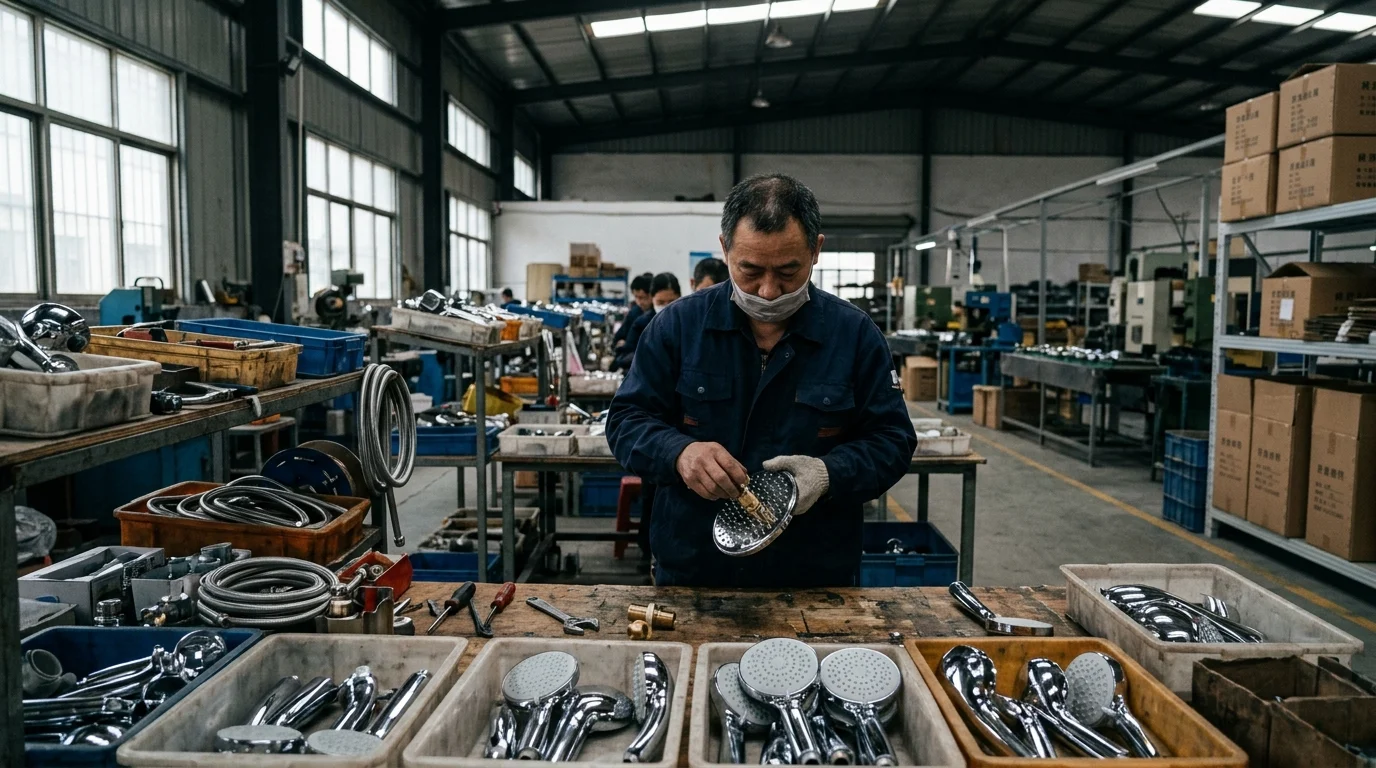
Global demand for better showers is rising, but buying from China requires more than comparing catalog photos and unit prices. The right supplier choice depends on regional manufacturing strengths, material selection, water-flow rules, tooling costs, and the buyer’s route to market. A basic ABS model and a premium brass rainfall unit may come from very different factory ecosystems, with very different quality controls and compliance risks. This guide explains how professional buyers can evaluate Chinese Shower Head suppliers, compare OEM and ODM options, specify technical requirements, and reduce sourcing risk before placing an order—especially when targeting competitive retail, project, or private-label bathroom markets.
China Shower Head Sourcing Basics
Sourcing sanitary ware from a China shower head manufacturer requires navigating a highly fragmented, geographically clustered industrial base. The supply chain is predominantly concentrated in three distinct regional hubs: Kaiping (Guangdong) for premium brass and stainless steel fixtures, Xiamen (Fujian) for high-end plastics and advanced water-saving technologies, and Cixi (Zhejiang) for mass-market, cost-effective ABS plastic models. Understanding these regional specializations is critical for aligning procurement strategies with target market positioning.
Global buyers must approach this market with a clear technical baseline rather than relying solely on aesthetic preferences. The variance in manufacturing capabilities dictates that unit costs can range from $0.50 for a basic, single-function Abs Shower Head to over $25.00 for a multi-function, PVD-finished brass rainfall unit. Selecting the appropriate manufacturing partner depends heavily on production scale and capacity fit, intellectual property management, and precise technical specifications.
Buyer goals and market expectations
Procurement professionals must define exact market expectations before engaging suppliers. A buyer targeting the North American retail sector will prioritize distinct criteria—such as WaterSense certification (which mandates a maximum of 2.0 GPM) and California Energy Commission (CEC) compliant 1.8 Gallons Per Minute (GPM) flow restrictors—compared to a buyer catering to the Middle Eastern project market, which often demands higher flow rates and robust resistance to hard water scaling.
Establishing target price bands and volume projections early in the sourcing phase prevents mismatched negotiations. For instance, a buyer requiring an illustrative volume of 50,000 units annually of a standardized SKU will leverage different supply chain efficiencies than a boutique brand ordering 1,500 units of a proprietary architectural design. Clear goals dictate whether a buyer should target heavily automated tier-one factories or flexible mid-sized workshops.
OEM vs ODM supplier models
The choice between Original Equipment Manufacturer (OEM) and Original Design Manufacturer (ODM) models fundamentally alters the sourcing trajectory. Under an OEM arrangement, the buyer provides complete CAD drawings and technical specifications. The factory executes the manufacturing, requiring the buyer to fund custom injection molds or forging dies, with indicative costs commonly ranging between $2,500 and $8,000 depending on complexity.
Conversely, the ODM model allows buyers to select from the manufacturer's existing catalog of proprietary designs. The buyer applies their branding, packaging, and perhaps custom surface finishes. This approach eliminates tooling costs and reduces time-to-market from an average of 90 days (OEM) to approximately 35-45 days. However, it sacrifices exclusive design rights unless a specific exclusivity threshold (often benchmarked around 50,000 units per year, though actual terms vary by supplier and contract) is negotiated alongside a formal NNN (Non-Disclosure, Non-Use, Non-Circumvention) and IP assignment agreement.
Key Shower Head Specifications
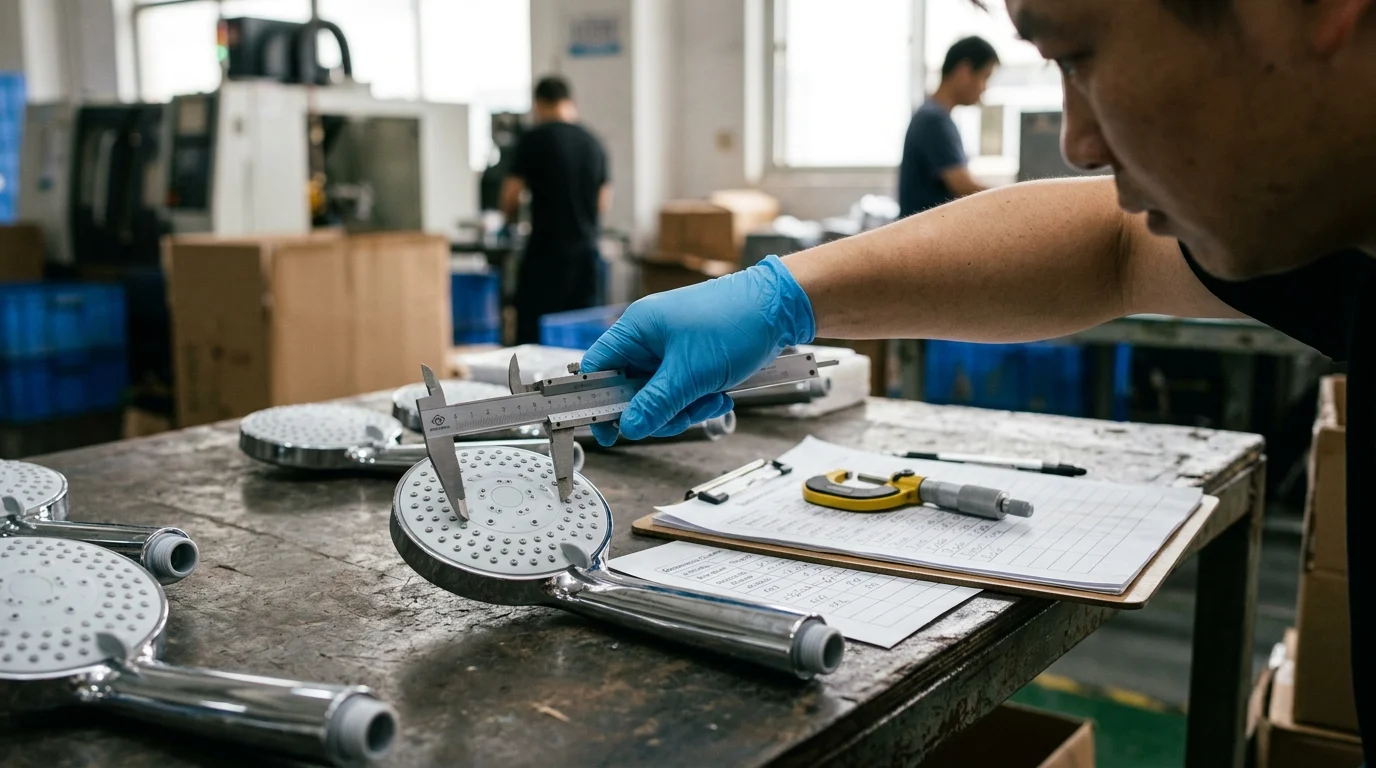
A shower head's physical specifications dictate its market viability, lifespan, and warranty risk. Professional buyers must mandate strict technical parameters in their Purchase Orders (POs) rather than accepting generalized descriptions. This includes explicit declarations of base materials, surface treatment processes, and internal component engineering.
Materials and finish options
The primary base materials for shower heads are Acrylonitrile Butadiene Styrene (ABS), 304/316 stainless steel, and solid brass. While HPb59-1 brass is common, buyers must note this alloy typically contains 0.8–1.9% lead and does not meet low-lead regulations such as the U.S. Safe Drinking Water Act or California AB 1953. For North American and relevant European markets, buyers should specify low-lead alternatives like HBi59-1 or certified lead-free alloys. ABS dominates the residential market due to its lightweight nature, thermal resistance, and cost-efficiency, while brass is reserved for high-end architectural fixtures offering superior durability and a premium tactile weight.
Surface finish quality is a critical differentiator. Standard chrome plating should be subjected to Copper Accelerated Acetic Acid-Salt Spray (CASS) testing. As a recommended procurement benchmark, buyers typically require a 24-hour to 48-hour CASS test pass rate without blistering or corrosion, though acceptable thresholds can vary by market tier. For premium finishes like matte black or brushed gold, Physical Vapor Deposition (PVD) is preferred over standard electroplating or powder coating due to its superior scratch resistance and longevity.
Note: The unit costs outlined below are indicative benchmarks; actual pricing will fluctuate based on raw material commodity markets and currency exchange rates.
| Base Material | Typical Unit Cost Range | Primary Application | Expected Lifespan (Standard Use) |
|---|---|---|---|
| Standard ABS | $0.80 - $3.50 | Mass Market / Retail | 3 - 5 Years |
| 304 Stainless Steel | $4.00 - $12.00 | Mid-to-High End / Commercial | 7 - 10 Years |
| Solid Brass (Low-Lead/Standard) | $15.00 - $35.00+ | Luxury / Hospitality | 15+ Years |
Performance, durability, and cost factors
Performance is quantified by flow rate consistency, spray pattern distribution, and acoustic levels. Internal components, particularly the thermoplastic elastomer (TPE) or liquid silicone rubber (LSR) nozzles, dictate the self-cleaning capabilities and resistance to calcification. High-quality silicone nozzles allow users to manually rub away limescale buildup, a vital feature in hard water regions.
Durability testing must include burst pressure assessments. A standard ABS shower head should withstand static water pressure of at least 10 bar (1.0 MPa) for one minute without leaking or structural failure. Cost factors are directly tied to these performance metrics; integrating a pressure-compensating flow restrictor to maintain a steady 2.0 GPM across fluctuating line pressures will add an estimated $0.15 to $0.30 to the Bill of Materials (BOM) as an illustrative benchmark, but it is essential for regulatory compliance.
Sample approval and pre-production testing
The Pre-Production Sample (PPS) is the definitive and most critical milestone before mass manufacturing. Buyers must never authorize mass production based on a hand-crafted prototype. The PPS must be produced using the actual injection molds, assembly lines, and finishing processes designated for the final run.
During sample approval, buyers should conduct destructive testing, including drop tests (e.g., dropping the unit from 1.5 meters onto a concrete floor) and thermal shock tests (alternating between 70°C and 20°C water for 300 cycles). Only after the PPS passes all dimensional, aesthetic, and functional benchmarks should the buyer sign and seal the sample as the sealed master sample for third-party inspections and future production runs.
How to Compare Manufacturers
Differentiating a genuine manufacturer from a trading company requires rigorous vetting. While trading companies can offer broader catalogs and lower Minimum Order Quantities (MOQs), direct manufacturers provide better cost control, direct accountability for quality assurance, and technical transparency for custom developments.
Factory capability and audit indicators
A robust factory audit should evaluate the facility's vertical integration. Key indicators include in-house injection molding machines (look for precise tonnage capabilities, typically 100T to 300T for shower components), automated electroplating lines, and dedicated testing laboratories. Outsourced electroplating is common due to environmental regulations in China. However, because environmental enforcement can cause sudden electroplating line shutdowns, buyers should confirm that the manufacturer has backup plating suppliers or contingency plans to mitigate supply chain disruption. The manufacturer must also demonstrate strict incoming Quality Control (QC) for these outsourced plated parts.
Furthermore, while verified ISO 9001:2015 certification is a baseline requirement, buyers should note that certifications and factory audits in China can sometimes be staged or rented. While unannounced video walkthroughs are sometimes suggested, they are frequently refused by Chinese suppliers for operational and privacy reasons. Engaging local third-party inspectors for random spot checks is a much more practical and effective alternative to supplement standard audit indicators. Advanced buyers should also request a supplier's defect rate history and corrective action reports (CAPA). A manufacturer that cannot provide documented procedures for handling typical buyer requirements—such as maintaining acceptable defect rates that align with specific AQL thresholds for your price tier—lacks the maturity for large-scale global supply.
MOQ, lead time, and pricing comparison
MOQs for shower heads generally range from 500 to 2,000 units per SKU, heavily dependent on the finish and material. Standard chrome ABS units may have lower MOQs, while custom PVD colors often require 1,000+ units to justify the batch processing costs.
Lead times typically span 30 to 45 days for repeat orders, but initial orders can take 60 days due to packaging design and component sourcing. When comparing pricing, buyers must ensure quotes are normalized. A $2.50 quote from Supplier A and a $1.80 quote from Supplier B are only comparable if both specify the same ABS grade (e.g., Chimei Polylac), the same CASS test duration, and identical packaging.
Mold ownership and customization terms
For OEM projects, mold ownership must be explicitly negotiated before the transfer of any CAD files or deposit payments. Contracts must state that the buyer retains 100% ownership of the tooling upon full payment, and that the factory cannot use the mold to produce units for other clients.
Customization terms should also address tooling maintenance. Standard steel molds (such as NAK80 or S136) are typically rated for an illustrative lifespan of 300,000 to 500,000 injection shots, though actual longevity depends on maintenance and contract terms. The agreement must specify who bears the cost of mold refurbishment or replacement once the tool reaches the end of its lifecycle, ensuring uninterrupted supply for high-volume programs.
Compliance, Quality Control, and Logistics
Importing sanitary ware introduces stringent regulatory hurdles. Non-compliance can result in customs seizures, mandatory recalls, and severe financial penalties. Consequently, quality control cannot be an afterthought; it must be integrated into every stage of the logistics and manufacturing pipeline.
Regional compliance requirements
Shower head compliance is highly regionalized. In the United States, the Environmental Protection Agency (EPA) WaterSense program mandates a maximum flow rate of 2.0 GPM, while strict state-level regulations like the California Energy Commission (CEC) cap flow at 1.8 GPM. Additionally, because shower heads are not drinking-water devices, they are generally subject to lead content verification (e.g., NSF/ANSI 372) or state-level low-lead plumbing laws, rather than NSF/ANSI 61 health-effects certification.
European markets require CE marking and, depending on the country, specific acoustic and plumbing certifications such as WRAS in the UK, ACS in France, or KTW/W270 in Germany. Australian importers must secure WaterMark certification. Buyers must demand verifiable, third-party test reports from recognized laboratories (e.g., SGS, TUV, Intertek) rather than accepting self-declared factory certificates.
| Target Market | Key Certification | Primary Focus Area | Maximum Flow Rate Limit (Typical) |
|---|---|---|---|
| United States | WaterSense / CEC | Water Conservation | 1.8 - 2.0 GPM |
| United Kingdom | WRAS | Material Safety / Water Quality | Non-regulated (Market driven) |
| Australia | WaterMark / WELS | Plumbing Safety / Efficiency | 9.0 Liters/min (3-Star) |
| France | ACS | Material Toxicity | N/A |
Inspection plan and quality checkpoints
Implementing an Acceptable Quality Limit (AQL) inspection plan is non-negotiable. Most global buyers utilize the ISO 2859-1 standard, setting thresholds at AQL 1.5 for Major defects (e.g., leaks, severe plating scratches) and AQL 4.0 for Minor defects (e.g., slight color variations, minor packaging flaws).
Quality checkpoints should occur at three stages: Incoming Quality Control (IQC) for raw brass or plastic granules, In-Process Quality Control (IPQC) post-plating but pre-assembly, and Final Random Inspection (FRI) before shipping. The FRI must include functional checks on water pressure, flow rate verification, and thread tolerance testing using standard G1/2 or NPT pipe thread gauges.
Incoterms, packaging, freight, and spare parts
Incoterms dictate the risk and cost transfer point. Buyers must factor in current trade-policy risks (such as U.S. Section 301 tariffs on Chinese sanitary ware), which can significantly impact landed costs and influence Incoterms selection. FOB (Free On Board) Ningbo, Shenzhen, or Xiamen are the most common terms, meaning the factory covers costs until the goods are loaded onto the vessel. Buyers must specify packaging requirements meticulously; a color box with a die-cut EVA foam insert reduces transit damage compared to basic bubble wrap but adds $0.20 to $0.40 per unit.
Freight consolidation requires accurate volumetric calculations. A standard 40HQ container can hold roughly 30,000 to 40,000 standard handheld shower heads, depending on retail packaging dimensions.
Final Supplier Selection
Navigating the final stages of onboarding a China shower head manufacturer requires strict adherence to standardized procurement protocols. Transitioning from a vetted shortlist to a finalized partnership demands rigorous validation of commercial terms, product quality, and operational reliability.
Quotation, sample, and contract workflow
The procurement process begins with a detailed Request for Quotation (RFQ) specifying exact material grades (e.g., solid brass versus ABS plastic), surface plating thickness, and flow rate parameters. Once initial pricing aligns, buyers must mandate a pre-production sample. This "golden sample" serves as the non-negotiable benchmark for mass production quality.
Upon sample approval, formalize the agreement through a comprehensive manufacturing contract or Pro Forma Invoice (PI). Ensure the contract explicitly defines the agreed Incoterms (e.g., FOB Jiangmen or Xiamen), lead times, and standard payment structures. Standard industry practice typically involves a 30% telegraphic transfer (T/T) deposit before production, with the 70% balance payable upon presentation of the Bill of Lading and a passed inspection report.
Supplier risk red flags
When evaluating a potential China shower head manufacturer, certain warning signs warrant immediate disqualification:
- Unrealistic pricing: Quotes significantly below the regional manufacturing average often indicate compromised material integrity, such as using recycled plastics or reducing chrome plating layers, which inevitably leads to premature corrosion.
- Compliance evasion: Reluctance to provide verifiable third-party test reports for mandatory certifications like cUPC (North America), WaterSense, or EN 1112 (Europe).
- Payment anomalies: Requests to route payments to unverified offshore accounts or sudden changes in banking details, which are common indicators of financial instability or interception fraud.
- Inspection resistance: Refusal to allow third-party quality control agencies (e.g., SGS or TÜV Rheinland) to conduct pre-shipment inspections (PSI) at the factory.
Decision checklist for global buyers
To systematize the final supplier selection, procurement managers should utilize a standardized evaluation matrix to compare finalists objectively.
| Evaluation Criteria | Benchmark for Approval |
|---|---|
| Quality Assurance | ISO 9001 certification; in-house salt spray, lifecycle, and water pressure testing capabilities. |
| Regulatory Compliance | Valid, verifiable certifications specific to the target market (e.g., ACS, WRAS, or WaterSense). |
| Production Capacity | Automated injection molding and assembly lines that comfortably exceed the buyer's peak volume requirements. |
| Supply Chain Transparency | Clear documentation of sub-tier suppliers for critical internal components, such as check valves or aerators. |
By rigorously applying these criteria, global buyers can mitigate procurement risks and secure a scalable, compliant, and reliable manufacturing partner.
Key Takeaways
- Match your sourcing region to your target product, such as Kaiping for metal fixtures, Xiamen for advanced plastic and water-saving designs, and Cixi for cost-effective ABS shower heads.
- Define flow rate, material, finish, certifications, target price, and annual volume before contacting suppliers to avoid mismatched quotations.
- Use OEM for proprietary designs that require custom molds, and use ODM when speed, lower upfront cost, and catalog-based private labeling are priorities.
- Include exact technical specifications in the purchase order, covering base material, surface treatment, internal components, packaging, and inspection requirements.
- Validate samples, compliance documents, and production capability before mass ordering, especially for regulated markets such as North America.
Frequently Asked Questions
Where are China shower head manufacturers mainly located?
Key clusters include Kaiping for brass and stainless steel fixtures, Xiamen for premium plastic and water-saving designs, and Cixi, Zhejiang for cost-effective ABS shower heads and full-chain Bathroom Shower production.
Should I choose OEM or ODM when ordering shower heads?
Choose OEM if you have proprietary CAD drawings and need exclusive designs. Choose ODM if you want faster launch, lower tooling cost, and existing factory designs with your branding, packaging, and finish options.
What certifications should global buyers check before ordering?
Requirements depend on market. North American buyers often need WaterSense, CEC flow compliance, and material safety checks, while other markets may prioritize pressure performance, durability, anti-scale features, or local plumbing standards.
What is a typical MOQ for shower head sourcing?
MOQ varies by supplier, material, finish, and customization level. Standard ODM ABS models usually allow lower MOQs, while custom OEM molds, exclusive finishes, or private tooling often require higher order volumes.
How can buyers reduce quality risks before mass production?
Confirm technical drawings, flow rate, materials, finish, packaging, and testing standards in the purchase order. Request samples, pre-production approval, in-process inspection, and final random inspection before shipment.
