


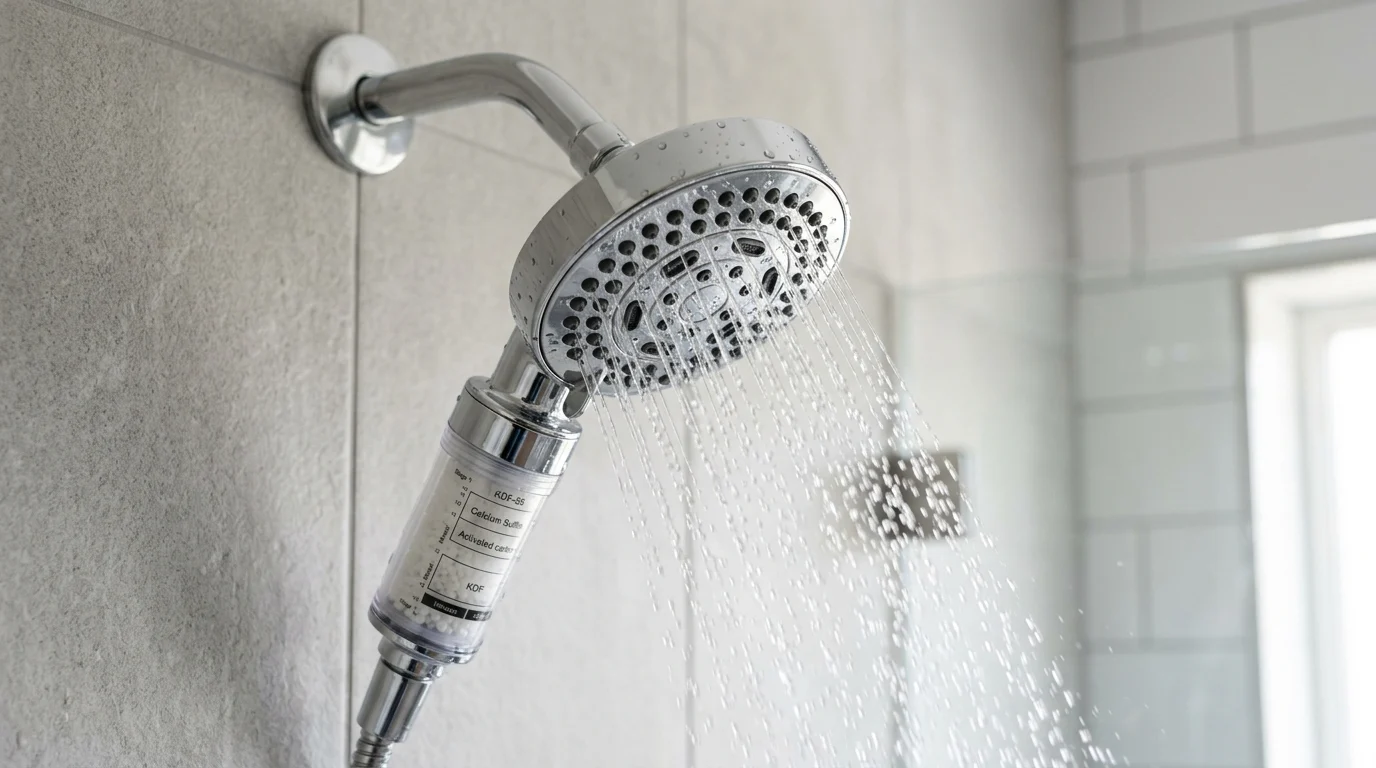
Hard water can turn an everyday shower into a frustrating cycle of scale buildup, weak lather, dry skin, and dull hair. While municipal water may be safe, it is often not softened, leaving calcium, magnesium, chlorine, and other compounds to affect comfort and fixture performance. Choosing the right Filtered Shower Head means understanding what these products can—and cannot—do. This guide explains how hard water behaves in the shower, when filtration helps, when a whole-house softener is necessary, and which filter technologies are worth comparing. For buyers, distributors, and bathroom project planners, the goal is simple: better shower results backed by realistic expectations and practical product selection.
Why Choose a Filtered Shower Head for Hard Water
Dealing with hard water requires understanding your local water supply. Hard water contains high levels of dissolved minerals, mainly calcium and magnesium carbonates. While municipal treatment facilities ensure water is microbiologically safe, they do not typically soften the water, leaving you to manage the downstream effects on your plumbing fixtures and skin. Adding a Shower Filter is a simple, targeted way to mitigate these issues right where you wash. Because the right choice depends entirely on your specific plumbing and water chemistry, there is no single universal model. Instead, this buying guide provides a comprehensive framework to help you navigate the market, compare top features, and find the best filtered shower head for hard water to suit your specific needs.
Common hard water problems in the shower
High mineral content—generally considered by water quality standards to be anything over 120 milligrams per liter (mg/L) or 7 grains per gallon (GPG)—leaves scale on bathroom surfaces and fixtures. In the shower environment, these minerals react with the fatty acids in soap to form insoluble calcium and magnesium salts, commonly known as soap scum. This reaction makes it harder for soap to lather and leaves a residual film on your skin and hair. Over time, this film disrupts your natural moisture barrier, leading to dryness, itching, and worsened conditions for individuals managing eczema or psoriasis.
When a shower filter is not enough
It is critical to distinguish between water filtration and water softening. A point-of-use shower filter cannot physically remove calcium and magnesium ions to truly soften the water. True water softening requires an ion-exchange process, which demands a specific contact time that is physically impossible to achieve at standard shower flow rates of 1.5 to 2.5 gallons per minute (GPM). Therefore, if a property exhibits extreme hardness exceeding 15 GPG, a whole-house ion-exchange softener or reverse osmosis system is the only definitive solution.
You should be highly skeptical of shower filters that market themselves as "water softeners" or promise "mineral alteration" benefits—such as "ionizing" or "mineral ball" gimmick products—as these claims often lack independent verification. However, for hard-water mitigation, some specialized shower filters incorporate polyphosphate or citric acid media; rather than removing minerals, these agents temporarily sequester (bind) calcium and magnesium to reduce scale buildup. Because these media do not actually remove the minerals, they will not change how the water feels on your skin. If you are expecting the slick, smooth feel of softened water, you may be disappointed. Primarily, shower filters serve to neutralize chlorine, chloramines, and heavy metals, which compound the drying effects of hard water. By removing these harsh chemicals, a filter provides noticeable relief for your skin and hair even without extracting the hard minerals.
Key Filtration Technologies to Compare
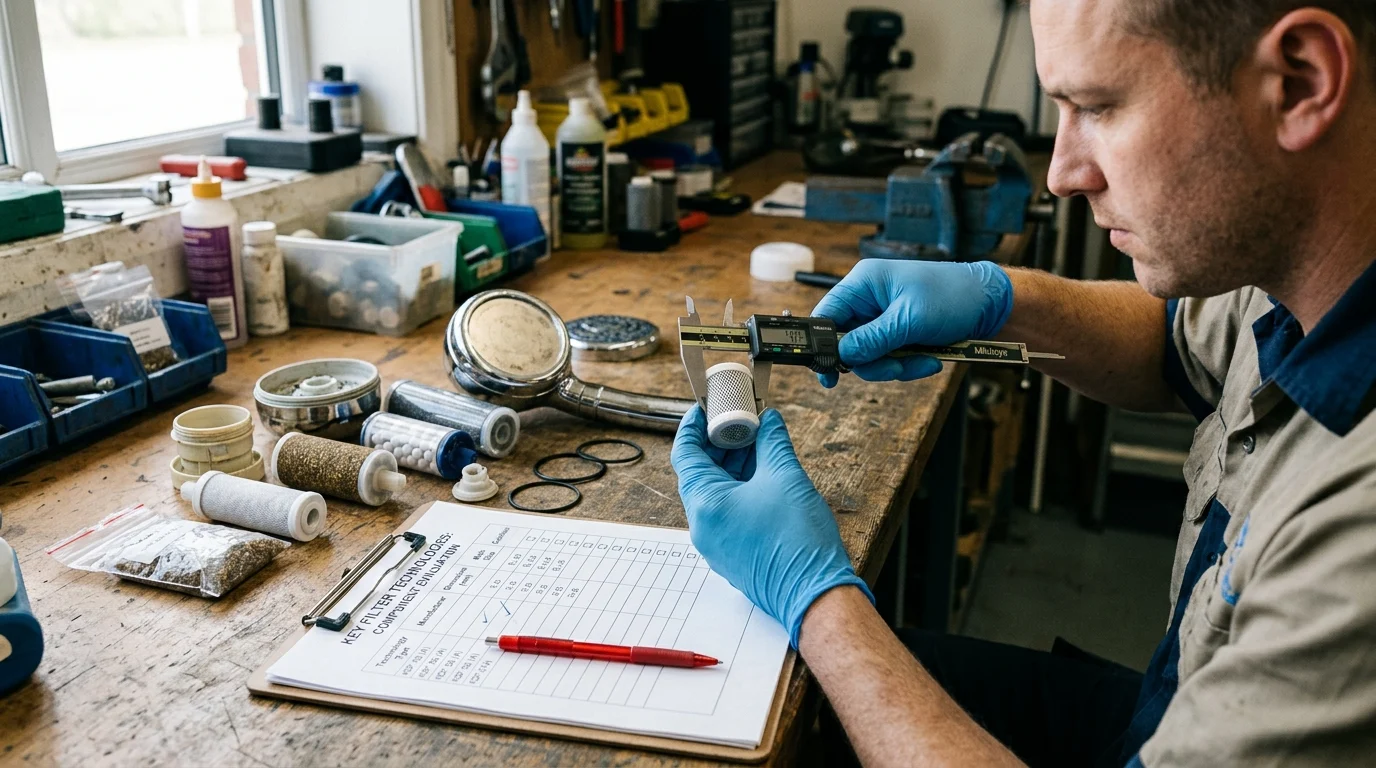
A shower filter's effectiveness relies entirely on the quality and volume of its internal media. Manufacturers typically utilize a multi-stage approach, layering different reactive compounds to target a broader spectrum of contaminants. Understanding the specific capabilities and thermal limitations of these materials helps you choose the right model for high-temperature shower environments.
KDF, activated carbon, calcium sulfite, and ceramic media
Kinetic Degradation Fluxion (KDF), specifically KDF-55, remains the industry standard for hot water applications. Composed of high-purity copper-zinc granules, KDF utilizes a redox (oxidation-reduction) process to convert free chlorine into benign water-soluble chlorides. Manufacturers commonly cite that it operates efficiently at temperatures up to 212°F (100°C), well above standard shower temperatures. Activated carbon, while excellent for capturing volatile organic compounds (VOCs) and odors, often begins to degrade in effectiveness in warmer water (frequently cited as around 105°F or 40°C, depending on the manufacturer), making it better suited as a cold or warm water pre-filter.
It is also important to check your local water utility's disinfection method. Many municipalities now use chloramines instead of free chlorine. Standard KDF and carbon shower filters handle chloramines poorly; if chloramines are present, you may need a specialized Vitamin C (ascorbic acid) filter. Keep in mind that Vitamin C cartridges deplete quickly and require frequent replacement, which adds to your recurring costs. Calcium sulfite is frequently integrated due to its rapid chlorine reduction capabilities in hot water, often outperforming carbon in compact spaces. Finally, ceramic spheres or tourmaline are sometimes included to alter the water's pH, though independent lab verification for their dermatological benefits remains limited compared to KDF. Use the quick reference table below to compare these primary media types.
| Media Type | Primary Target | Thermal Tolerance | Typical Application |
|---|---|---|---|
| KDF-55 | Chlorine, Heavy Metals | Up to 212°F (100°C) | Core filtration layer |
| Activated Carbon | VOCs, Odors | Degrades > 105°F (40°C) | Cold/warm water pre-filter |
| Calcium Sulfite | Rapid Chlorine Reduction | High (Steam/Hot Water) | Compact inline filters |
| Ceramic Spheres | pH Balancing | High | Supplemental stage |
Flow rate, filter lifespan, and contaminant reduction claims
The physical size of the filter dictates the volume of media, which directly impacts both the flow rate and the cartridge lifespan. While manufacturers often provide illustrative industry estimates—such as processing approximately 10,000 gallons of water or lasting roughly four to six months for a two-person household—actual lifespans vary widely based on your specific brand, water quality, and household usage. Because U.S. federal and state regulations restrict modern showerheads to a maximum flow rate of 1.8 to 2.5 GPM, high-density media beds can sometimes induce a drop in water pressure. Premium units utilize larger housing designs to maintain water velocity and prevent flow constriction. Keep in mind that filters cannot fix pre-existing low water pressure caused by your municipal supply. When evaluating contaminant reduction claims, look for empirical testing data rather than marketing hyperbole, specifically focusing on the percentage of free available chlorine removed over the entire estimated lifecycle.
How to Compare Filtered Shower Heads
Evaluating shower filtration options requires a systematic approach, moving beyond aesthetics to assess build quality, standardized performance metrics, and long-term costs. A robust comparison ensures that the selected unit will deliver consistent improvements without introducing plumbing vulnerabilities.
Build quality, certifications, and compatibility
Structural build quality is paramount, as the housing must withstand continuous temperature changes and water pressure without degrading. Acrylonitrile Butadiene Styrene (ABS) plastic is common, but brass or stainless steel fittings offer superior longevity and eliminate the risk of microplastic leaching. Compatibility is rarely an issue, as the industry standardizes on 1/2-inch National Pipe Thread (NPT) connections.
Performance validation is critical. Buyers should look for certification to NSF/ANSI Standard 177, the specific standard governing shower filtration systems. To achieve this certification, the standard requires a unit to demonstrate a minimum 50% reduction in free available chlorine at the manufacturer's specified flow rate for the entire duration of the filter's stated capacity. Note that this standard applies only to free chlorine, not chloramines or hard minerals.
Filter replacement cost and total ownership cost
The initial purchase price of a shower filter represents only a fraction of the total cost of ownership (TCO). Please note that the cost ranges below are illustrative industry estimates. Based on typical pricing, high-end multi-stage units may retail between $80 and $150, while entry-level inline models cost $25 to $40. However, the recurring cost of replacement cartridges—required every four to six months—dictates the long-term economic viability. Proprietary cartridges can cost upwards of $40 each, whereas standardized drop-in filters may cost less than $15. Calculating the TCO over a standard 24-month lifecycle provides a more accurate financial comparison.
| System Tier | Estimated Initial Unit Cost | Typical Cartridge Cost (per 6 months) | Estimated 24-Month Total Cost |
|---|---|---|---|
| Entry-Level Inline | $25 - $40 | $15 | $70 - $85 |
| Mid-Range Multi-Stage | $50 - $70 | $25 | $125 - $145 |
| Premium Heavy-Duty | $100 - $150 | $45 | $235 - $285 |
How to Get Better Results
Buying the filter is only the first step. Assessing your shower environment before installation and keeping up with routine maintenance determines how well and how long your filter will actually work.
Check water hardness and shower setup before buying
Prior to selecting a unit, an objective assessment of your existing plumbing is necessary. You can utilize chemical test strips to quantify your local water hardness. (Note: A standard TDS meter cannot verify shower filter efficacy, as filters do not remove dissolved minerals; they only alter them or remove chlorine). If the baseline hardness is exceptionally high, anticipate accelerated degradation of the filtration media. Extreme hardness can significantly reduce a filter's lifespan—sometimes by an estimated 30% compared to baseline claims, according to some manufacturers—because scale coats the filtration media. Furthermore, static water pressure must be evaluated. Installations in low-pressure environments may require specialized low-resistance inline filters to prevent unacceptable reductions in flow velocity.
Install, flush, clean, and descale the unit properly
Proper installation and maintenance directly impact immediate water quality and long-term functionality. When installing, always use thread seal tape (Teflon tape) on the Shower Arm threads to ensure a watertight fit, and test the connections for leaks after 24 to 48 hours of use, as leaks at the filter junction are the most common user complaint. Newly installed cartridges containing activated carbon need to be flushed for 2 to 5 minutes to purge residual carbon dust, which can initially cause black water. Routine maintenance extends beyond cartridge replacement; the showerhead nozzles and filter housing must be descaled periodically. Soaking the non-filtered components in standard white vinegar for 30 to 45 minutes dissolves external scale. This keeps the spray pattern uniform and prevents pressure spikes that could damage the filter.
How to Choose the Best Option for Your Needs
Choosing the best shower filter comes down to your living situation, skin sensitivities, and budget. A strategic selection process guarantees both physical benefits and mechanical compatibility.
Best choices for homeowners, renters, and sensitive skin
Your living situation heavily influences the ideal filter type. Renters generally benefit from compact, inline filters that install directly behind the existing showerhead. However, always confirm that the model offers a simple, no-tool installation; even inline filters can potentially void specific lease clauses if permanent plumbing alterations are required or if damage occurs during installation. Homeowners have the flexibility to install larger, wall-mounted units with higher media volumes or integrated wand systems. For individuals managing severe atopic dermatitis or sensitive skin, maximizing the volume of KDF-55 and calcium sulfite is critical; these users should prioritize oversized filter housings over aesthetic minimalism to ensure the highest possible reduction of chemical irritants.
Final buying checklist
Before you make your final choice, use this simple decision framework to ensure a seamless purchase and installation:
- Measure your physical clearance: Check the distance between your shower arm and the height of the tallest user. Large, premium filter housings can lower the showerhead by several inches, which may require you to purchase an adjustable extension arm.
- Evaluate plumbing weight limits: Heavy, multi-stage filtered showerheads can strain older plumbing. Ensure your existing shower arm can support the extra weight and bulk without leaking; otherwise, a lightweight inline model is a safer choice.
- Verify third-party testing: Do not take marketing claims at face value. Look for the NSF/ANSI 177 certification seal on the packaging or the manufacturer's website to guarantee the unit has been independently tested for chlorine reduction.
- Confirm cartridge availability: Ensure that replacement media is readily available from multiple distributors. Relying on a single, obscure manufacturer can render your system useless if they stop producing the proprietary cartridges. Factor this recurring cost into your annual household budget.
Key Takeaways
- Test your local water hardness before buying because water above 120 mg/L or 7 GPG is considered hard and may require targeted treatment.
- Choose a shower filter to reduce chlorine, chloramines, heavy metals, and odors rather than expecting it to fully remove calcium and magnesium.
- Use a whole-house ion-exchange softener or reverse osmosis system if your property has extreme hardness above 15 GPG.
- Be cautious with products marketed as shower “water softeners” or “ionizing” mineral-ball filters unless they provide independent performance verification.
- Compare filtration media carefully, as polyphosphate and citric acid can help control scale but will not make water feel fully softened.
Frequently Asked Questions
Do filtered shower heads actually soften hard water?
No point-of-use shower filter can truly soften water by removing calcium and magnesium at normal shower flow rates. True softening requires a whole-house ion-exchange softener. A filtered shower head can still reduce chlorine, some metals, odors, and scale-related buildup depending on its media.
What hardness level is considered hard water?
Water is generally considered hard when mineral content exceeds 120 mg/L or 7 grains per gallon. If your water is above 15 GPG, a shower filter may help comfort but a whole-house softener is usually the better long-term solution.
Which filter media should I look for in a hard water shower head?
Look for proven media such as KDF, activated carbon, calcium sulfite, polyphosphate, or citric acid-based scale control. Avoid relying only on vague claims such as “ionizing” or “mineral balls” unless the manufacturer provides clear testing data.
Can a filtered shower head help dry skin and hair?
Yes, it may help by reducing chlorine, chloramines, and certain metals that can worsen dryness and irritation. However, it will not create the slippery feel of fully softened water if calcium and magnesium remain in the supply.
How often should I replace the shower filter cartridge?
Replacement depends on water quality, usage, and cartridge capacity. Many filters need changing every 2 to 6 months. If water pressure drops, odors return, or scale builds faster, replace the cartridge sooner.
