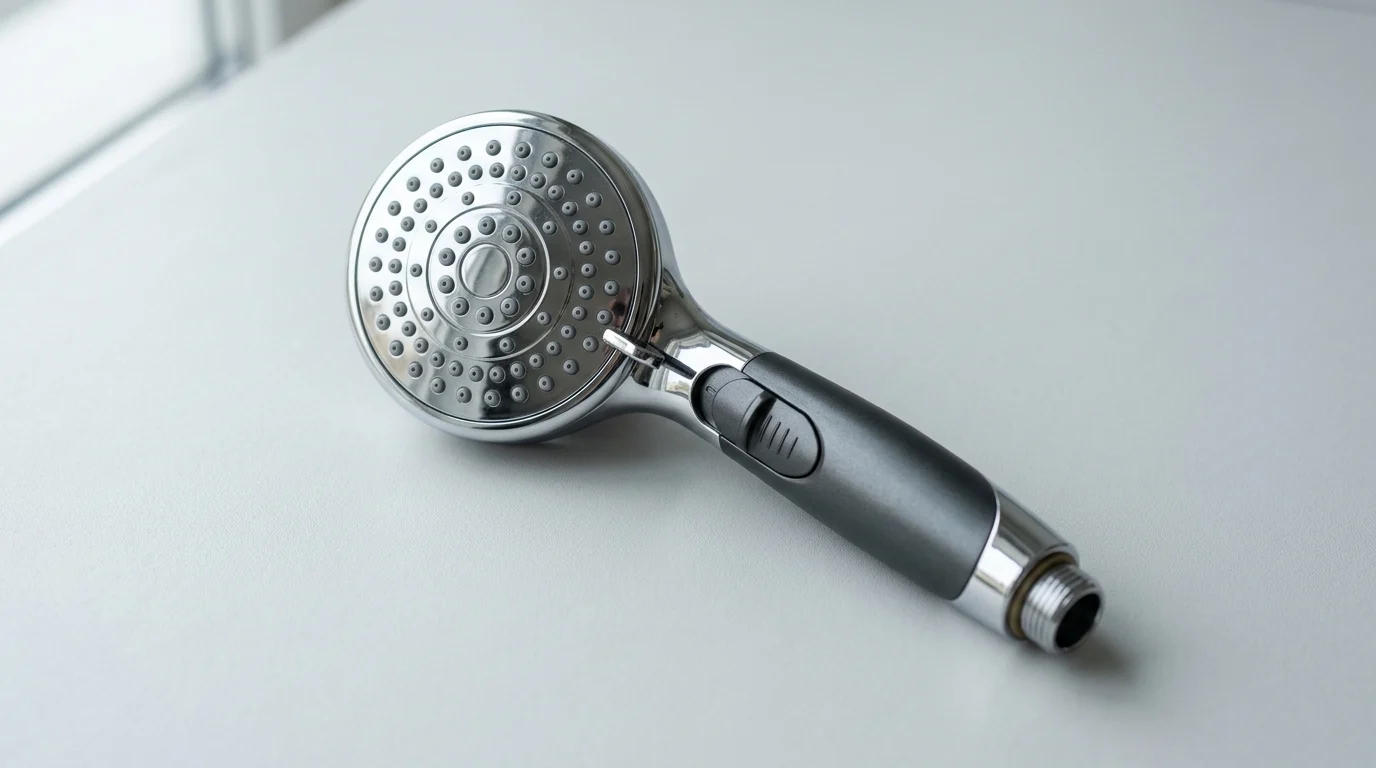
For importers, the best-selling shower product is not always the heaviest or most expensive—it is the one that delivers reliable performance at scale. ABS handheld Shower Heads have become a practical choice for large-volume sanitary ware programs because they combine low unit cost, reduced container weight, flexible design, and market-ready finishes. This article examines why ABS works so well for wholesale and OEM orders, which specifications influence landed cost, and how buyers can reduce quality risks before committing to mass production. For distributors sourcing from experienced manufacturers like XinYi Sanitary Ware, understanding these details can make the difference between a profitable import program and costly after-sales issues.
Why Importers Choose ABS Handheld Shower Heads
Acrylonitrile Butadiene Styrene (ABS) has established itself as the dominant polymer in the global sanitary ware market, particularly for high-volume shower fixtures. For importers and wholesale distributors, specifying ABS handheld shower heads provides a calculated balance between manufacturing scalability, unit cost, and end-user performance.
The shift from traditional brass to engineered plastics in shower head manufacturing is driven by the material's thermoplastic properties, which allow for rapid injection molding of complex internal water channels. Understanding the commercial and technical rationale behind this material choice is the first step in building a profitable sanitary ware import program.
Cost and Weight Advantages
The primary driver for selecting ABS is its superior cost-to-performance ratio. Raw ABS resin typically trades between $1.50 and $2.50 per kilogram, a fraction of the cost of casting brass, which frequently exceeds $6.00 per kilogram. This raw material cost advantage is magnified during the manufacturing process, as injection molding requires significantly less labor and post-processing than metal casting and CNC machining.
Weight reduction presents another massive commercial advantage for large-scale importers. A standard multi-function ABS handheld shower head weighs between 150g and 250g. In contrast, a similarly sized brass fixture can weigh upwards of 500g to 800g. This 70% reduction in unit weight directly translates to lower freight costs, allowing importers to maximize the unit count within standard 20-foot or 40HQ shipping containers without hitting weight restrictions.
Import-Grade Quality Features
Despite being a lightweight polymer, import-grade ABS delivers exceptional durability suited for residential and commercial plumbing environments. High-quality ABS exhibits excellent thermal stability, comfortably withstanding continuous water temperatures up to 85°C (185°F) without structural deformation or degradation of the internal waterways.
Furthermore, ABS possesses high impact resistance. In the event a handheld shower head is dropped on a hard tile floor—a common occurrence in bathrooms—ABS is highly resilient and less likely to crack or dent compared to brittle plastics or thin-walled metals. The material also readily accepts electroplating, allowing manufacturers to achieve a mirror-like chrome finish that meets strict aesthetic standards while resisting bathroom humidity and corrosion.
Key Specifications That Affect Landed Value
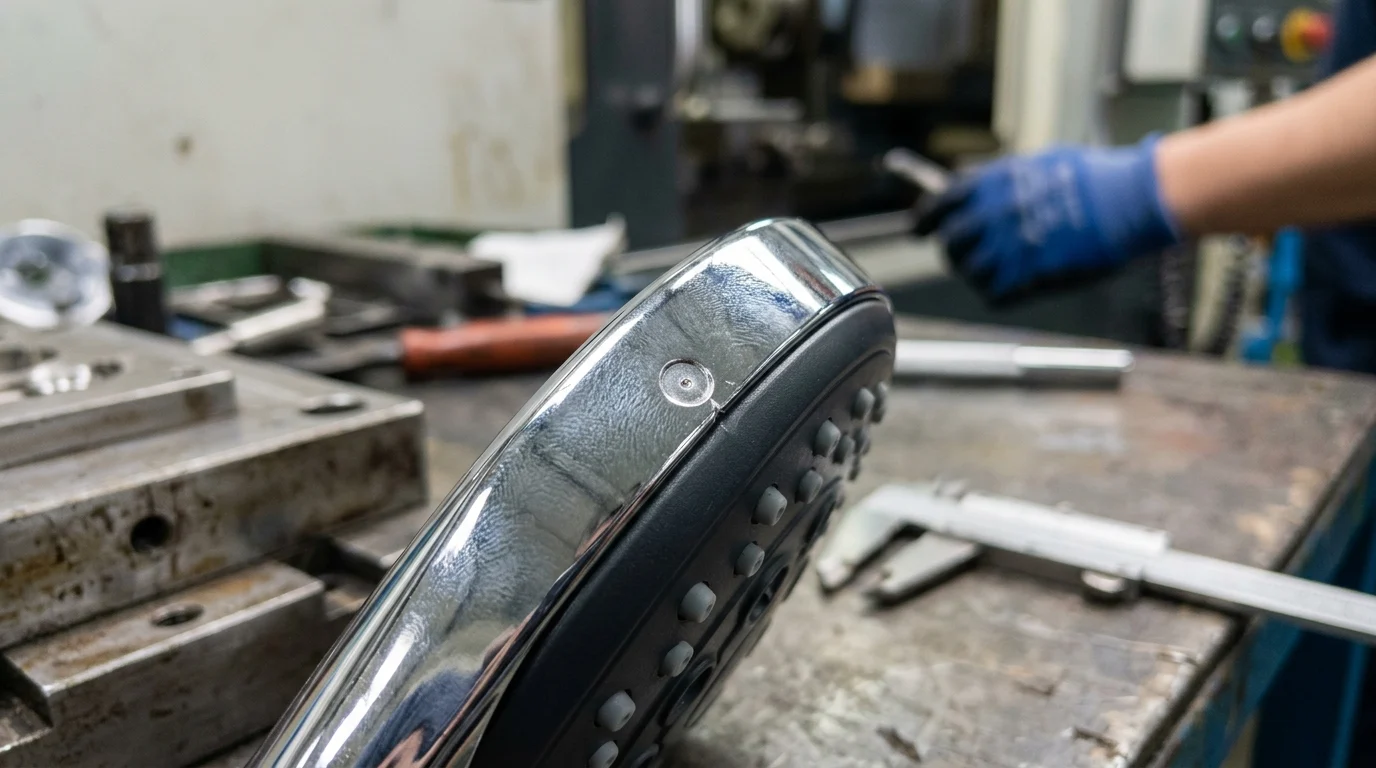
The landed value of an ABS handheld shower head is dictated by a specific set of technical specifications. Importers must carefully define these parameters on their purchase orders to ensure the final product meets regional market expectations while maintaining target profit margins. Minor variations in plating thickness, internal mechanisms, and included accessories can significantly alter the FOB price.
Material, Plating, and Finish
The foundation of a reliable shower head is the use of virgin ABS resin rather than recycled regrind, which can compromise structural integrity and plating adhesion. The electroplating process itself is a major cost driver. A standard import-grade chrome finish requires multiple layers of plating to ensure longevity and resistance to peeling.
| Plating Layer | Standard Thickness (Microns) | Purpose |
|---|---|---|
| Acid Copper | 15.0 - 20.0 | Fills microscopic imperfections, provides a smooth base |
| Semi-Bright/Bright Nickel | 5.0 - 8.0 | Provides corrosion resistance and deep luster |
| Trivalent/Hexavalent Chrome | 0.2 - 0.25 | Delivers surface hardness and the final mirror finish |
Importers can also specify alternative finishes such as matte black, brushed nickel, or oil-rubbed bronze. Matte black is typically achieved through Physical Vapor Deposition (PVD) or specialized painting processes, which can increase the unit cost by 15% to 30% compared to standard chrome plating.
Spray Functions, Flow Rate, and Pressure Performance
The internal dial mechanism dictates the number of spray functions, ranging from a basic single-function spray to complex 5-setting or 7-setting configurations (e.g., massage, mist, rain, combined). Higher function counts require more complex injection molds and tighter tolerances, marginally increasing tooling and assembly costs.
Flow rate and pressure performance are critical for regulatory compliance and user satisfaction. To meet North American WaterSense standards, manufacturers install flow restrictors that cap the output at 1.8 to 2.0 Gallons Per Minute (GPM). The internal water channels must also be designed to withstand standard municipal water pressures, typically tested for burst resistance at 0.5 to 0.8 MPa (72 to 116 PSI) to ensure seams do not split under pressure spikes.
Hose, Connector, Bracket, and Filter Options
Handheld shower heads are rarely imported as standalone units; they are usually bundled with hoses and mounting brackets. The choice of hose greatly affects the perceived quality of the set. Standard configurations utilize a 1.5-meter double-interlock stainless steel outer hose with an EPDM (Ethylene Propylene Diene Monomer) inner tube, which resists high temperatures and prevents kinking.
Connectors must feature standard G1/2-inch threading to ensure compatibility with global plumbing fixtures. Additionally, for markets with hard water, importers increasingly specify shower heads with integrated filtration systems, utilizing replaceable PP cotton or calcium sulfite filter cartridges to neutralize chlorine and trap mineral scale. Adding a filtration module typically increases the unit FOB price by $0.80 to $1.50 depending on the media used.
ABS vs Metal Handheld Shower Heads
When engineering a sanitary ware portfolio, procurement teams must evaluate the technical and commercial differences between ABS, brass, and stainless steel. While metal fixtures dominate the ultra-luxury segment, ABS has captured the vast majority of the mid-market and volume-retail sectors.
ABS, Brass, and Stainless Steel Comparison
Understanding the precise differences between these materials helps importers position their products correctly across different retail tiers. The table below outlines the comparative metrics for high-volume manufacturing.
| Metric | ABS Polymer | Solid Brass | 304 Stainless Steel |
|---|---|---|---|
| Average Material Cost | Low ($1.50-$2.50/kg) | High ($6.00+/kg) | Medium ($3.00-$4.50/kg) |
| Manufacturing Method | Injection Molding | Casting / Machining | Stamping / Welding |
| Thermal Conductivity | Very Low (Insulator) | High (Heats up quickly) | Medium-High |
| Custom Tooling Cost | $3,000 - $8,000 | $1,000 - $3,000 | $4,000 - $10,000 |
| Typical Unit Weight | 150g - 250g | 500g - 800g | 300g - 500g |
Where ABS Outperforms Metal
ABS significantly outperforms metal in thermal management. Because brass and stainless steel are highly conductive, hot water running through a metal handheld shower head transfers heat directly to the handle, creating a burn risk for users at temperatures above 45°C (113°F). ABS acts as a thermal insulator, remaining comfortable to hold regardless of the water temperature.
Furthermore, ABS is immune to internal galvanic corrosion and rust. In areas with hard water, mineral scale binds aggressively to metal surfaces, requiring harsh chemicals to clean. ABS surfaces, especially when paired with silicone anti-clog nozzles, allow users to simply rub away calcium buildup with their fingers, drastically reducing maintenance.
Key Trade-Offs to Consider
Despite its advantages, ABS carries specific trade-offs. The primary limitation is perceived value; high-end hospitality projects and luxury residential builds often mandate solid brass fixtures for their tactile weight and premium aesthetic. An Abs Shower Head cannot replicate the "heavy" feel of solid brass.
Additionally, while the electroplating on ABS is highly advanced, it is ultimately a metal layer bonded to a plastic substrate. Over a lifespan of 7 to 10 years, aggressive chemical cleaners or extreme temperature fluctuations can cause the plating to blister or peel—a failure mode less common in electroplated solid brass. Importers must weigh this slightly shorter lifespan against the massive upfront cost savings.
Sourcing, Compliance, and Quality Control
Successfully importing ABS handheld shower heads requires rigorous supplier qualification and adherence to international quality and compliance standards. A failure in the quality control process can lead to container rejections, customs seizures, or costly product liability claims.
How to Qualify Wholesale Suppliers
Qualifying a wholesale supplier begins with evaluating their manufacturing infrastructure. Importers should look for factories with ISO 9001 certification and a robust array of injection molding machines, typically ranging from 120T to 250T clamping force for sanitary ware.
It is also critical to determine if the supplier handles electroplating in-house or outsources it. Due to stringent environmental regulations in manufacturing hubs like China and Vietnam, many smaller factories outsource plating to specialized industrial parks. Suppliers with in-house plating capabilities generally offer better quality consistency and shorter lead times, though they require higher minimum order quantities.
Certifications, Labeling, and Market Requirements
Market access depends entirely on regulatory compliance. For the North American market, shower heads must meet ASME A112.18.1/CSA B125.1 standards and carry cUPC certification. Furthermore, states like California enforce the CEC (California Energy Commission) standard, strictly limiting flow rates to a maximum of 1.8 GPM.
In Europe, the ACS (Attestation de Conformité Sanitaire) in France, WRAS in the UK, and KTW/W270 in Germany dictate the safety of materials in contact with drinking water. Importers must ensure the supplier provides valid, up-to-date test reports from recognized third-party laboratories (e.g., SGS, Intertek, or TÜV) to verify that the ABS resin, EPDM hoses, and lubricants meet these regional requirements.
Pre-Production, In-Line, and Final Inspections
A comprehensive quality control strategy utilizes Acceptable Quality Limit (AQL) standards—typically setting thresholds at Minor 4.0, Major 2.5, and Critical 0. Pre-production inspections should verify raw material grades and mold tolerances before mass production begins.
During final inspection, random sampling must include functional stress tests. Crucial evaluations include Salt Spray Testing (e.g., CASS 8-hour or ASS 24-hour) to ensure the chrome plating will not corrode in humid bathroom environments. Mechanical lifecycle testing is also vital; the diverter switch that controls spray functions should be tested for a minimum of 10,000 cycles to guarantee the internal springs and rubber gaskets will not fail prematurely under daily use.
How to Choose the Right ABS Handheld Shower Head
Procurement success relies on aligning product specifications with logistical realities and retail strategies. Importers must optimize order volumes, packaging formats, and freight utilization to maintain a competitive edge in the sanitary ware market.
MOQ, Tooling, Packaging, and Freight Factors
Minimum Order Quantities (MOQ) for ABS shower heads typically range from 1,000 to 3,000 units per design or finish. If an importer requires a custom exterior design, new injection molds must be cut, incurring tooling costs between $3,000 and $8,000, with a lead time of 30 to 45 days before first-article approval.
Packaging density directly impacts landed freight costs. A standard 40HQ shipping container offers roughly 68 cubic meters of usable space. If shower heads are packed in space-efficient bulk PE bags or plain brown boxes, a 40HQ can hold 40,000 to 50,000 units. However, if they are packaged in bulky retail blister packs or premium color boxes with foam inserts, container capacity may drop to 25,000 to 30,000 units, effectively doubling the per-unit freight cost.
Best Configurations for Retail and Wholesale Channels
The intended sales channel dictates the optimal product configuration. For big-box retail and direct-to-consumer e-commerce, visual differentiation is key. Importers targeting these channels should opt for 5-function or 7-functIon Shower Heads with high-contrast silicone nozzles, packaged in full-color display boxes with clear viewing windows.
Conversely, for wholesale distribution targeting plumbing contractors, hotels, or multi-family residential developments, simplicity and durability are paramount. These buyers prefer 1-function or 3-function models with heavy-duty commercial-grade hoses, packaged in bulk master cartons. Stripping away unnecessary spray functions and retail packaging can reduce unit costs by 15% to 20%, allowing for highly competitive contract bidding.
Decision Matrix for Importers
To finalize a purchasing strategy, importers should utilize a decision matrix that weighs unit FOB cost, compliance requirements, and freight efficiency against target retail margins. High-volume, low-margin strategies demand standard chrome finishes, basic 3-function dials, and high-density packaging.
For higher-margin portfolios, importers can leverage the low baseline cost of ABS to invest in premium upgrades—such as PVD matte black finishes, integrated water filtration, and extra-long 2.0-meter reinforced hoses—without exceeding the budget constraints typically associated with solid brass fixtures. By carefully manipulating these variables, importers can build a resilient and profitable supply chain.
Key Takeaways
- Choose virgin ABS resin for bulk handheld shower head orders because it improves structural strength and plating adhesion compared with recycled regrind.
- Use ABS to reduce freight pressure, as standard ABS handheld shower heads often weigh 150g to 250g versus 500g to 800g for similar brass models.
- Define plating thickness, finish, spray mechanism, and accessories in the purchase order because small specification changes can significantly affect FOB price.
- Request samples before mass production to verify spray performance, chrome finish quality, connector fit, and durability under expected market conditions.
- Work with an experienced source factory such as XinYi Sanitary Ware when importing OEM or ODM shower products for consistent quality, customization, and large-order support.
Frequently Asked Questions
Why do importers prefer ABS handheld shower heads for bulk orders?
ABS offers a strong cost-to-performance balance, fast injection-mold production, lighter shipping weight, and reliable durability. These advantages help importers reduce landed costs while maintaining acceptable quality for retail, wholesale, and project channels.
Are ABS handheld shower heads durable enough for daily use?
Yes. Import-grade ABS can withstand typical bathroom impact, humidity, and continuous hot water use when made with quality resin and proper plating. It is also less prone to denting than thin metal fixtures.
What specifications should buyers confirm before placing large orders?
Buyers should confirm virgin ABS material, plating thickness, spray functions, flow rate, connector size, pressure performance, packaging, certifications, and sample approval. These details directly affect FOB price, landed value, and market acceptance.
How does ABS reduce shipping costs compared with brass?
A typical ABS handheld shower head weighs about 150g to 250g, while brass models may reach 500g to 800g. Lower unit weight helps importers load more pieces per container and reduce freight cost per unit.
Can ABS handheld shower heads support chrome finishes?
Yes. ABS accepts electroplating well when the substrate and process are controlled properly. Multi-layer chrome plating can create a bright, corrosion-resistant finish suitable for mainstream bathroom markets.