


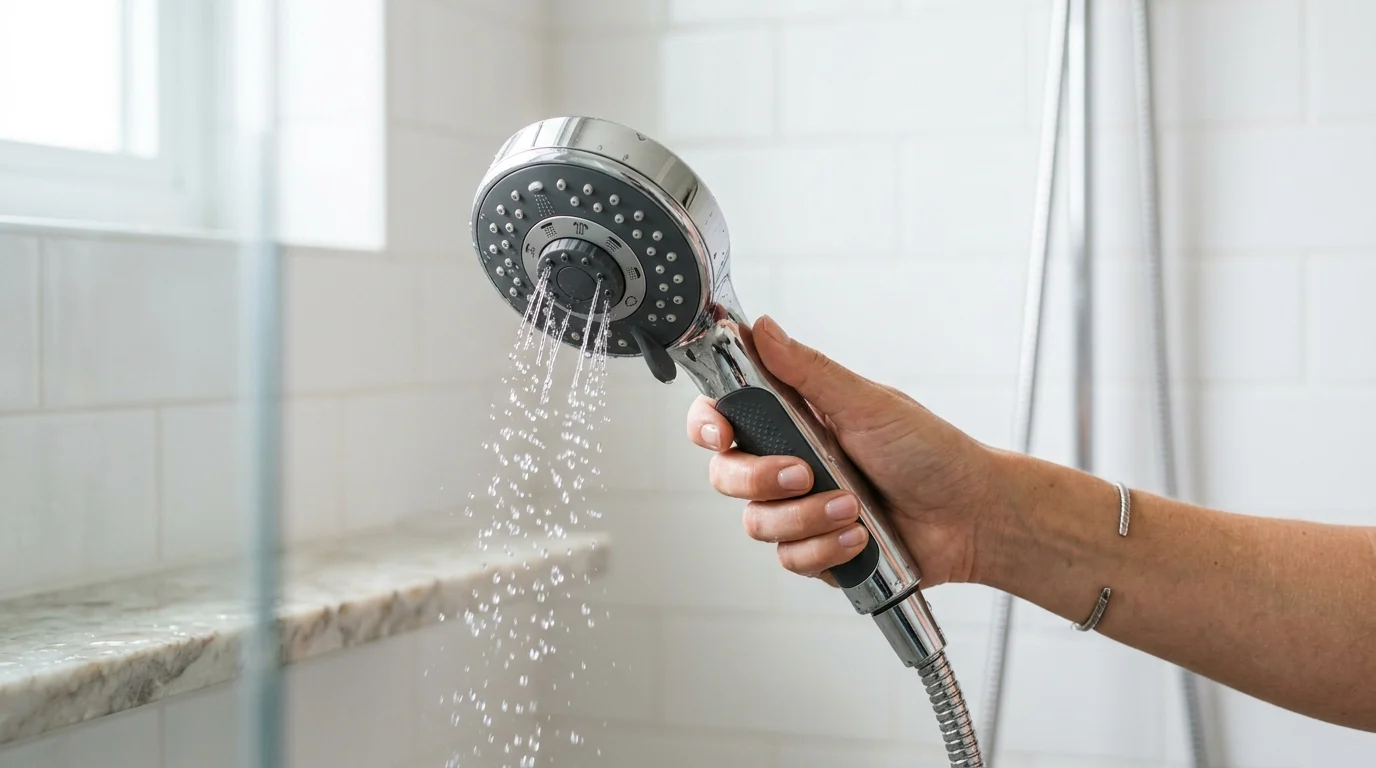
Modern bathroom specifications are no longer judged by appearance alone; users expect comfort, flexibility, and measurable water performance from every fixture. A multi-function handheld shower answers that demand by combining several spray experiences in one easy-to-install component, making it valuable for apartments, hotels, healthcare spaces, and renovation projects. For developers and procurement teams, the decision is also practical: the right model can improve perceived value, support accessibility goals, simplify future maintenance, and reduce the need for complex concealed shower systems. This guide looks at user benefits, commercial value, spray functions, pressure considerations, and sourcing factors that matter when selecting products for modern bathroom projects.
Why 6-Function Handheld Shower Heads Fit Modern Projects
Modern bathroom projects increasingly demand plumbing fixtures that blend architectural aesthetics with high functional versatility. The integration of a 6-function handheld shower headd](https://www.xinyisanitary.com/product_keywords_sitemap.xml) has become a standard specification in both premium residential developments and commercial hospitality sectors. These multi-function units allow developers to offer a customized, spa-like environment without requiring complex, multi-valve concealed shower systems.
By consolidating multiple spray patterns into a single interface, these fixtures streamline the installation process while maximizing end-user satisfaction. Understanding the mechanical advantages and value propositions of these units is the first step in successful project specification and procurement.
User Benefits
The primary advantage of specifying a multi-function hand showerlies in its ergonomic adaptability and user-centric design. By offering distinct spray patterns—typically including rainfall, targeted massage, aerated mist, and combination settings—the fixture easily accommodates diverse preferences. From an accessibility standpoint, handheld units paired with a minimum 60-inch Flexible Hose enable seated showering, aligning perfectly with Universal Design principles.
Furthermore, high-quality commercial models are engineered to require less than 5 pounds of force to rotate the dial or press the selection button. This specific threshold aligns with ADA (Americans with Disabilities Act) guidelines for operable parts, making the fixtures suitable for specific accessible applications in healthcare facilities, assisted living developments, and inclusive hospitality suites.
Commercial Value
For property developers and hoteliers, upgrading to a 6-function model presents a highly favorable cost-to-benefit ratio. While the procurement cost may reflect an estimated $15 to $40 premium per unit over standard single-function models during bulk purchasing, the perceived value significantly elevates tenant retention metrics.
In hospitality environments, versatile shower systems are widely perceived to enhance guest comfort, which can positively influence post-stay review scores. Additionally, integrating these fixtures into a standardized slide-bar configuration minimizes long-term renovation costs. The primary interface—the Shower Head And Hose—can be easily swapped or upgraded over time without necessitating invasive alterations to the in-wall plumbing infrastructure or waterproofing membranes.
Key Product Specifications

Evaluating the technical specifications of multi-function Hand Showers is critical to ensuring compatibility with local water pressures and established plumbing infrastructure. It is essential to scrutinize internal mechanisms, flow restrictors, and surface treatments to guarantee long-term performance under heavy usage.
Spray Modes
A standard 6-function configuration typically incorporates a rotary dial or push-button mechanism to transition between spray patterns. The standard suite of modes includes Full Body (Rainfall), Pulsating Massage, Soft Aerated Mist, a Power Wash setting, a Water-Saving Trickle (Pause), and a combination mode such as Rain/Massage.
To maintain distinct spray patterns over thousands of actuation cycles, the internal diverter cartridge must utilize high-grade ceramic discs or specialized polymer seals. These internal components prevent cross-flow between channels, ensuring that water pressure is fully directed to the active nozzles rather than bleeding into inactive zones.
Flow Rate and Pressure
Flow rate management is a critical specification, directly impacting both user experience and regulatory compliance. The fixture's flow restrictor must match the building's dynamic water pressure, which typically ranges from 40 to 80 PSI for optimal performance. Below is a breakdown of standard flow rate specifications utilized in modern plumbing projects:
| Specification Standard | Max Flow Rate (GPM) | Optimal Pressure (PSI) | Typical Application |
|---|---|---|---|
| Standard Federal (US) | 2.5 | 60 - 80 | Older residential, non-restricted zones |
| EPA WaterSense | 2.0 | 45 - 60 | Green building certifications, hospitality |
| CalGreen / Title 20 | 1.8 | 40 - 60 | California projects, LEED Platinum |
Selecting the correct flow rate is essential to prevent pressure drops in multi-story buildings. It should be noted that the applicability of standards like CalGreen or Title 20 varies by jurisdiction and must be verified per project.
Materials and Finishes
The longevity of a handheld shower head relies heavily on its material composition and exterior finishing process. The majority of commercial-grade units utilize an ABS (Acrylonitrile Butadiene Styrene) thermoplastic core. This material resists thermal expansion and prevents the exterior handle from becoming dangerously hot during prolonged use.
Surface finishes, whether polished chrome, brushed nickel, or matte black, are typically applied via electroplating or Physical Vapor Deposition (PVD). Premium commercial specifications often target an illustrative range of 0.2 to 0.5 microns for chrome plating thickness to withstand aggressive hospitality cleaning agents and prevent premature flaking.
How to Compare Product Options
Selecting the ideal 6-function handheld shower head requires a systematic comparison of OEM offerings. The specification process must balance the initial capital expenditure against the projected lifecycle, installation methodology, and material durability.
Material Comparison
The choice of housing material fundamentally dictates the fixture's weight, durability, and cost. While brass offers superior longevity, its heavy weight can be cumbersome for handheld applications and risks damaging acrylic shower bases if dropped. Thermoplastics provide a lightweight alternative with excellent impact resistance. The following table presents illustrative ranges for comparison:
| Housing Material | Average Unit Weight (lbs) | Commercial Lifespan | Wholesale Cost Index (Base=1.0) |
|---|---|---|---|
| Injection-Molded ABS | 0.4 - 0.8 | 3 - 5 Years | 1.0x |
| Brass Alloy | 1.5 - 2.5 | 10+ Years | 3.5x |
| Stainless Steel (304) | 1.2 - 2.0 | 8 - 12 Years | 2.8x |
These factors must be weighed heavily; a drop impact from a 2.5 lb brass unit can easily crack composite shower pans, making ABS or stainless steel safer choices for high-turnover environments.
Mounting Types
Handheld shower heads require robust mounting hardware to ensure stability and accessibility. The two primary configurations are fixed wall brackets and vertical slide bars. Slide bars, typically specified in lengths of 24 to 36 inches, are essential for ADA-compliant showers, allowing the height of the shower head to be adjusted for users of varying statures.
When specifying slide bars, it is crucial to note that they are not automatically considered grab bars. To serve as a grab bar, the hardware must be specifically rated and anchored to structural backing capable of supporting a minimum of 250 pounds of downward force. Fixed brackets offer a lower-cost alternative but sacrifice vertical adjustability.
Cost and Durability Trade-Offs
A successful specification strategy accounts for the total cost of ownership rather than just the initial unit price. A low-cost Abs Shower Head may reduce upfront expenditure, but in high-turnover environments like hotels or fitness centers, the replacement cycle may accelerate due to mechanical failure in the function-switching dial.
Conversely, investing in units with self-cleaning silicone nozzles and reinforced internal water channels minimizes maintenance labor. These premium features effectively offset higher initial procurement costs over a standard capital improvement cycle by reducing the frequency of descaling and cartridge replacements.
Compliance, Sourcing, and Logistics
Navigating the global supply chain for commercial plumbing fixtures requires strict attention to regulatory compliance, supplier vetting, and logistics planning. Failing to verify certifications or accurately forecast lead times can result in costly project delays and failed municipal inspections.
Water Efficiency and Plumbing Standards
All specified fixtures must carry appropriate third-party certifications to legally clear plumbing inspections in North America. Baseline requirements include compliance with ASME A112.18.1 / CSA B125.1, which governs the mechanical safety, burst pressure, and structural integrity of plumbing fittings.
Building on the flow rate targets discussed earlier, fixtures destined for eco-conscious projects must be listed on the EPA WaterSense registry, ensuring they meet stringent spray force and coverage criteria at reduced volumes. For projects in regions with stricter codes, specialized flow restrictors built directly into the shower head handle are necessary to maintain compliance.
OEM and Supplier Qualifications
When sourcing directly from overseas manufacturers, vetting the OEM (Original Equipment Manufacturer) is a critical risk management step. Qualified suppliers should hold active ISO 9001 quality management certifications and possess in-house hydrostatic testing facilities to batch-test products for leaks.
For custom finishes or branded configurations, manufacturers typically enforce Minimum Order Quantities (MOQs) ranging from 500 to 1,000 units. Specifiers should request independent audit reports verifying the supplier's defect rate, which industry benchmarks suggest should ideally remain below 1.5% for high-volume production runs to ensure consistent quality.
Packaging, Lead Time, and After-Sales Support
Logistical timelines must be carefully factored into the broader construction schedule. Standard production lead times for bulk plumbing orders average 30 to 45 days, with ocean freight and customs clearance adding an additional 25 to 40 days to the critical path.
To mitigate transit damage during global shipping, packaging must meet ISTA 1A drop-test standards. Furthermore, commercial procurement contracts should secure a minimum 3-year commercial warranty, guaranteeing the availability of replacement diverter cartridges, hoses, and O-rings to support the facility's on-site maintenance team.
How to Select the Right Model
The final selection of a 6-function handheld shower head bridges the gap between architectural vision and engineering reality. A structured approval process ensures that the chosen fixture aligns with the project's budgetary constraints, aesthetic goals, and long-term operational requirements.
Specification Process
The specification process begins with drafting a comprehensive submittal package that details flow rates, material compositions, and dimensional tolerances. These specifications must be cross-referenced against the building's central water heating capacity and pressure loop calculations to ensure adequate delivery.
Before mass procurement, it is standard industry practice to install sample units in a physical mock-up room. This allows stakeholders to evaluate the tactile feedback of the function dial under active water pressure, monitor the acoustic levels of the spray modes, and verify the overall aesthetic integration with the surrounding tile and hardware.
Premium vs Mid-Range Options
Projects must delineate between mid-range and premium product tiers based on their target demographic and capital budgets. Mid-range options, typically estimated at $25 to $50 per unit at wholesale volumes, utilize standard ABS construction and electroplated chrome finishes, making them highly suitable for multi-family residential developments.
Premium options, ranging from an estimated $80 to $150 per unit wholesale, offer advanced PVD finishes (such as brushed gold or oil-rubbed bronze), integrated water filtration screens, and proprietary air-injection technology. This technology aerates the water, amplifying the tactile pressure of low-flow streams to simulate a high-volume shower experience.
Final Approval Criteria
Final sign-off requires a rigorous checklist to prevent on-site installation conflicts and delayed handovers. Key approval criteria include verifying that the connection threads conform to the standard 1/2-inch NPT (National Pipe Thread) taper, ensuring universal compatibility with standard shower hoses and wall supply elbows.
Additionally, the approval team must confirm that the accompanying flexible hose incorporates a double-interlock stainless steel design and an anti-twist swivel nut. This critical feature prevents the hose from kinking during function adjustments, thereby extending the lifespan of the internal EPDM (Ethylene Propylene Diene Monomer) water tube and reducing maintenance calls.
Key Takeaways
- Specify a handheld shower with at least a 60-inch hose when accessibility, seated showering, or Universal Design is part of the project brief.
- Choose models with clearly separated spray functions, such as rainfall, massage, mist, power wash, pause, and combination settings, to improve user satisfaction.
- Verify that the mode selector is easy to operate, ideally requiring less than 5 pounds of force for accessible bathroom applications.
- Budget an estimated $15 to $40 more per unit than a single-function hand shower when planning bulk procurement for upgraded projects.
- Use slide-bar configurations to simplify future replacement of the shower head and hose without disturbing in-wall plumbing or waterproofing.
- Evaluate internal diverter quality, seals, flow restrictors, and surface finishes before specifying products for heavy-use residential or hospitality environments.
Frequently Asked Questions
What spray modes are common in a 6-function handheld shower head?
Typical modes include rainfall, pulsating massage, aerated mist, power wash, water-saving trickle or pause, and a combination mode such as rain plus massage.
Why choose a 6-function hand shower for hotel or apartment projects?
It adds user comfort and a premium feel without complex concealed plumbing. The shower head and hose can also be replaced later, reducing renovation cost.
Is a handheld shower head suitable for accessible bathrooms?
Yes, especially when paired with a slide bar and at least a 60-inch flexible hose. Controls requiring less than 5 pounds of force support accessibility-focused design.
How much more does a 6-function model usually cost than a basic one?
In bulk procurement, the article estimates a premium of about $15 to $40 per unit over standard single-function models, depending on materials and specifications.
What should buyers check before specifying multi-function hand showers?
Check spray mechanism durability, flow rate, pressure compatibility, hose length, surface finish, water-saving features, and whether the model meets local plumbing requirements.
