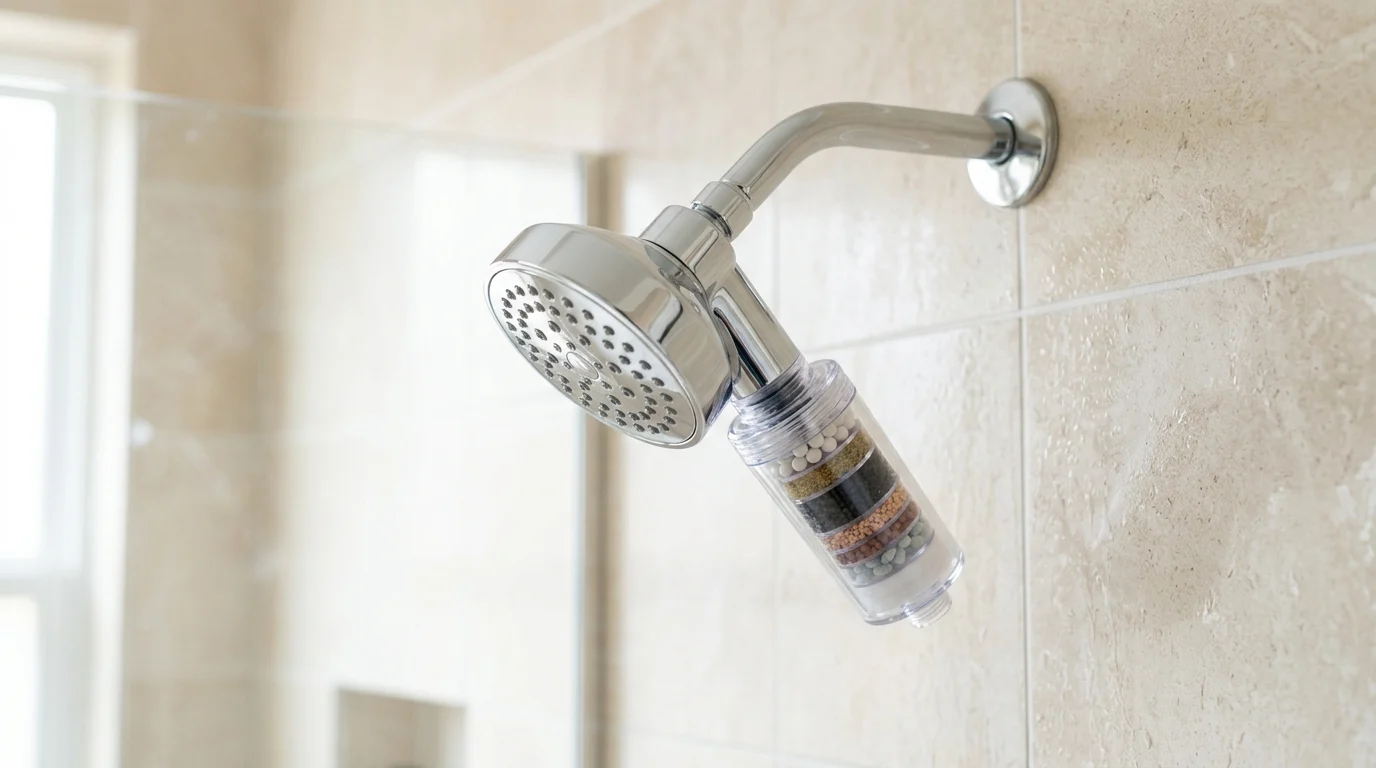
Choosing between a 15-stage Filtered Shower Head and a 20-stage filter system is not simply a matter of picking the bigger number. In shower filtration, cartridge size, media density, water contact time, and verified reduction performance often matter more than the advertised stage count. For buyers comparing household upgrades, hospitality replacements, or OEM/ODM product lines, the difference can affect cost, maintenance cycles, flow rate, and customer satisfaction. This article breaks down what “stages” actually mean, why brands use them in marketing, and how to assess filtration-focused shower products with a more practical, data-aware approach.
15-Stage vs. 20-Stage Filtered Shower Heads
The market for point-of-use water filtration has seen rapid expansion, driven by heightened consumer awareness regarding municipal water quality and skin health. Within this sector, the debate between utilizing a 15-stage filtered shower head versus a 20-stage filter system is a primary focal point for buyers, product developers, and facility operators. Both configurations aim to mitigate dermal exposure to chlorine, volatile organic compounds (VOCs), and heavy metals, but they approach the engineering challenge differently.
Fundamentally, standard shower filter cartridges operate within strict volumetric constraints, typically offering an internal capacity of 120 to 150 cubic centimeters. Consequently, increasing the number of filtration stages requires a deliberate redistribution of this limited spatial footprint. Understanding the technical trade-offs between 15-stage and 20-stage systems requires looking beyond surface-level marketing claims and examining the fluid dynamics, media density, and verifiable performance metrics of the cartridges.
What Stage Count Really Means
In the context of shower filtration, a "stage" denotes a distinct layer of filtration media or structural material through which water passes. A 15-stage filtered shower head typically incorporates a combination of physical barriers, such as stainless steel mesh and polypropylene (PP) cotton, alongside chemical and catalytic media like KDF-55, calcium sulfite, and activated carbon. Additional stages often consist of mineralizing agents, such as ceramic or tourmaline balls.
Because the external dimensions of universal replacement cartridges are highly standardized across the industry, adding more stages does not equate to adding more total filtration material. Instead, it means that the existing volume is segmented into thinner, more numerous layers. Therefore, the stage count is fundamentally a measure of media diversity rather than total filtration capacity. Claims that these micro-layers significantly alter pH or provide measurable "negative ion" benefits should be viewed with skepticism, as the water's contact time in a shower is generally too brief to produce scientifically significant alterations.
Why Brands Use Stage Count in Marketing
The escalation from 15 to 20 stages is largely a product of retail differentiation and consumer psychology. In saturated e-commerce markets, a higher stage count is frequently perceived by non-expert buyers as indicative of superior purification capabilities. A 20-stage system implies a proportional increase in filtration efficacy to the layperson, allowing brands to command a retail premium per unit.
However, from a manufacturing and bill of materials (BOM) perspective, the cost differential between a 15-stage and a 20-stage cartridge is often minimal—sometimes amounting to just a fraction of a dollar at wholesale volumes. Manufacturers achieve the higher count by inserting low-cost micro-layers, such as additional PP cotton pads, magnetic energy balls, or vitamin C blocks, enabling brands to market a "premium" tier without substantially increasing production overhead.
Common Buyer and Facility Use Cases
Procurement decisions often hinge on Total Cost of Ownership (TCO) and replacement cadence. In the hospitality and fitness sectors, where bulk procurement and predictable maintenance cycles (typically every 3 to 6 months) are paramount, 15-stage filters are frequently favored. These units provide a reliable balance of chlorine reduction and flow rate maintenance, with standard minimum order quantities for custom OEM configurations readily available.
Conversely, residential buyers in regions with highly localized water concerns—such as elevated chloramine levels, which require different validation than free chlorine—may gravitate toward 20-stage systems that advertise specialized layers. Buyers must weigh the perceived benefits of these specialized micro-layers against the reality that thinner foundational layers can lead to premature cartridge depletion in high-usage environments.
How Filtered Shower Heads Are Built
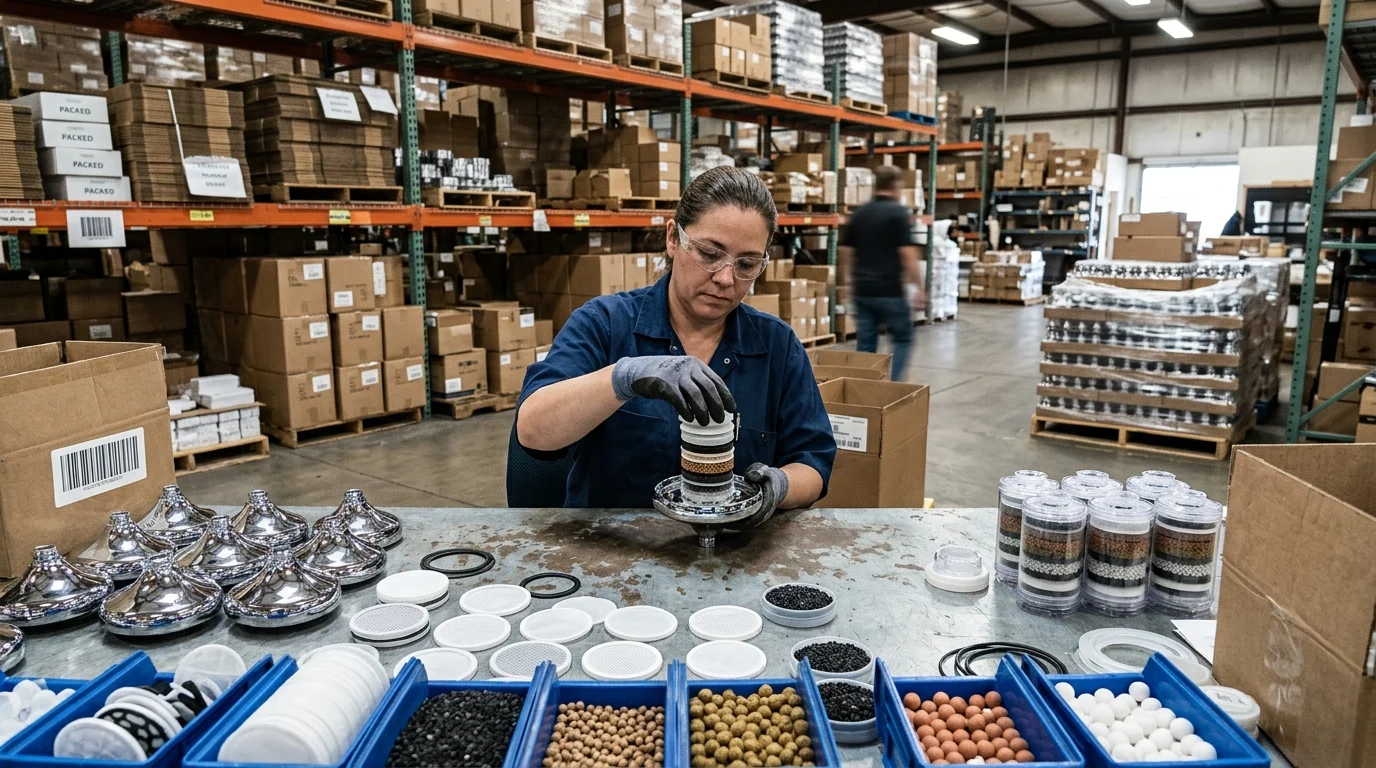
The physical architecture of a filtered shower head dictates its durability, compatibility, and overall efficacy. The outer housings are predominantly injection-molded from Acrylonitrile Butadiene Styrene (ABS) plastic, valued for its impact resistance and thermal stability, and are engineered to withstand standard residential water pressures ranging from 20 to 100 psi. Inside this housing sits the core component: a replaceable cylindrical cartridge.
Regardless of the stage count, the internal fluid dynamics must ensure that water traverses the media sequentially without channeling or bypassing the active layers. The construction of these internal cartridges involves precise layering techniques, where media are separated by fine stainless steel screens and high-density cotton pads to prevent media migration and ensure structural integrity under pressure.
Common Media Layers in 15-Stage Filters
A scientifically optimized 15-stage filtered shower head allocates its internal volume to maximize the presence of highly reactive media. The foundational layers consist of micro-porous PP cotton and high-density stainless steel mesh, which serve as pre-filters to capture macro-particulates, rust, and sediment. The core active layers are heavily reliant on KDF-55 (Kinetic Degradation Fluxion) and calcium sulfite.
KDF-55, a high-purity copper-zinc formulation, uses a basic redox process to exchange electrons with contaminants, making it effective against free chlorine and water-soluble heavy metals. Calcium sulfite complements this with a rapid reaction rate. Activated carbon is also included, though its efficacy is somewhat bottlenecked by the high flow rates typical of shower environments. The remaining stages usually comprise alkaline ceramic balls and far-infrared stones.
How 20-Stage Cartridges Differ
To engineer a 20-stage cartridge within standard universal cartridge dimensions (commonly around 68mm by 60mm to fit standard housings), manufacturers must compress the primary active layers (KDF-55 and calcium sulfite) to make room for additional distinct stages. These supplementary stages often include specialized resins, vitamin C (ascorbic acid) blocks, tourmaline, zeolite, and additional physical filtration barriers.
| Feature | 15-Stage Cartridge | 20-Stage Cartridge |
|---|---|---|
| Primary Active Media Vol. | High (Thicker layers of KDF/CaSO3) | Moderate (Thinner primary layers) |
| Media Diversity | Standard (Focus on core purification) | High (Includes niche mineral layers) |
| Typical Pressure Drop | Nominal (Baseline resistance) | Elevated (Higher resistance) |
| Primary Marketing Focus | Reliable chlorine/sediment reduction | Comprehensive water conditioning |
While the inclusion of vitamin C can aid in neutralizing chloramines, it is a consumable that depletes rapidly. Furthermore, the reduction in the volume of foundational media like KDF-55 can technically reduce the cartridge's total longevity regarding heavy metal and free chlorine removal.
Inline Filters vs. Integrated Shower Heads
The housing design further influences the construction and deployment of these filters. Inline filters are standalone cylindrical units featuring standard 1/2-inch NPT threads, designed to be installed between the existing Shower Arm and the showerhead. This modularity allows users to retain their preferred showerhead while adding filtration capabilities using commoditized, cost-effective universal cartridges.
Integrated shower heads, by contrast, incorporate the 15-stage or 20-stage filter directly into the handle of a handheld unit or the backplate of a fixed rainfall showerhead. Integrated designs offer a sleeker aesthetic but often utilize proprietary cartridge shapes. This creates vendor lock-in, which can significantly increase the Total Cost of Ownership through expensive, brand-specific replacement cartridges.
How to Compare Performance
Evaluating the performance of point-of-use shower filtration systems requires an understanding of standard plumbing metrics and chemical kinetics. Because water in a shower environment is both hot and fast-moving, the operational parameters differ drastically from under-sink or whole-house reverse osmosis systems.
The primary limiting factor in shower filtration is contact time. With North American flow rates legally capped at 2.5 gallons per minute (GPM) federally—and often restricted to 1.8 GPM in certain states or under WaterSense labeling—water passes through the cartridge in a fraction of a second. Consequently, assessing performance relies on evaluating how efficiently the media can catalyze reactions within this minimal contact window.
Chlorine Reduction and Odor Control
The benchmark metric for shower filter performance is the reduction of free available chlorine, which is responsible for the drying of skin and hair, as well as the emission of volatile odors in a hot shower environment. Standard activated carbon, while excellent for cold drinking water, suffers a significant drop in adsorption efficiency at temperatures exceeding 90°F (32°C).
Therefore, high-performance filtered shower heads rely on calcium sulfite and KDF-55, both of which maintain or even increase their reaction kinetics at hot water temperatures (effective up to 212°F / 100°C). A properly constructed cartridge should demonstrate a chlorine reduction efficiency of at least 80% to 90% during its initial lifecycle, effectively mitigating the chemical odor and stringent feel of heavily chlorinated municipal water.
Pressure Drop, Flow Rate, and Contact Time
Introducing dense filtration media into a pressurized water line inherently causes a pressure drop. A well-engineered 15-stage filter typically induces a nominal pressure drop that is virtually imperceptible to the user. However, increasing the stage count to 20 stages requires more separation meshes and denser packing of micro-layers, which can elevate the pressure drop noticeably.
Flow rate and contact time share an inverse relationship. If a facility suffers from low baseline water pressure, a heavily stratified 20-stage filter may reduce the flow rate below acceptable comfort levels. Conversely, while higher pressure pushes water through faster, it reduces the contact time with the active media, thereby lowering the instantaneous filtration efficacy. Maintaining a balanced media density is critical to optimizing both the user experience and the chemical reduction rates.
Limits of Heavy Metal and Hard Water Claims
A pervasive misconception in the industry is that 15-stage or 20-stage Shower Filters function as water softeners. True water softening requires the removal of calcium and magnesium ions, typically achieved through ion-exchange resins requiring regular salt regeneration. Shower filters do not possess the volume or the regenerative capacity to soften hard water.
Instead, media like KDF-55 can alter the morphology of calcium carbonate crystals, potentially reducing scale buildup on shower surfaces, but the water's total hardness remains unchanged. Furthermore, while KDF-55 is technically capable of bonding with heavy metals like lead and mercury, the short contact time at standard flow rates limits this reduction efficiency. Buyers must ensure that marketing claims regarding hard water and heavy metals remain scientifically accurate and legally compliant.
Quality, Compliance, and Sourcing Checks
For industry professionals, distributors, and facility managers, sourcing a filtered shower head involves rigorous vetting of supplier claims, material safety, and manufacturing consistency. The global supply chain for these units is highly concentrated, primarily situated in specialized manufacturing hubs across Asia. Consequently, robust quality assurance protocols are non-negotiable.
A critical benchmark for quality is the NSF/ANSI 177 standard, which specifically governs shower filtration systems. To achieve compliance, a system must demonstrate a minimum of 50% reduction of free available chlorine for the entirety of its stated capacity—typically evaluated at 10,000 gallons. It is important to note that this standard covers only free chlorine reduction, not heavy metals or water conditioning. Navigating the sourcing landscape requires a keen eye for verifiable data over marketing rhetoric.
Certifications and Test Reports
Legitimate manufacturers should provide independent, third-party test reports from recognized bodies such as SGS, Intertek, or TÜV SÜD. These reports must validate the chlorine reduction capacity, the structural integrity of the ABS housing under static pressure (often tested up to 300 psi for burst strength), and the absence of leachable toxins.
Furthermore, compliance with the Restriction of Hazardous Substances (RoHS) directive is essential for the plastics and metal finishes used in the housing. Buyers must request specific documentation proving that the KDF media utilized is genuine KDF Fluid Treatment material, as counterfeit media is a prevalent issue that drastically degrades performance.
Evaluating OEM and Supplier Claims
Evaluating OEM and supplier claims requires analyzing the Bill of Materials (BOM). Genuine, high-purity KDF-55 is a premium raw material. If a supplier offers a fully assembled 15-stage or 20-stage cartridge at an abnormally low price point, it is highly probable that the KDF-55 has been diluted with inert, dyed sand or an excess of cheap ceramic balls.
| Sourcing Checkpoint | High-Quality Indicator | Red Flag / Low-Quality Indicator |
|---|---|---|
| Media Verification | Certificates of origin for KDF-55 | Vague "copper-zinc alloy" descriptions |
| Housing Material | Virgin ABS plastic, RoHS compliant | Recycled plastics, uneven chrome plating |
| Testing Documentation | SGS/NSF 177 performance data | Internal or unpublished test results |
| Cartridge Weight | Heavier (indicates dense active media) | Excessively light (indicates cheap fillers) |
Ultimately,
How to Choose the Right Filtered Shower Head
Selecting an optimal filtration system requires analyzing feed water chemistry and evaluating the total cost of ownership. Buyers must look beyond marketing claims and assess filtration media based on empirical water quality data.
Match the Filter to Local Water Conditions
The primary driver for selecting shower filtration should be the local municipal water report, often mandated by agencies like the U.S. Environmental Protection Agency (EPA).
- Chlorine and Volatile Organic Compounds (VOCs): Environments with high chlorine levels require robust layers of KDF-55 and calcium sulfite.
- Hard Water Scale: Areas with high mineral concentrations benefit from ion-exchange resins. According to the U.S. Geological Survey (USGS), over 85% of U.S. geography features hard water, necessitating media that mitigates calcium and magnesium buildup.
- Chloramine: If a municipality utilizes chloramine for disinfection instead of free chlorine, catalytic carbon becomes a mandatory filtration stage.
When a 15-Stage Filter Is Enough
For the vast majority of urban and suburban households relying on treated municipal water, a 15 stage filtered shower head provides comprehensive purification without diminishing water pressure. These systems are engineered to target standard municipal contaminants—specifically free chlorine, trace heavy metals, and physical sediment. Upgrading to a 20-stage system is generally only necessary for well-water applications or regions with severe agricultural runoff, where additional micro-porous ceramic or dense alkaline stages are required to neutralize complex contaminants.
| Water Profile | Primary Contaminants | Recommended System |
|---|---|---|
| Standard Municipal | Chlorine, moderate scale, sediment | 15-Stage Filter |
| Agricultural Well Water | Heavy metals, pesticides, chloramine | 20-Stage Filter |
| Urban Hard Water | High calcium, magnesium, VOCs | 15-Stage Filter |
Balance Performance, Cost, and Replacement Needs
Adding filtration stages inherently increases media density, which introduces friction and restricts water flow. In jurisdictions enforcing a maximum shower flow rate of 1.8 to 2.5 gallons per minute (GPM) to meet energy and water conservation standards, an overly dense 20-stage filter can cause noticeable pressure drops.
A high-quality 15 stage filtered shower head maintains optimal hydrodynamic flow while offering a predictable 10,000-gallon (approximately six-month) cartridge lifespan. Procurement teams and consumers must weigh the marginal purification benefits of five extra stages against higher replacement cartridge costs, increased unit weight, and potential flow rate degradation. Balancing these factors ensures a sustainable return on investment and reliable daily performance.
Key Takeaways
- Evaluate shower filters by media quality, cartridge volume, and verified reduction data rather than stage count alone.
- A 15-stage filtered shower head often offers a practical balance of filtration diversity, flow stability, and cost for homes, hotels, and gyms.
- Because many cartridges hold only about 120 to 150 cubic centimeters of media, adding stages usually creates thinner layers instead of more capacity.
- Replace shower filter cartridges every 3 to 6 months in typical use, and shorten the interval for high-traffic facilities or poor water quality.
- Treat claims about negative ions, pH adjustment, or mineralization cautiously unless the supplier provides credible test evidence.
Frequently Asked Questions
Is a 20-stage shower filter always better than a 15-stage filtered shower head?
No. A higher stage count usually means more layers within the same cartridge space, not more total filtration media. Performance depends more on media quality, flow design, and verified chlorine or metal reduction.
What does “15-stage” mean in a filtered shower head?
It means water passes through 15 distinct media or structural layers, such as PP cotton, stainless steel mesh, KDF-55, calcium sulfite, activated carbon, or mineral balls.
How often should 15-stage shower filter cartridges be replaced?
Most cartridges are replaced every 3 to 6 months, depending on water quality, shower frequency, and flow rate. Hotels, gyms, and high-use facilities should follow a predictable replacement schedule.
Can a filtered shower head remove chlorine from tap water?
Quality shower filters using media such as KDF-55, calcium sulfite, or activated carbon can help reduce chlorine exposure, but actual performance should be checked against product specifications or test data.
Do mineral or negative ion layers provide measurable shower benefits?
Claims about pH changes, negative ions, or strong mineral effects should be viewed carefully. Shower water has short contact time, so verified filtration results matter more than wellness marketing claims.